

AI-driven search engines and conversational models now influence how brands are discovered online. If a brand’s information is inconsistent or poorly structured, generative systems may produce incorrect or incomplete descriptions. A generative brand protection strategy ensures that AI platforms interpret and present brand information accurately.
The 5-Layer AI Defense Model focuses on entity clarity, schema reinforcement, multi-channel authority, monitoring systems, and response protocols to maintain credibility and visibility in evolving AIO and GEO search environments.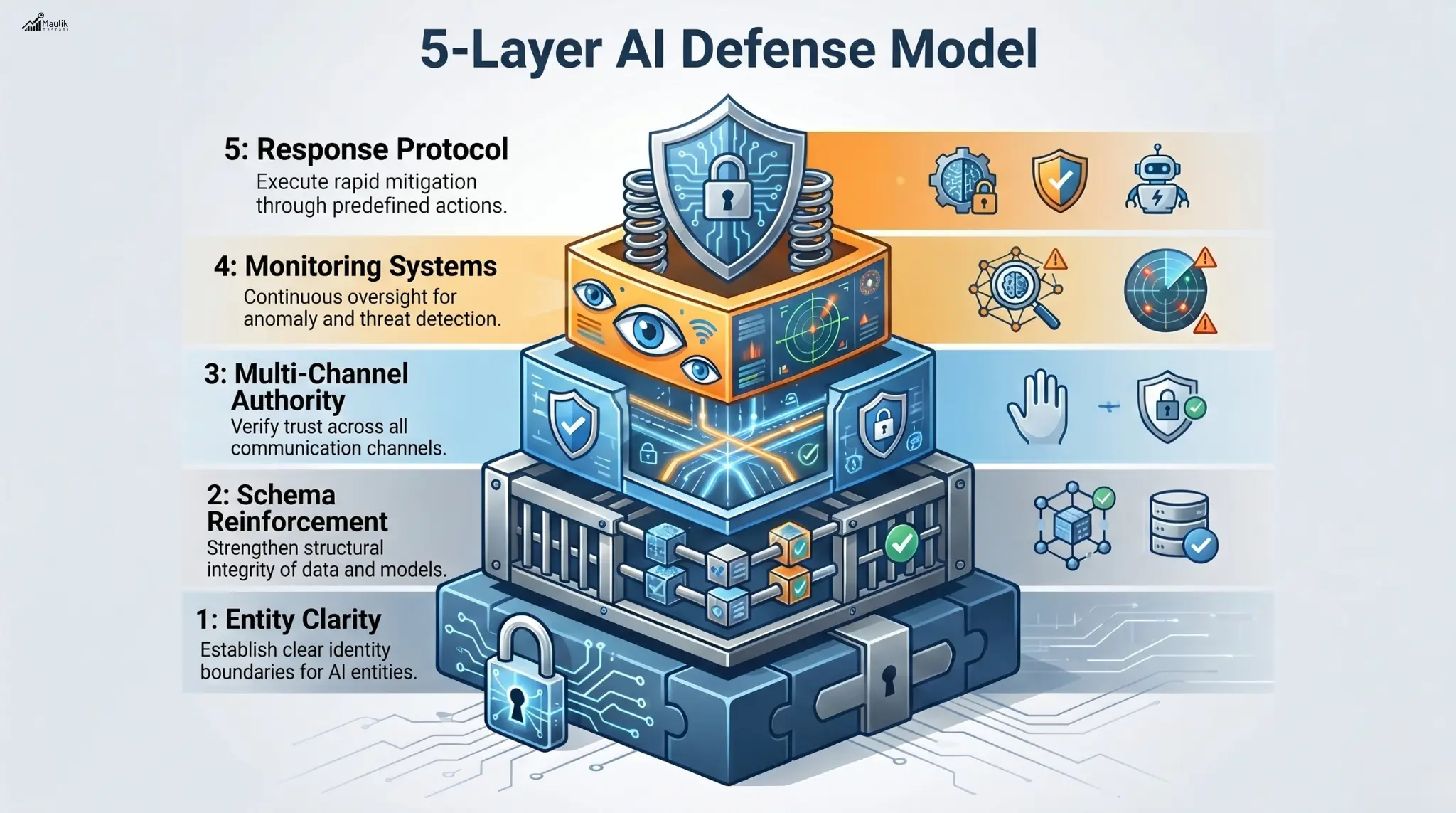
5-Layer AI Defense Model
Search is no longer limited to blue links and traditional rankings. Modern search experiences increasingly rely on AI-generated answers, summaries, and recommendations. Platforms powered by large language models analyze multiple signals across the web to understand brands, products, and services.
This shift has created a new challenge for organizations. If AI models collect fragmented or inconsistent information, the resulting answers may misrepresent a brand’s expertise, positioning, or offerings. For companies operating in competitive industries, even minor inaccuracies can influence trust, visibility, and decision-making.
This is where generative brand protection becomes essential. Instead of focusing only on website rankings, businesses must build a defense framework that ensures AI systems consistently interpret their brand narrative.
The 5-Layer AI Defense Model is designed as a strategic structure that strengthens brand reliability in AI search environments. Each layer contributes to the overall stability of brand representation across generative platforms such as ChatGPT, Gemini, and other AI-driven discovery tools.
Layer 1: Entity Clarity
The first layer of the defense model focuses on defining the brand as a clearly identifiable entity in the digital ecosystem. AI models interpret the web using knowledge graphs and entity relationships. If those signals are unclear, the system may struggle to connect information correctly.
When a company’s messaging differs across its website, professional networks, press mentions, and other platforms, generative engines may create mixed interpretations.
To maintain strong entity clarity, brands must ensure consistency in how they describe themselves. This includes standardized company descriptions, product explanations, and leadership information.
Key elements that help reinforce entity clarity include:
- Consistent brand descriptions across websites and profiles
- Clear explanation of services and expertise areas
- Unified naming conventions for products and offerings
- Verified author or leadership profiles
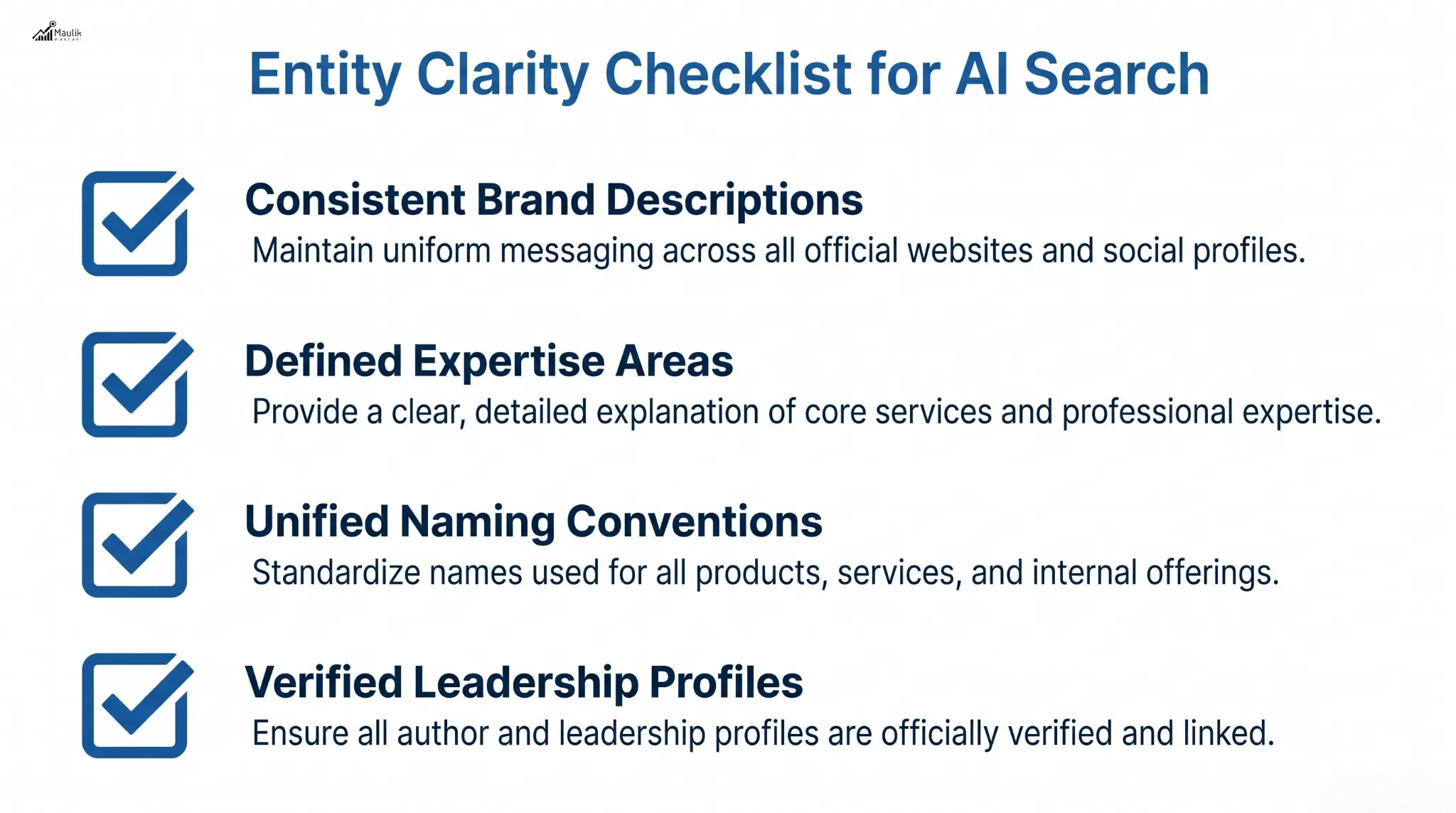
When these signals align, AI systems can confidently associate content with the correct organization. This layer acts as the starting point for AIO brand safety, ensuring that generative engines interpret the brand with clarity.
Companies that invest in entity consistency often notice more stable AI-generated responses and fewer instances of misinterpretation.
Layer 2: Schema Reinforcement
Once entity clarity is established, the next step is to reinforce that information through structured data.
Schema markup acts as a communication layer between human-readable content and machine interpretation. It helps search engines and AI systems understand relationships between different elements on a webpage.
Without schema reinforcement, generative models may rely solely on text interpretation, which can lead to ambiguity.
Structured data strengthens generative brand protection by providing explicit signals about:
- Organizational identity
- Author credibility
- Article structure
- Frequently asked questions
- Service or product relationships
For example, implementing FAQ schema helps AI systems identify concise answers within content, increasing the chances of those answers appearing in AI-generated responses.
Similarly, organization schema connects brand information across the web, helping search engines understand the relationship between websites, social profiles, and official resources.
Businesses adopting AEO or GEO strategies often treat schema as a foundational component rather than a simple technical enhancement. Over time, consistent schema implementation helps stabilize how generative search engines interpret brand data.
Layer 3: Multi-Channel Authority
AI models rarely rely on a single source when generating answers. Instead, they evaluate signals from multiple platforms before deciding which information is trustworthy. This makes multi-channel authority a crucial layer in the AI defense model.
Authority signals can come from various digital environments, including industry publications, social networks, podcasts, research articles and conference appearances. When multiple credible platforms consistently mention a brand, AI systems gain confidence in referencing that organization.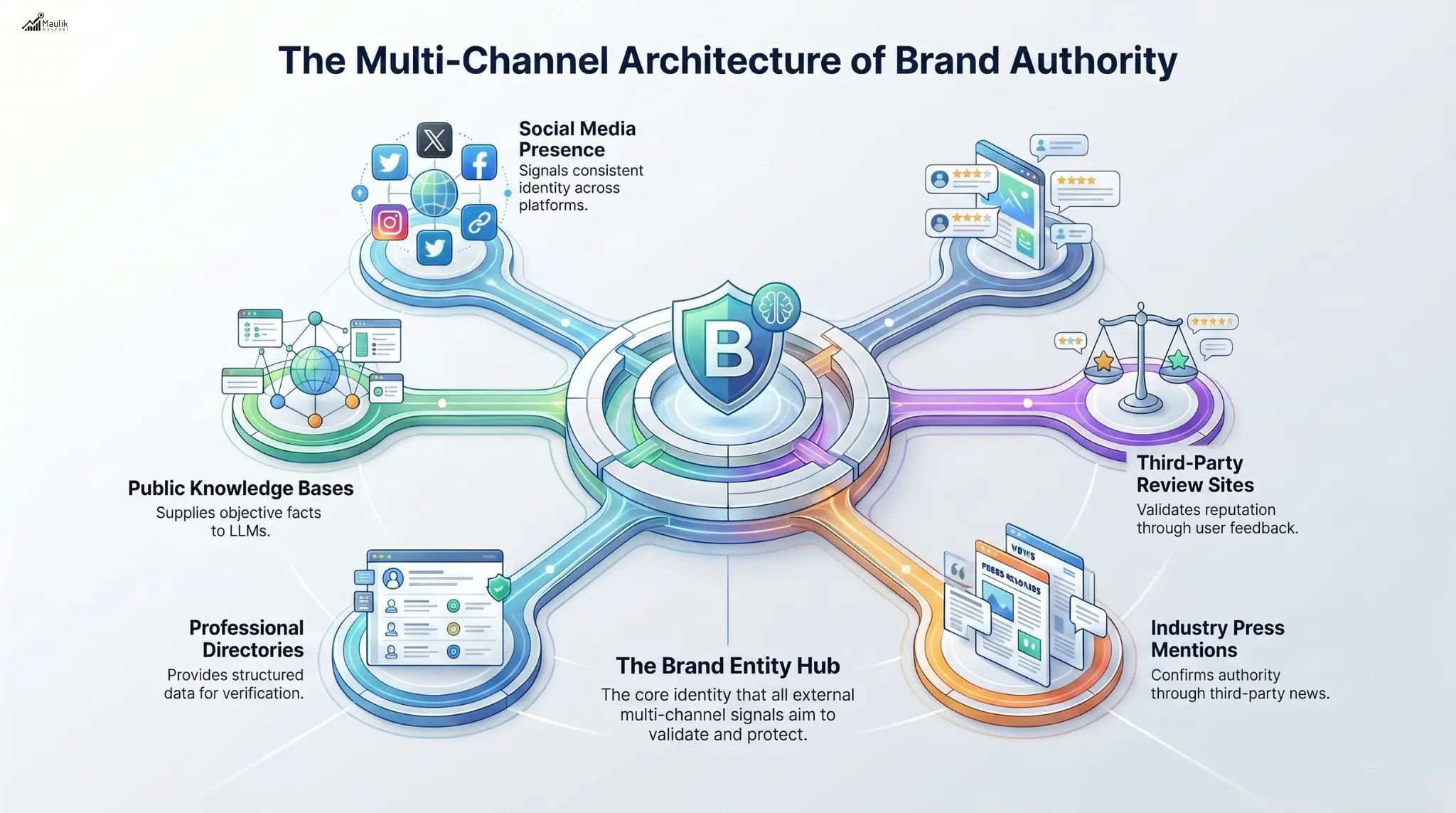
For example, consider how AI models interpret expertise. If a company publishes insights only on its own website, the authority signal may remain limited. However, if the same ideas appear across external publications and professional discussions, the brand becomes part of a broader knowledge network.
Effective authority-building activities may include:
- Publishing expert insights on reputable platforms
- Participating in industry discussions or webinars
- Sharing research-backed content
- Contributing to professional communities
These activities strengthen AI defense layers by creating an ecosystem of trusted references. The more consistently AI systems encounter the same narrative across platforms, the more likely they are to treat the brand as a credible authority.
In modern generative search environments, authority signals often determine which brands appear in AI summaries and recommendations.
Layer 4: Monitoring Systems
Even with strong authority signals, brand representation in AI search must be monitored continuously.
Generative platforms evolve rapidly, and the way they interpret information can change in response to new data or algorithm updates. Monitoring systems help organizations track how their brand appears in AI-generated responses.
Regular monitoring allows companies to evaluate several important indicators:
- Whether AI assistants describe the brand accurately
- Whether key services or expertise areas are correctly mentioned
- Whether competitors appear in contexts where the brand should be referenced
- Whether outdated or incorrect information appears in responses
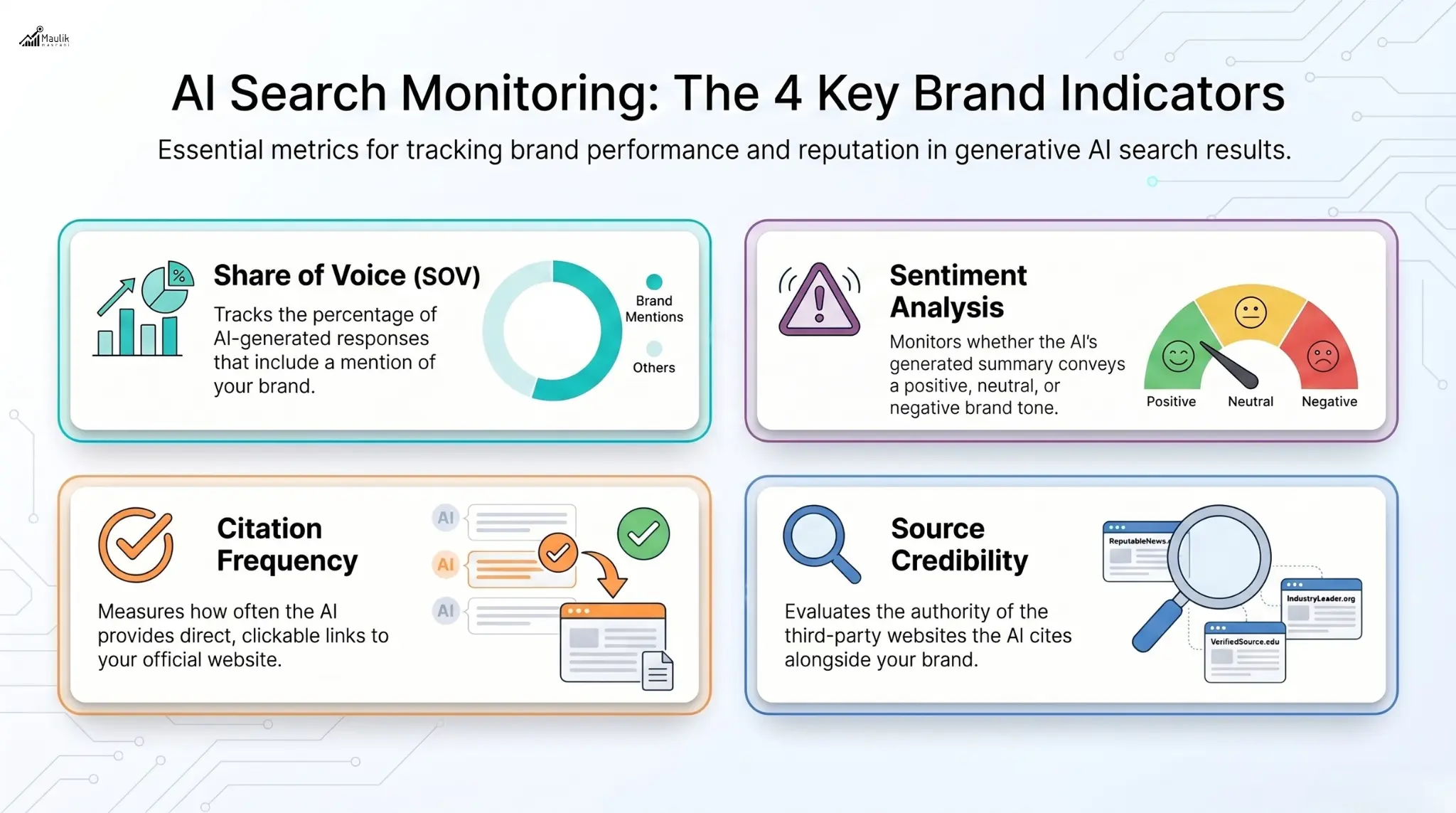
Many organizations now use AI visibility dashboards to track these signals across different generative platforms.
Monitoring plays a key role in AIO brand safety because it allows companies to detect potential reputation issues early. Without monitoring, inaccurate information may spread across AI systems without immediate detection.
By tracking generative responses regularly, brands can maintain control over how they are represented in AI search environments.
Layer 5: Response Protocol
The final layer of the AI defense model focuses on action.
Even well-established brands occasionally encounter incorrect AI-generated responses. When this happens, organizations must respond strategically rather than react impulsively. A structured response protocol helps guide corrective actions when misinformation appears.
A typical response process may include:
- Identifying the source of incorrect information
- Updating authoritative content on official platforms
- Reinforcing entity signals through new publications
- Publishing clarifications through trusted channels
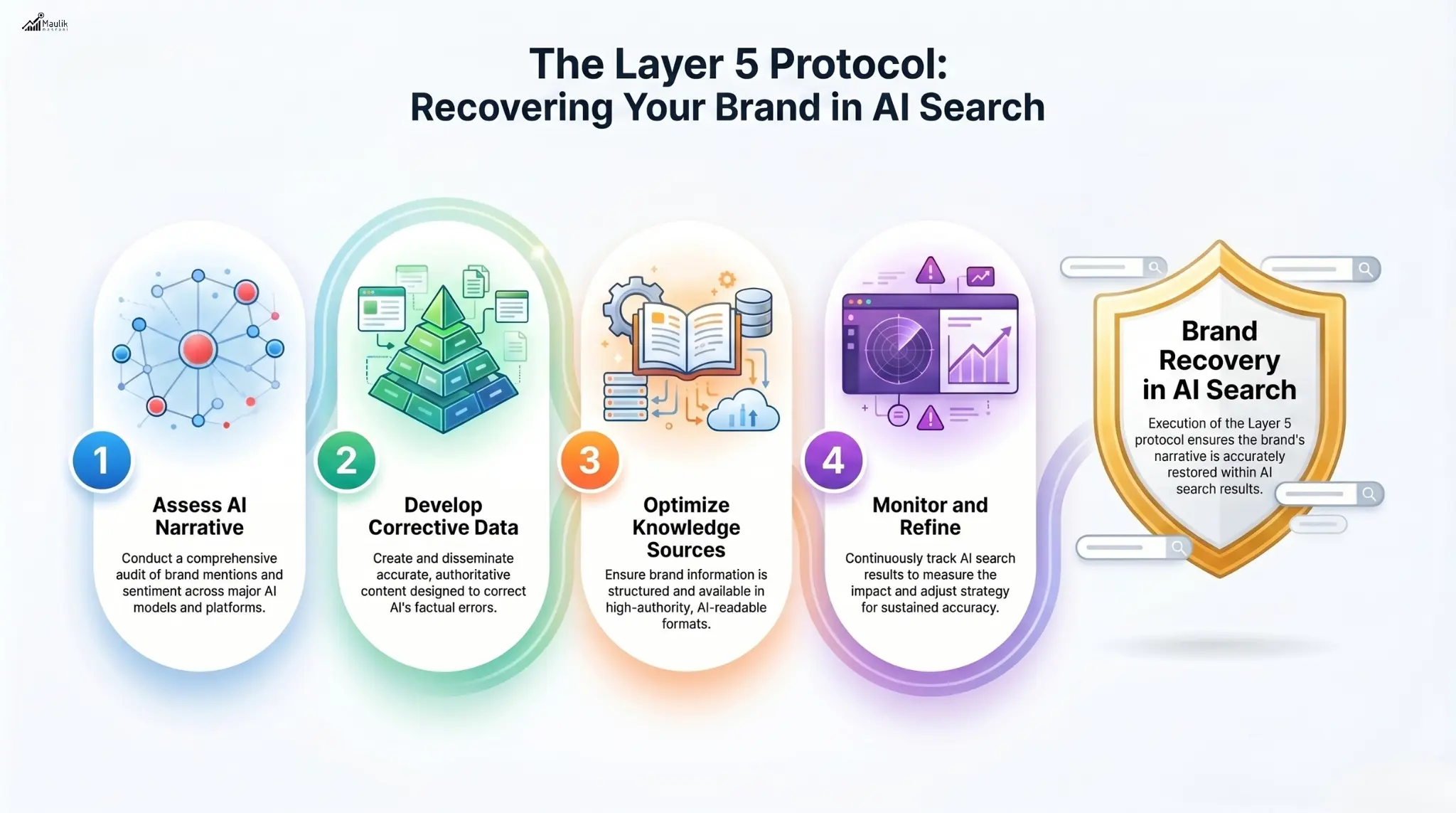
When these corrections are distributed across authoritative sources, AI models gradually update their understanding.
This process highlights why generative brand protection should be proactive rather than reactive. By continuously reinforcing accurate information, brands can influence how generative systems interpret their identity over time.
Organizations that implement strong response protocols are better equipped to maintain stability in AI-driven search environments.
FAQs
How to protect a brand in AI search?
Protecting a brand in AI search requires clear entity signals, structured data implementation, authority across multiple platforms, and ongoing monitoring of AI-generated responses. These elements help ensure that generative systems interpret brand information accurately.
Why is generative brand protection important?
Generative search engines summarize information from multiple sources. Without strong brand signals, AI systems may generate inaccurate descriptions or incomplete explanations, affecting credibility and visibility.
What are AI defense layers?
AI defense layers refer to strategic components used to protect brand identity in generative search environments. These layers include entity clarity, schema reinforcement, authority signals, monitoring frameworks, and structured response strategies.
How does AIO improve brand safety?
AIO strategies optimize content and data structures for AI-driven search systems. By strengthening entity signals and structured information, brands can reduce misinformation risks and improve visibility in generative search responses.
Conclusion
As AI-driven search becomes a primary discovery channel, protecting how a brand is interpreted by generative systems is no longer optional. Businesses must think beyond traditional SEO and adopt frameworks designed for AI understanding.
The 5-Layer AI Defense Model offers a structured approach to generative brand protection, ensuring that entity clarity, structured data, authority signals, monitoring systems, and response protocols work together to maintain consistent brand representation. When these layers operate in alignment, organizations can safeguard their reputation while strengthening long-term visibility in AIO, GEO, and emerging AI search ecosystems.