
An AIO documentation system transforms scattered marketing knowledge into structured, repeatable, AI-aligned workflows. By formalizing SOPs, logging AI visibility patterns and integrating documentation into internal wikis, enterprises prevent knowledge loss, accelerate scale and maintain consistent AI search performance. Documentation is no longer administrative overhead; it is strategic infrastructure.
AIO Documentation Systems
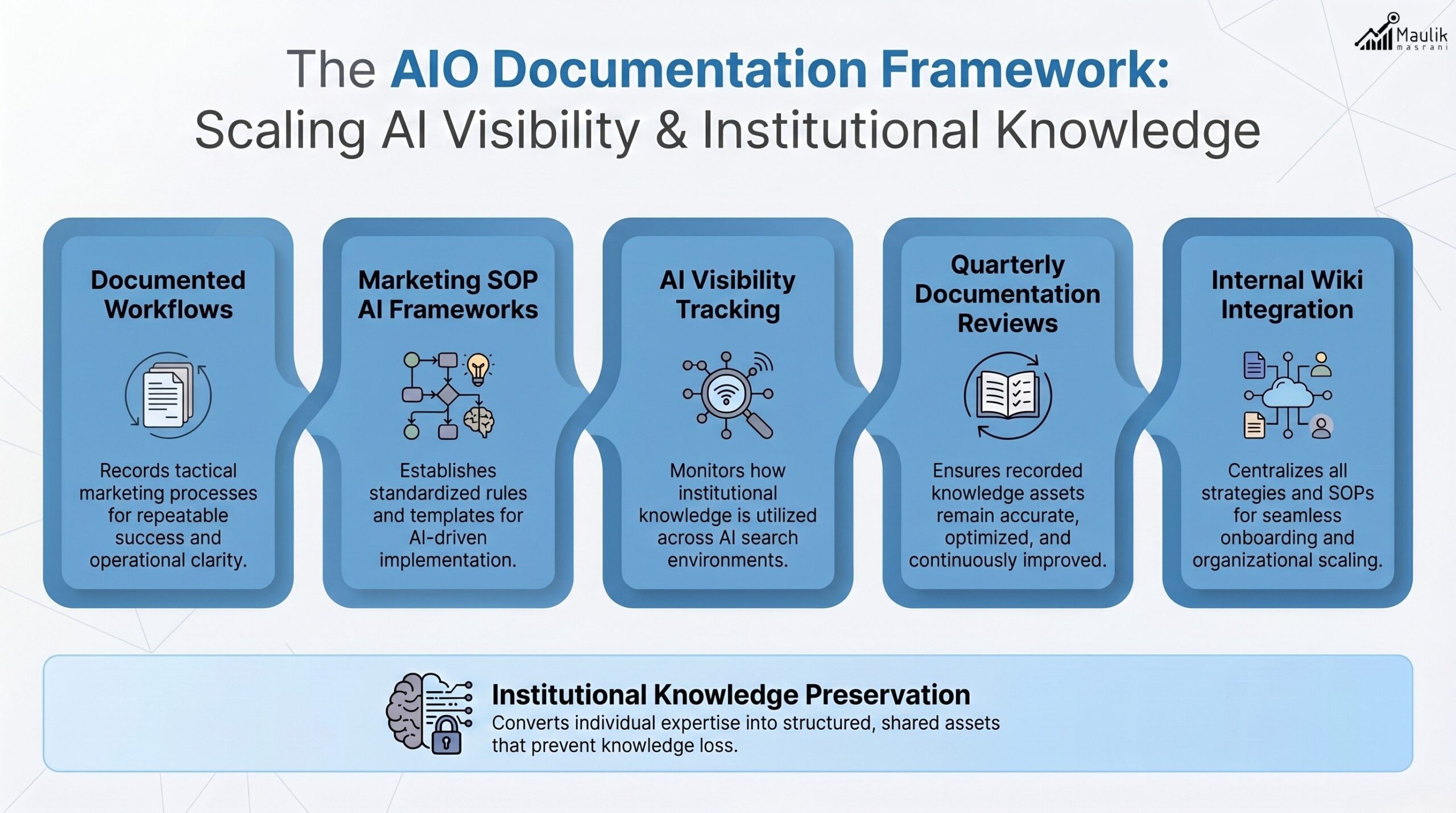
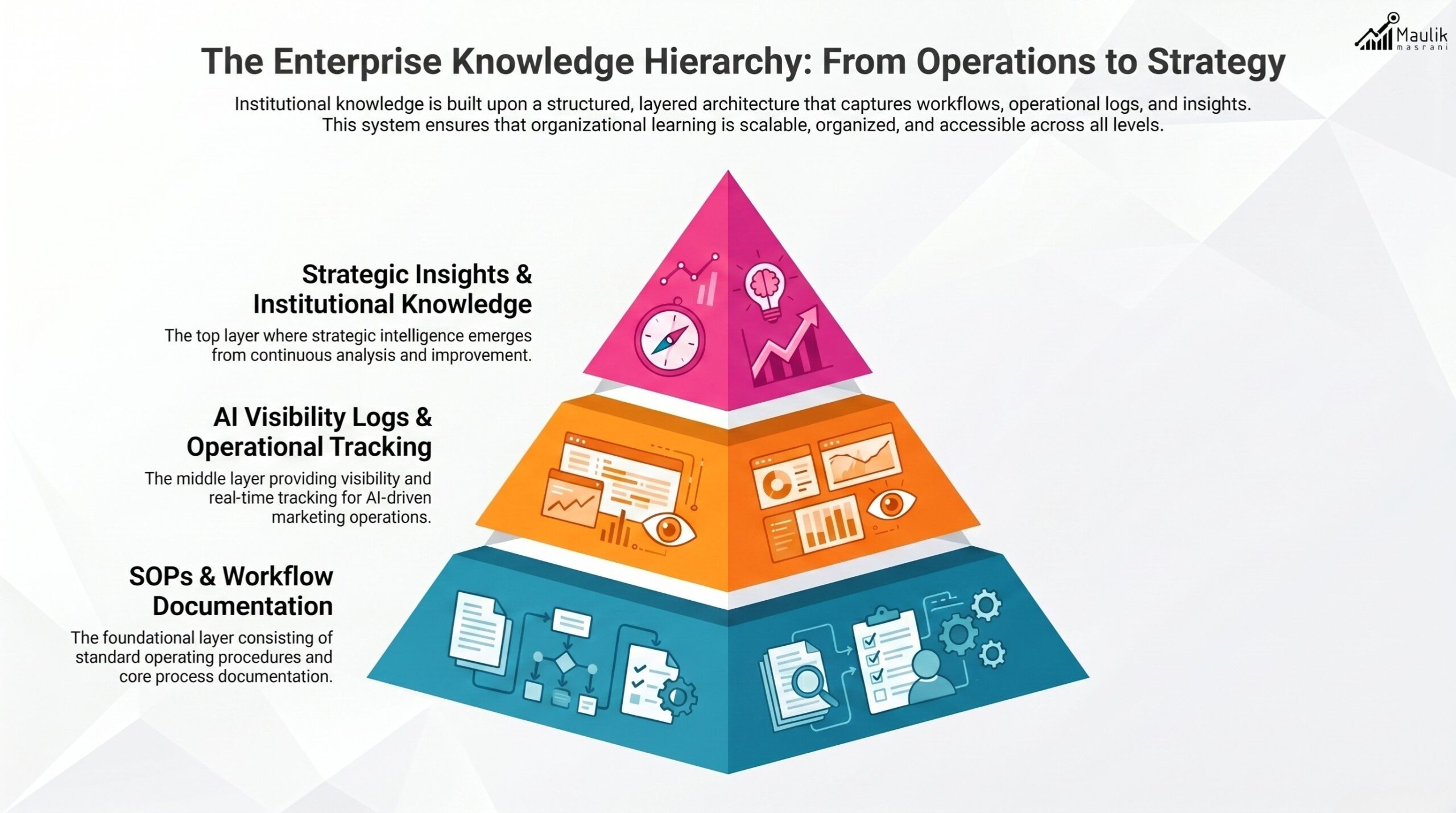
An AIO documentation system is the operational backbone of scalable AI visibility. It captures workflows, decisions, experiments and governance standards in a structured format that ensures repeatability and performance consistency across teams.
As AI-powered search systems evolve, companies no longer compete solely on content volume. They compete on institutional clarity. AI models reward consistency, structured entities and predictable authority signals. When teams rely on tribal knowledge instead of documented processes, AI visibility becomes unstable.
Enterprise growth demands documentation maturity.
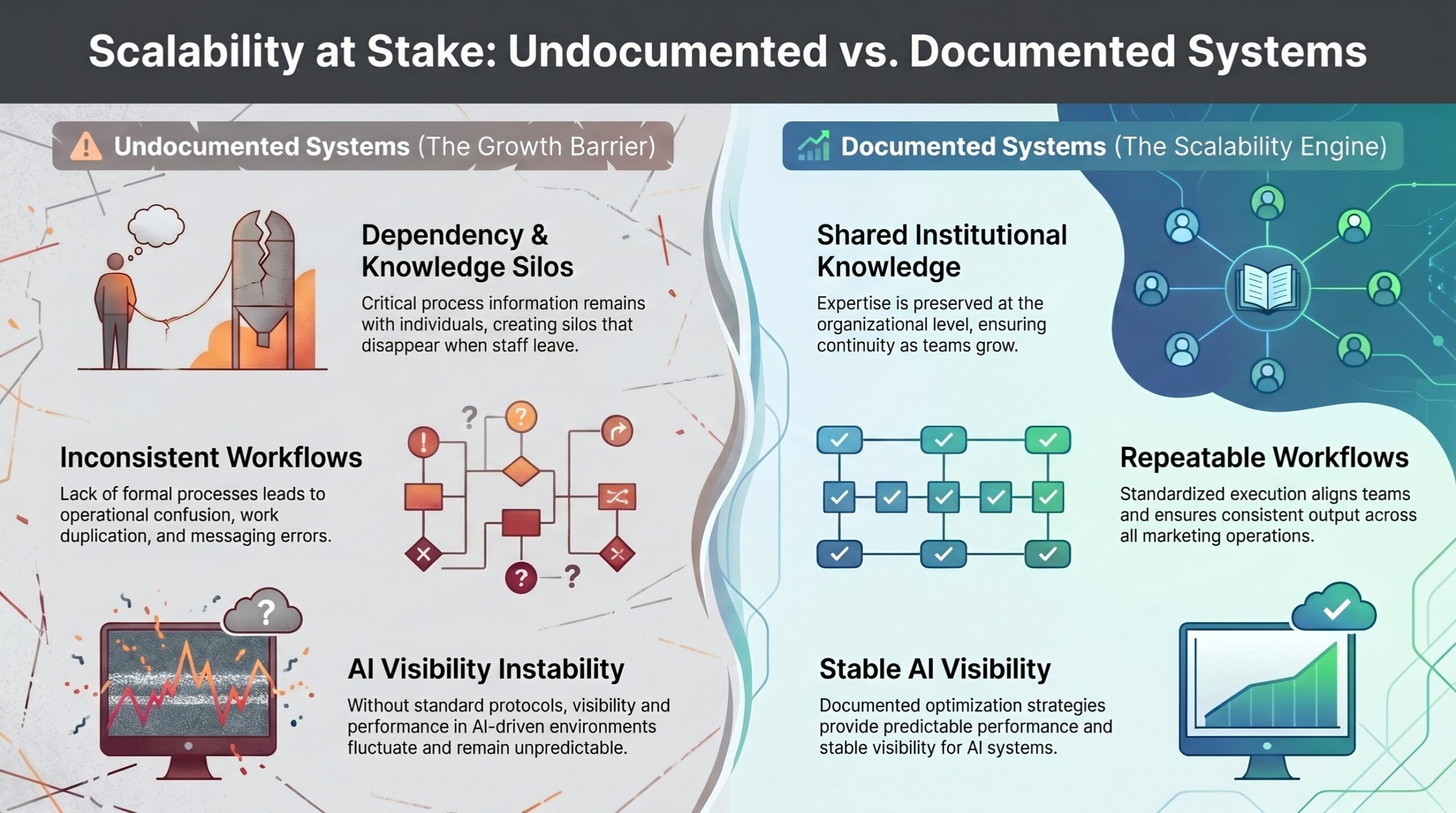
Without documentation:
- Knowledge resides in individuals.
- Processes shift informally.
- AI outcomes fluctuate.
- Institutional memory erodes.
With a structured system:
- Workflows are standardized.
- Experiments are logged.
- Iterations are tracked.
- Scale becomes predictable.
In practical terms, this means building a centralized AI documentation workflow that integrates content governance, testing frameworks, performance logs and SOP-driven execution.
Why Undocumented Systems Break Scale
Undocumented systems create invisible bottlenecks.
When teams scale from 3 marketers to 30, undocumented processes fracture. What worked in a small team fails under enterprise complexity.
Consider this pattern:
- A strategist builds a successful AI answer optimization workflow.
- Results improve.
- No formal documentation exists.
- The strategist leaves or changes roles.
- Performance declines within two quarters.
This is not hypothetical. Research across operational scaling frameworks consistently shows that organizations with documented SOPs grow faster and experience fewer performance regressions.
In AI visibility environments, inconsistency carries amplified risk. Large language models rely on:
- Entity coherence
- Structured reinforcement
- Cross-platform alignment
- Stable narrative patterns
When documentation is missing, messaging drifts. Governance weakens. AI output variance increases.
Scale breaks not because teams lack talent, but because institutional knowledge was never codified.
An AIO documentation system prevents this erosion.
SOPs for AIO Workflows
At the heart of any scalable system lies standardized operating procedures. For AI-driven visibility, SOPs must be explicit, measurable and version-controlled.
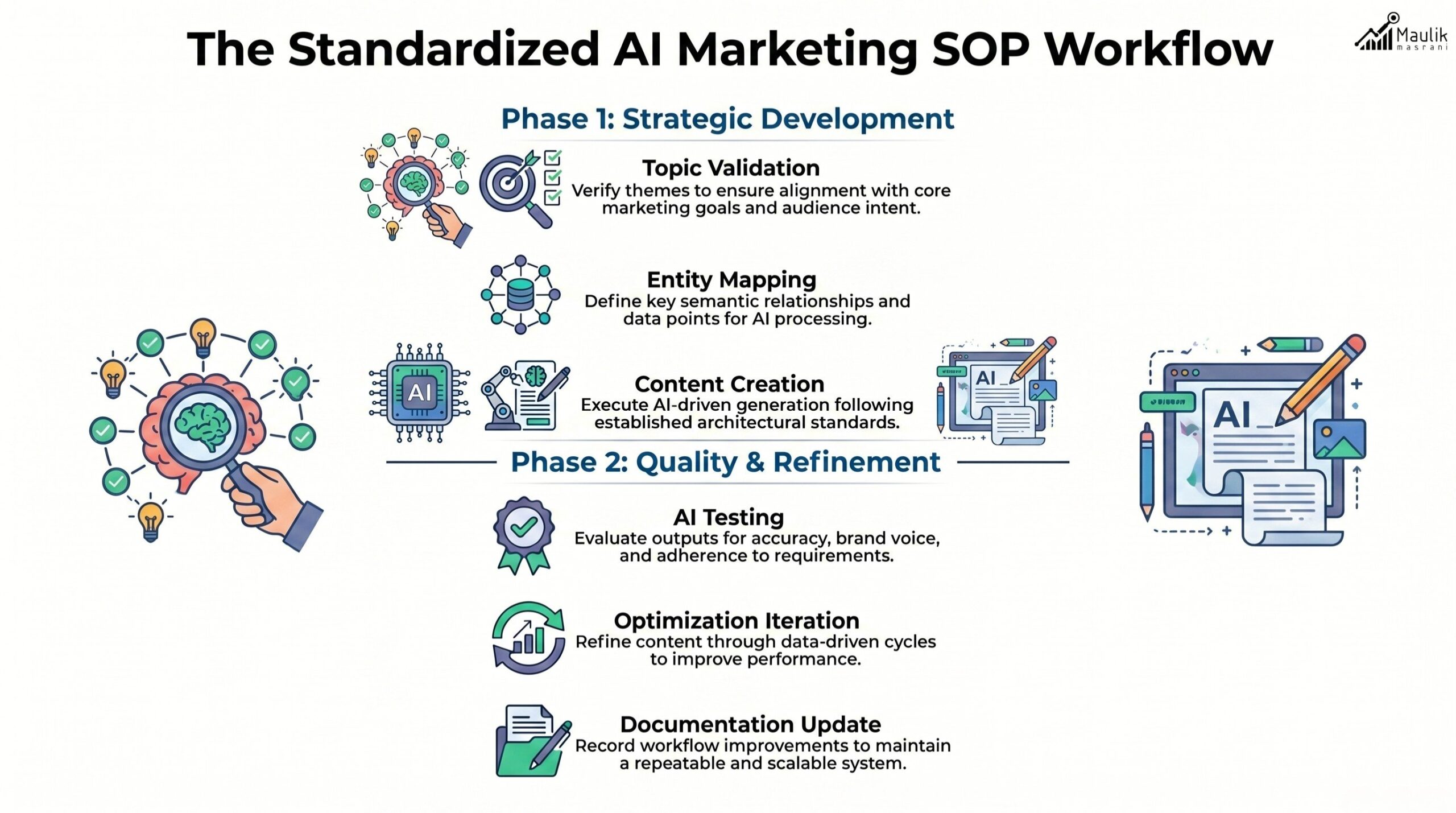
A robust marketing SOP AI framework should include:
1. Content Production SOP
- Topic validation method
- Entity mapping process
- FAQ embedding checklist
- Schema implementation guidelines
- Internal linking standards
2. Optimization Workflow SOP
- AI answer testing protocol
- Cross-model validation method
- Citation tracking process
- Visibility scoring methodology
3. Publishing Governance SOP
- Definition-first writing rule
- Semantic reinforcement checklist
- Structured heading hierarchy policy
- Formatting compliance checklist
4. Iteration & Review SOP
- Performance benchmark comparison
- Quarterly entity audit
- Narrative drift detection
- Competitive response framework
Each SOP must be documented within the AI documentation workflow so that:
- New hires can onboard faster.
- Teams operate with clarity.
- Leadership can audit compliance.
- AI outputs remain consistent.
This shifts marketing from art-driven to system-driven without sacrificing creativity.
Quarterly Review Documentation
Documentation is not static.
Quarterly reviews transform documentation from a static archive into a living performance engine.
Every quarter, enterprises should formally document:
- AI visibility trends
- Citation frequency changes
- Model-specific answer variations
- Competitive movement
- Content performance delta
Without quarterly documentation, organizations rely on memory and fragmented analytics. With structured review logs, leadership can identify patterns over time.
For example:
If AI answer inclusion drops from 32% to 19% in one quarter, the documentation should record:
- What changed in the content structure?
- Did schema deployment shift?
- Was messaging updated?
- Did a competitor reinforce entities more aggressively?
This review process becomes strategic insurance.
Quarterly review documentation ensures that performance volatility becomes diagnosable, not mysterious.
AI Visibility Log Tracking
Visibility without logging is anecdotal.
An enterprise-grade AIO documentation system must include AI visibility logs that track:
- Prompt queries tested
- Model responses
- Inclusion frequency
- Citation mentions
- Answer positioning
These logs function like a performance ledger.
Instead of guessing whether brand presence improved, teams can quantify exposure across AI interfaces.
A practical visibility log should capture:
Metric | Example |
Query Tested | “AI governance framework enterprise” |
Model | GPT-4.x |
Inclusion Status | Mentioned in paragraph 2 |
Citation Link | Yes |
Date Logged | Q1 2026 |
Over time, patterns emerge:
- Which queries drive consistent inclusion?
- Which models favor certain content formats?
- Which updates trigger visibility spikes?
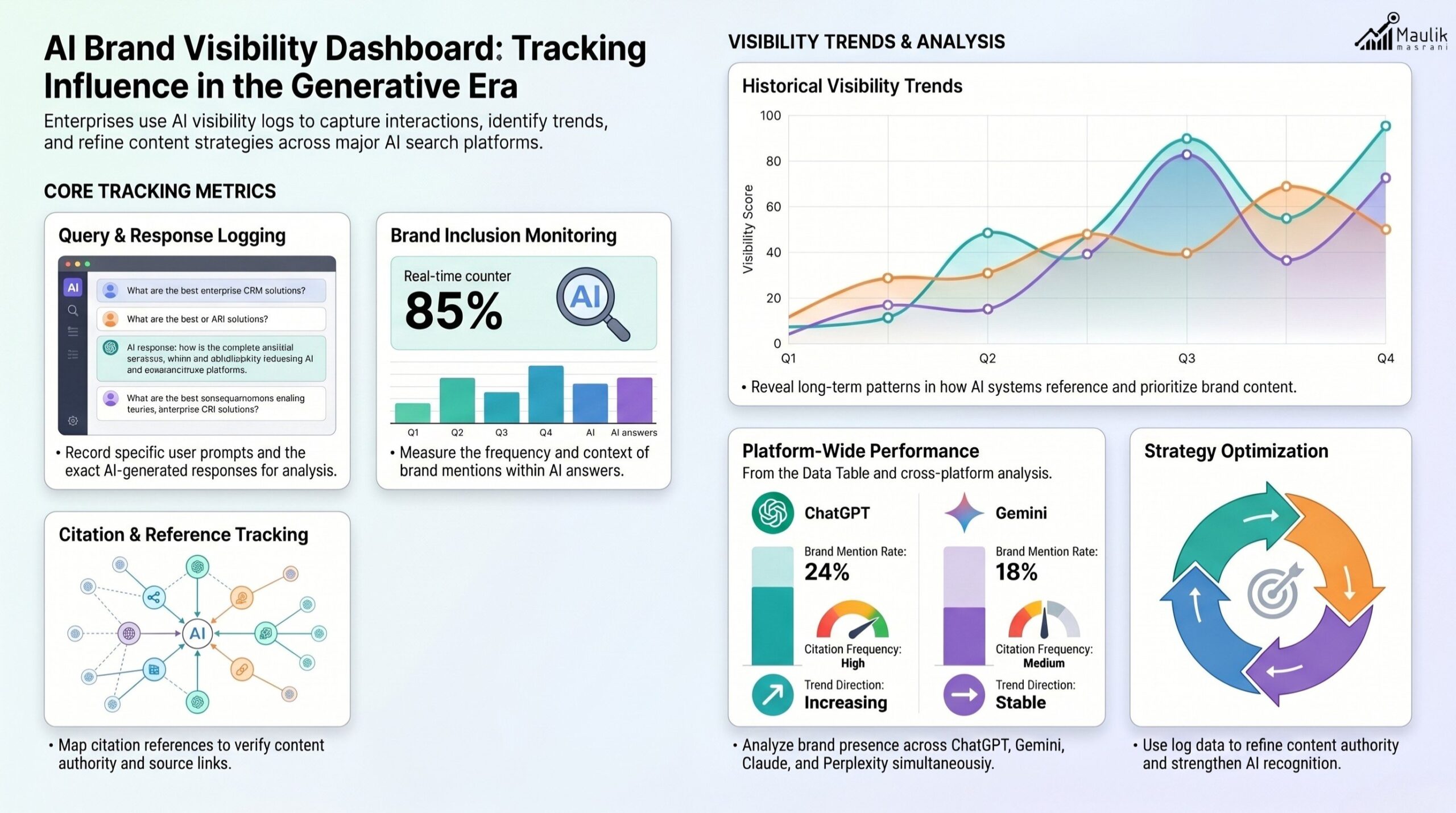
Log tracking elevates AI optimization from reactive guessing to structured experimentation.
This transforms documentation into strategic intelligence.
Internal Wiki Integration
Documentation fails when it sits in disconnected files.
To scale effectively, the AI documentation workflow must integrate into an internal wiki or knowledge repository.
Internal wiki integration ensures:
- Searchable SOP access
- Version history tracking
- Role-based permissions
- Collaborative updates
- Institutional continuity
When SOPs, logs, review reports and governance standards live inside a centralized wiki, the organization gains:
- Knowledge durability
- Faster onboarding
- Lower operational risk
- Cross-department clarity
Integration prevents duplication and fragmentation.
For enterprise environments, wiki systems serve as the single source of truth. AI visibility strategy becomes an operational asset, not an informal playbook.
FAQs
Why document AIO processes?
Documenting AIO processes ensures consistency, scalability and institutional stability. Without documentation, AI visibility becomes dependent on individuals rather than systems. Structured documentation enables repeatability, faster onboarding and long-term performance retention.
What should an AIO documentation system include?
It should include SOPs for content creation, optimization workflows, governance standards, quarterly review logs and AI visibility tracking. It must be version-controlled and integrated into an internal knowledge repository.
How often should AIO documentation be reviewed?
Quarterly reviews are recommended. These reviews should log performance trends, competitive shifts, entity stability and visibility changes to maintain strategic alignment.
Can documentation improve AI visibility?
Yes. Consistent documentation improves narrative stability, structured entity reinforcement and workflow standardization, all factors that enhance AI recognition and inclusion in generative search environments.
Conclusion
Building a structured AIO documentation system is not simply an operational improvement; it is a strategic requirement for organizations competing in AI-driven search environments. When workflows, SOPs, review cycles, and visibility logs are properly documented, teams gain clarity, repeatability, and long-term stability. Instead of relying on individual expertise or scattered notes, companies develop a shared operational memory that supports consistent execution across marketing, SEO, and AI optimization initiatives.
As enterprises scale, institutional knowledge becomes one of their most valuable assets. Documented AI documentation workflows ensure that insights, experiments, and successful strategies are preserved and continuously improved. By integrating documentation with internal knowledge systems and maintaining regular reviews, organizations create a sustainable framework that supports growth, strengthens AI visibility, and protects strategic knowledge for future teams.