
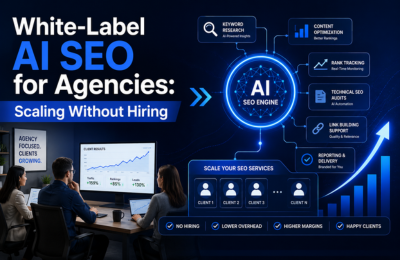
Many agencies want to offer AI search optimization, but face a major barrier: hiring specialists in entity-based SEO, AI retrievability and generative search optimization is expensive and slow. White-label AI SEO provides a scalable alternative. Agencies can partner with specialists who deliver the technical execution while the agency maintains client relationships and brand ownership. Through agency GEO outsourcing, agencies can expand services, introduce AI visibility solutions and grow revenue without increasing internal hiring costs.
White-Label AI SEO
Search behavior has evolved faster in the last two years than in the previous decade. Instead of browsing search results, users now ask questions directly to AI systems like ChatGPT, Gemini, Claude and Perplexity.
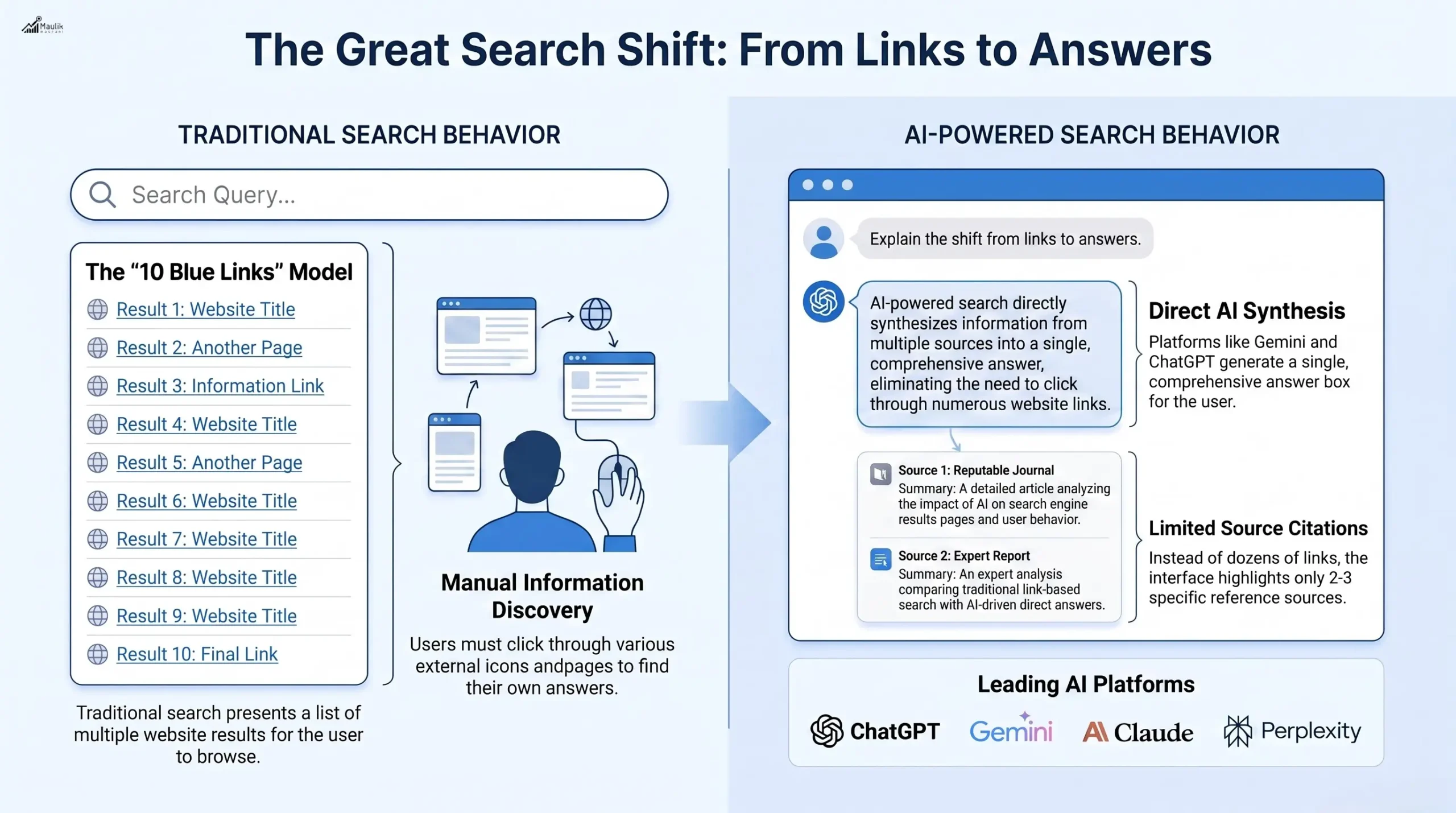
These platforms don’t present a list of ten websites. They generate a direct answer and reference only a few sources.
That change creates a new visibility challenge. A brand may rank well on traditional search engines but still be absent from AI-generated responses. For agencies managing SEO campaigns, this means the definition of success is expanding.
Clients now ask questions like:
- Why does our competitor appear in AI answers?
- Why is our brand not cited in ChatGPT responses?
- How do we optimize for AI search?
Delivering these services requires expertise in entity-based SEO, structured information architecture and AI retrievability frameworks.
Building a full in-house team capable of managing these elements can be difficult for most agencies.
This is where white-label AI SEO becomes an important operational strategy.
A white-label model allows agencies to offer AI search optimization services under their own brand while a specialized partner handles the technical execution. The agency retains ownership of the client relationship, while the partner delivers the expertise required to optimize visibility within AI systems.
This approach allows agencies to expand capabilities quickly without hiring new teams.
Why Agencies Struggle With AI Search
Traditional SEO teams are highly experienced in optimizing for search rankings. However, AI search operates differently from classic search engines.
The gap between these two systems is one of the main reasons agencies struggle to adapt.
AI Answers Rely on Structured Information
Search engines primarily rank pages based on signals such as backlinks, page relevance and technical performance.
AI systems focus on understanding information.
They evaluate:
- entity relationships
- fact consistency across sources
- contextual relevance within knowledge graphs
If content is not structured clearly enough for AI systems to interpret it, it may never appear in generated answers.
Content Must Be Designed For AI Retrieval
Traditional SEO content often focuses on keyword placement and ranking potential.
AI search requires a different structure.
Information must be easy to extract, summarize and verify. Many successful AI-visible pages follow patterns such as:
- definition-first explanations
- structured sections
- fact-based statements
- consistent terminology
These formatting principles form the foundation of AIO (Artificial Intelligence Optimization) strategies.
Without them, even high-ranking pages may remain invisible to AI systems.
AI Visibility Requires New Measurement Systems
Ranking reports alone cannot measure AI visibility.
Agencies increasingly track signals such as:
- AI citation frequency
- entity recognition across AI platforms
- appearance in generated answers
Monitoring these signals requires new tools, testing frameworks and structured reporting models.
For agencies operating with traditional SEO workflows, building this infrastructure internally can take significant time.
Hiring AI Search Specialists is Difficult.
The demand for AI optimization expertise is growing quickly.
Agencies attempting to build in-house teams often face challenges such as:
- limited talent availability
- high hiring costs
- long onboarding timelines
For many agencies, the faster option is agency GEO outsourcing, where specialized partners deliver the technical work while the agency manages the client strategy.
Partnership Models
White-label collaborations can take several forms depending on how an agency wants to structure its services.
Each model offers a different balance between control and operational efficiency.
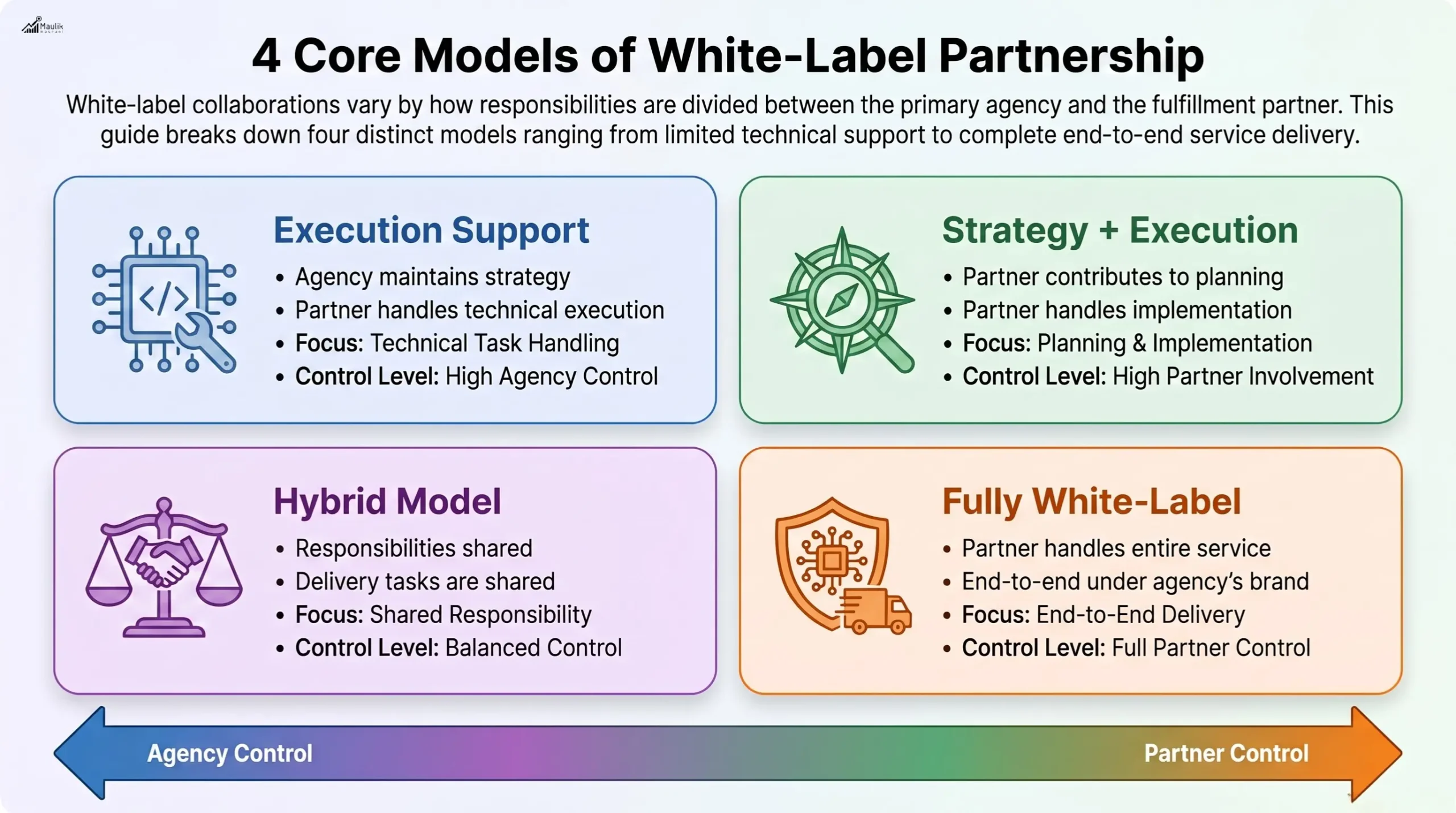
Execution Support Partnerships
Some agencies prefer to maintain strategic control while outsourcing technical execution.
In this model, the agency handles:
- client strategy
- campaign planning
- reporting and communication
The white-label partner focuses on tasks such as:
- AI content structuring
- schema implementation
- entity mapping
- AI retrievability testing
This approach works well for agencies that already manage SEO strategy but lack AI search optimization expertise.
Strategy And Execution Partnerships
In some cases, agencies collaborate more deeply with their white-label partners.
Here, the partner contributes to both planning and implementation.
This collaboration may include:
- AI search audits
- AI visibility gap analysis
- Content restructuring for AI answers
- AIO strategy frameworks
Because the technical partner is involved in planning, agencies often see faster results and fewer implementation challenges.
Fully White-Label Service Delivery
Agencies entering AI search services for the first time often adopt a full white-label delivery model.
In this structure, the partner handles:
- AI SEO strategy
- implementation
- performance monitoring
- reporting dashboards
The agency presents these services to clients under its own brand identity.
This allows agencies to launch new offerings quickly without investing months in building internal expertise.
Hybrid Collaboration Model
Some agencies prefer a hybrid structure where responsibilities are shared.
For example:
The agency may manage:
- client relationships
- industry insights
- content planning
The partner manages:
- AI search optimization
- entity engineering
- AI retrievability frameworks
This combination allows agencies to maintain strategic leadership while outsourcing technical complexity.
Revenue Framework
Beyond operational efficiency, white-label AI SEO creates meaningful revenue opportunities.
Agencies can expand their services without increasing fixed costs.
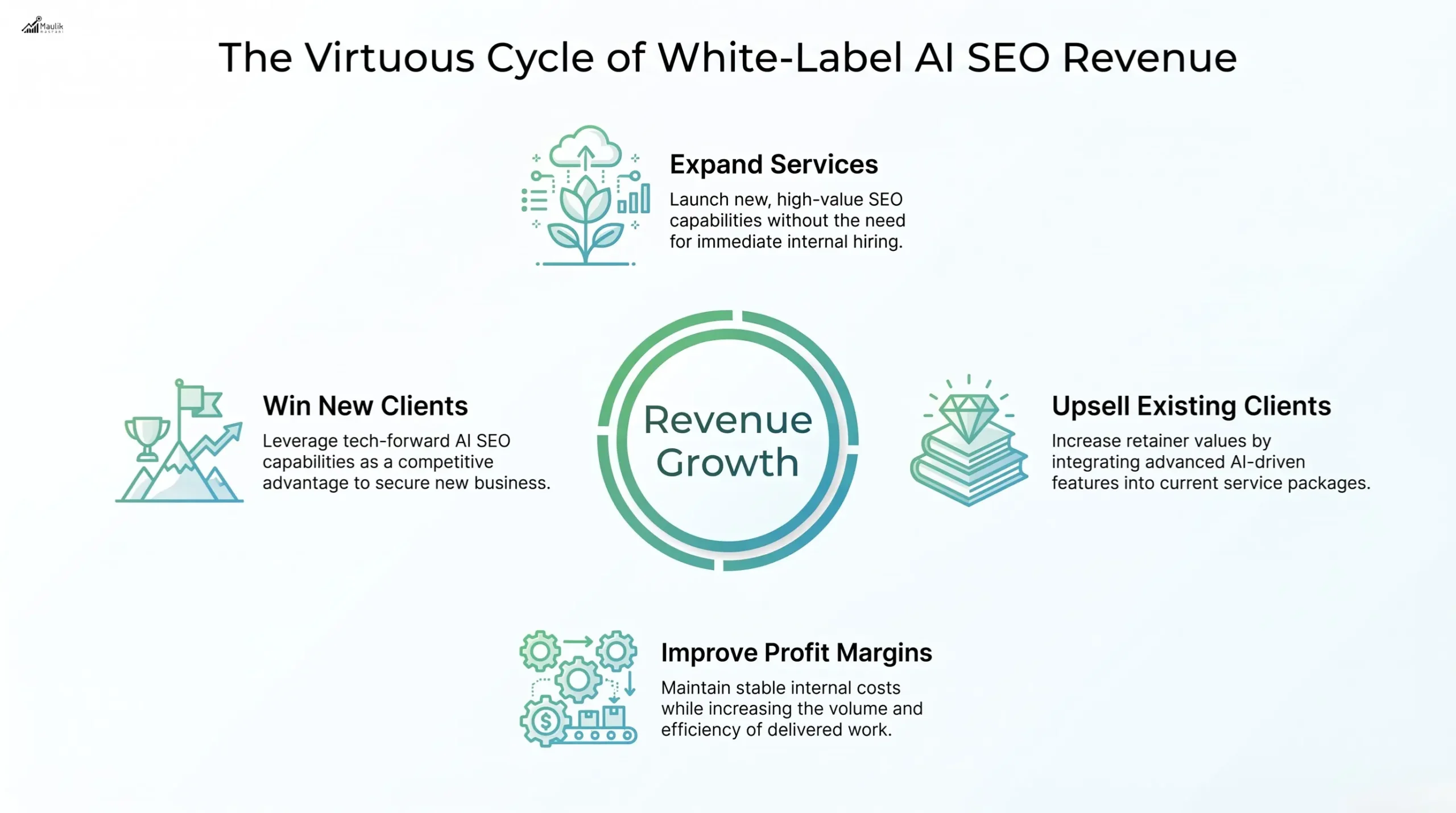
Expanding Service Offerings
Many agencies integrate AI search optimization into their existing SEO retainers.
Common packages include:
- AI visibility optimization
- generative search readiness
- GEO implementation
Clients increasingly view these services as essential for maintaining visibility in modern search environments.
Upselling Existing SEO Clients
Agencies managing traditional SEO campaigns already have established relationships with their clients.
Introducing AI optimization services often becomes a natural extension of those partnerships.
Typical conversations include:
- Protecting brand visibility in AI answers
- Ensuring content is AI-retrievable
- Improving knowledge graph signals
Because trust already exists, agencies often see strong adoption rates.
Improving Profit Margins
Hiring AI specialists internally can significantly increase operational costs.
With agency GEO outsourcing, agencies can deliver advanced services while maintaining cost flexibility.
The result is a revenue model where:
- Client retainers increase
- Internal hiring costs remain stable
This helps agencies scale sustainably.
Winning New Clients
AI search optimization is still an emerging category.
Agencies offering white-label AI SEO early gain a strong positioning advantage.
Prospective clients searching for AI visibility solutions are more likely to work with agencies that already provide these services.
Early adoption often leads to stronger market differentiation.
FAQs
Can Agencies Outsource GEO?
Yes. Many agencies outsource Generative Engine Optimization through white-label AI SEO partnerships. This allows them to offer AI search optimization services without hiring specialized internal teams.
What Services are Included in White-Label AI SEO?
Services typically include AI visibility audits, entity optimization, structured content development, schema strategies, and AI retrievability testing.
How does Agency GEO Outsourcing Benefit Agencies?
It enables agencies to deliver AI search optimization services while focusing on strategy, client management, and business growth.
Is White-Label AI SEO suitable for Smaller Agencies?
Yes. Smaller agencies often benefit the most because they can offer advanced AI optimization services without expanding their internal teams.
How do Agencies Price AI search services?
Agencies typically package AI SEO services as an upgrade to traditional SEO retainers or as standalone AI visibility optimization programs.
Conclusion
AI search is transforming how brands are discovered online. Agencies that rely solely on traditional SEO services may struggle to keep up with this shift. White-label AI SEO provides a practical solution, allowing agencies to deliver advanced optimization services without building large internal teams. Through agency GEO outsourcing, agencies can expand capabilities, strengthen client relationships, and scale their offerings while maintaining operational flexibility.