
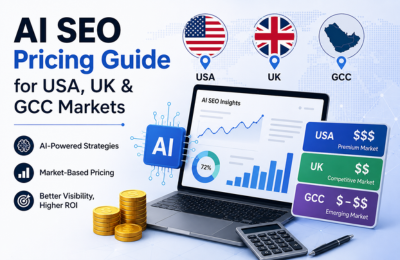
AI SEO pricing varies significantly across the USA, UK, and GCC due to differences in market maturity, talent costs, and service depth. Businesses can expect higher costs in the USA for advanced AIO strategies, while the GCC often reflects emerging adoption with flexible pricing models. The key is not just cost but the scope of AI visibility, structured optimization, and long-term ROI. Cheap SEO often fails because it ignores how AI-driven search engines retrieve and rank content today.
What Determines Pricing?
Understanding AI SEO pricing requires looking beyond traditional keyword-based SEO. Modern pricing reflects how well your brand is structured for AI retrieval, not just rankings.
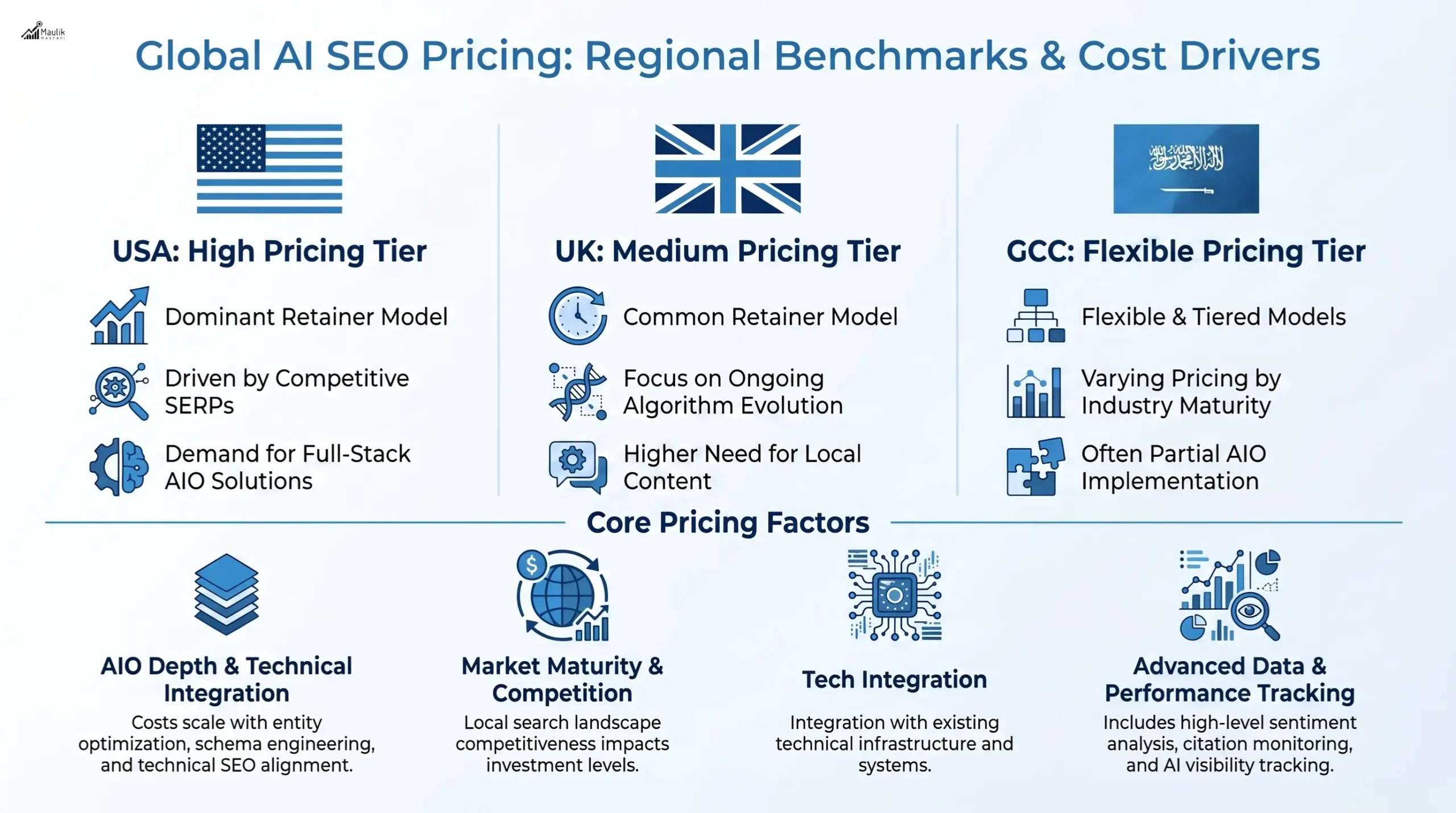
1. Scope of AI optimization (AIO depth)
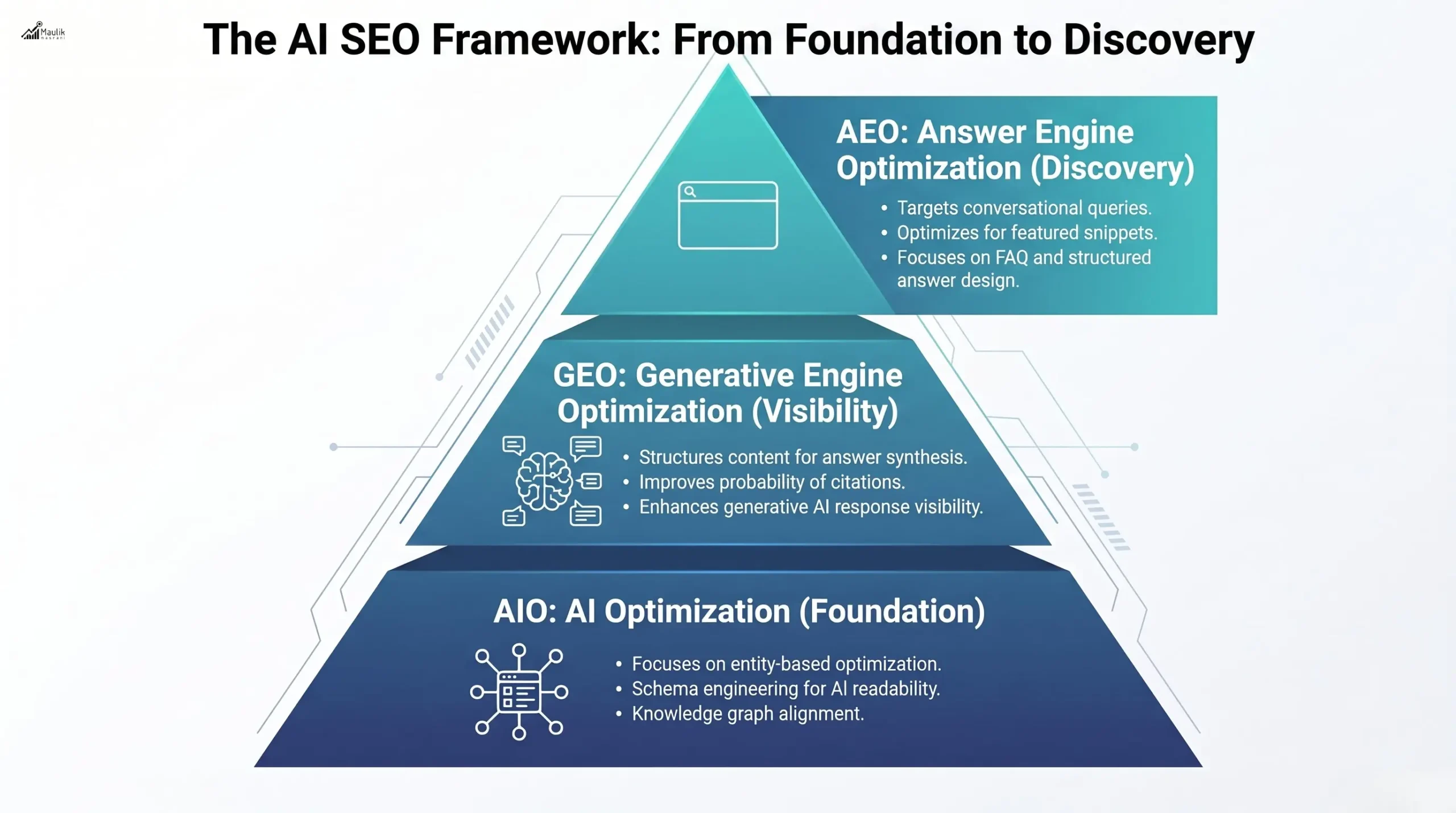
AI-first SEO involves multiple layers:
- Entity-based optimization
- Schema engineering for AI readability
- Content structuring for LLM retrieval
- Knowledge graph alignment
In the USA, businesses often invest heavily in full-stack AIO strategies, which increases pricing. In contrast, GCC markets may still adopt partial implementations, impacting overall cost.
2. Market maturity and competition
The SEO cost in the USA is typically higher because:
- Highly competitive SERPs
- Advanced adoption of AI search
- Demand for enterprise-level solutions
UK markets fall slightly below the US in cost but still maintain strong competition. GCC pricing varies widely depending on industry and digital maturity.
3. Content + technical integration
AI SEO is not just content; it’s a system:
- Structured content frameworks
- Internal knowledge base alignment
- API-driven schema deployment
This integration layer significantly impacts pricing, especially for brands scaling across multiple markets.
4. Data and performance tracking
Modern SEO includes:
- AI visibility tracking
- Citation frequency monitoring
- AI sentiment analysis
These advanced metrics add cost but directly improve ROI predictability.
Retainer vs Project
Choosing the right pricing model depends on your growth stage and business goals.
Retainer model (most common for AIO)
Retainers are ideal for continuous optimization:
- Monthly pricing typically ranges from mid-tier to enterprise budgets
- Includes ongoing optimization, monitoring, and content refinement
- Best for brands targeting long-term AI visibility
In markets like the USA and UK, retainers are the dominant model due to ongoing algorithm and AI evolution.
Project-based pricing
Projects are suited for:
- Initial audits
- One-time implementation (e.g., schema setup)
- Migration to AI-ready infrastructure
While project pricing may appear cost-effective, it lacks ongoing optimization, which is critical in AI-driven search environments.
Key insight
AI SEO is not static. Without continuous updates, your visibility in AI-generated answers can decline quickly.
GEO & AEO Add-Ons
Modern SEO pricing increasingly includes specialized services like GEO and AEO, which directly impact how your brand appears in AI-generated results.
GEO (Generative Engine Optimization)
GEO pricing typically includes:
- Structuring content for generative AI models
- Optimizing for answer synthesis
- Improving citation probability in AI responses
This is especially valuable in competitive markets like the USA, where AI-generated answers dominate search experiences.
AEO (Answer Engine Optimization)
AEO focuses on:
- Featured snippet optimization
- Conversational query targeting
- FAQ and structured answer design
These add-ons are often billed separately because they require specialized frameworks and testing.
Why Cheap SEO Fails In The AI Era
Low-cost SEO may seem attractive, but it often fails to deliver measurable results, especially in AI-driven ecosystems.
1. Lack of structured optimization
Cheap providers often focus only on:
- Basic keyword insertion
- Low-quality backlinks
They ignore:
- Entity mapping
- Schema layers
- AI readability
2. No alignment with AI retrieval systems
Modern search engines don’t just rank; they generate answers.
If your content isn’t structured for:
- Contextual relevance
- Semantic depth
- AI retrievability
It simply won’t appear in AI responses.
3. Short-term tactics vs long-term authority
Cheap SEO focuses on quick wins.
AI SEO focuses on:
- Authority building
- Consistent data signals
- Cross-platform visibility
4. Hidden costs over time
Businesses often end up paying more to fix:
- Poor content architecture
- Duplicate or inconsistent data
- Lack of schema implementation
Key takeaway
In the AI era, SEO is not an expense; it’s infrastructure. Underinvestment leads to invisibility.
FAQs
How much does AI SEO cost?
AI SEO pricing varies based on scope, market, and service depth. Businesses in the USA typically pay higher due to advanced competition and full-stack AIO implementation, while the UK and GCC markets may offer more flexible pricing depending on maturity.
Why does pricing vary by country?
Pricing differences are driven by market competition, talent availability, and the adoption of AI-driven search strategies. For example, SEO costs in the USA are higher due to enterprise demand and advanced implementation requirements.
What is included in AI SEO pricing?
AI SEO pricing usually includes content structuring, technical optimization, schema implementation, and AI visibility tracking. Advanced packages may also include GEO pricing components and AEO optimization.
Is AI SEO worth the investment?
Yes, because AI-driven search is reshaping how users discover information. Businesses investing in AI SEO gain better visibility in generated answers, improving long-term traffic and authority.
Conclusion
AI SEO pricing is not just about budget; it reflects how future-ready your digital presence is. Whether you’re targeting the USA, UK, or GCC markets, the real differentiator lies in how deeply your strategy aligns with AI-driven search systems. Businesses that invest strategically in AIO, GEO, and AEO frameworks position themselves for sustained visibility, while those chasing low-cost solutions risk falling behind in an increasingly AI-dominated search landscape. The right investment today directly translates into long-term discoverability and competitive advantage.