
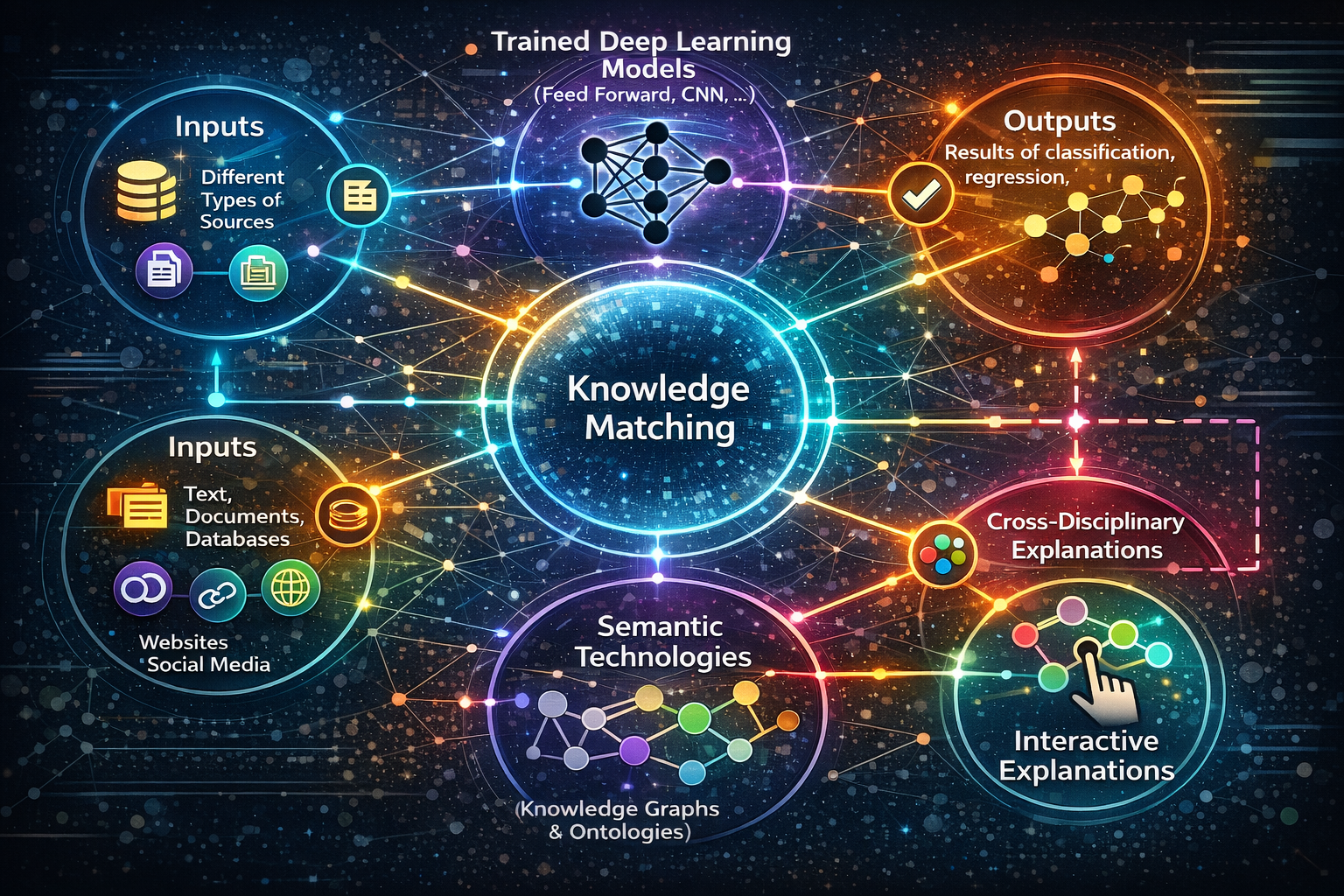
AI-powered search has fundamentally changed how visibility, authority, and demand are created. Traditional SEO alone cannot support executive growth goals. This AIO playbook outlines how leaders should think about AIO vs GEO, design an AI-first marketing system, structure teams for AI visibility, and execute a 12-month roadmap with executive-grade KPIs built for sustained relevance from 2026 to 2030.
AIO/GEO Executive Playbook
Search is no longer a list of links; it is a system of answers, summaries, and recommendations generated by AI models. For executives, this shift is not a tactical SEO issue; it is a strategic visibility and revenue risk.
This playbook reframes marketing through an AI-native lens, helping leadership teams understand how AI systems perceive brands, why AIO and GEO require different decisions, and how to operationalize AI-first marketing without chasing short-term hacks.
For executives, the shift to AI-powered search is not incremental; it is architectural. What is changing is not how marketing is executed, but how market authority is computed.
In traditional search, visibility was earned through pages competing for rankings. In AI-driven environments, visibility is granted through confidence. Large language models and generative engines do not “discover” brands; they infer them. This distinction is foundational to understanding why AIO and GEO must be treated as an executive system, not a marketing tactic.
At the leadership level, the AIO/GEO playbook reframes marketing from a performance channel into a brand intelligence layer that feeds AI systems the signals they need to recognize, trust, and recommend your organization.
From Ranking Systems to Inference Systems
Executives must internalize one core shift:
AI search systems operate on inference, not retrieval alone.
Instead of asking “Which page should rank?”, AI systems ask:
- What is this company known for?
- Is this brand consistently validated across sources?
- Can I safely summarize or recommend it?
This is why isolated SEO wins no longer translate into durable visibility. AI engines synthesize:
- On-site expertise
- Off-site authority
- Consistency of language, claims, and positioning
- Historical reinforcement across multiple platforms
The executive implication is clear: visibility is cumulative and reputational, not transactional.
Why AIO Is an Executive Responsibility
AIO (AI Optimization) governs how your organization exists inside AI models. That existence is shaped by decisions that only leadership can truly own:
- Market positioning
- Category definition
- Authority claims
- Risk tolerance around AI-generated representation
When AIO is left purely to execution teams, brands fragment. Different narratives emerge across blogs, PR, social, and sales enablement. AI systems interpret this fragmentation as uncertainty, and uncertainty suppresses visibility.
The executive role in AIO is to:
- Define the single source of truth for brand meaning
- Approve which expertise areas are reinforced
- Ensure claims are defensible, consistent, and repeatable
AIO succeeds when leadership treats brand meaning as infrastructure, not messaging.
Where GEO Fits in the Executive Model
GEO (Generative Engine Optimization) answers a different executive question:
“When AI speaks, are we included?”
While AIO builds understanding, GEO governs participation. It ensures that when AI systems generate answers, comparisons, or recommendations, your brand is:
- Eligible for inclusion
- Structured for citation
- Positioned for relevance
From an executive lens, GEO is not about chasing exposure. It is about strategic placement inside decision-making moments, the summaries, explanations, and synthesized insights buyers increasingly trust.
Importantly, GEO fails without AIO. AI engines will not reliably surface brands they do not fully understand. This is why the playbook treats GEO as an amplifier, not a foundation.
Executive Decision Logic: Control vs Scale
The AIO/GEO playbook helps leadership answer two fundamental questions:
1.) Do we control how AI understands us?
If not, AIO investment is non-negotiable.
2.) Are we present when AI influences decisions?
If not, GEO execution becomes a growth lever.
High-performing organizations sequence these efforts deliberately:
- AIO first to establish clarity, authority, and trust
- GEO second to expand reach across generative surfaces
This sequencing mirrors how executives already think about systems: stability before scale.
The Strategic Payoff for Leadership
When executed correctly, the AIO/GEO Executive Playbook delivers outcomes that matter at the board level:
- Reduced dependency on volatile traffic channels
- Stronger brand defensibility in AI-mediated markets
- Higher-quality inbound demand influenced by AI discovery
- Future-proofed visibility as AI systems evolve
Most importantly, it restores predictability to marketing in an environment where traditional levers are losing control.
For executives planning beyond 2026, AIO and GEO are not experiments. They are the operating system for modern market presence.

What CEOs Need to Understand About AI Search
AI-driven search systems do not “rank pages” the way classic search engines do. They interpret entities, trust signals, context, and cross-platform consistency.
Key executive-level realities:
- AI systems prioritize brand-level understanding, not isolated URLs
- Visibility is driven by entity recognition, citation frequency, and semantic clarity
- AI answers are shaped by training data, retrieval layers, and trust weighting, not just keywords
Reports from McKinsey highlight that AI adoption increasingly favors companies that embed AI into core operating models, not peripheral marketing tactics. Similarly, research from Gartner shows that AI-generated answers are becoming a primary discovery layer for enterprise buyers.
For CEOs, the implication is clear: If AI cannot confidently describe your brand, it cannot recommend it.
AI search is not an upgrade to traditional search; it is a replacement of the decision-making layer. For CEOs, the critical mistake is viewing AI-powered discovery as a marketing channel problem. It is not. It is a market perception problem.
Search engines once acted as directories. AI systems now act as advisors. When executives understand this shift, AIO and GEO stop being experimental initiatives and become enterprise risk management and growth levers.

AI Search Does Not “Find” Brands; It Forms Opinions
AI systems do not browse the web the way humans do. They construct internal representations of companies based on patterns, repetition, and corroboration across vast data environments.
From a CEO’s perspective, this means:
- AI does not ask “Who ranks first?”
- AI asks, “Who appears consistently credible?”
This credibility is inferred from:
- Repeated brand mentions across authoritative sources
- Stable positioning and terminology over time
- Alignment between owned content and third-party validation
If those signals conflict, AI systems hedge. When AI hedges, brands disappear from answers.
The uncomfortable truth for leadership is this:
Silence, inconsistency, or ambiguity is treated as risk by AI.
Visibility Has Shifted from Pages to Probability
Traditional search rewarded optimization effort. AI search rewards the probability of correctness.
Every time an AI model generates an answer, it makes probabilistic judgments such as:
- How confident am I that this brand is relevant?
- How safe is it to mention or recommend this company?
- Do multiple sources reinforce the same conclusion?
This explains why:
- Smaller brands with coherent authority outperform larger but fragmented ones
- AI answers feel “conservative” and brand-biased
- Trust compounds slowly, but once earned, it scales rapidly
For CEOs, this reframes visibility as a long-term compounding asset, not a campaign outcome.
AI Search Compresses the Buyer Journey
One of the most consequential changes for executive teams is journey compression.
Where buyers once:
- Searched
- Compared
- Evaluated
- Then contacted
AI now:
- Summarizes options
- Filters perceived leaders
- Recommends shortlists
Often, before a buyer ever visits a website.
This means:
- If your brand is excluded from AI answers, it may never enter consideration
- Website traffic becomes a lagging indicator, not a leading one
- Brand authority upstream matters more than conversion optimization downstream
Research from Gartner consistently shows that enterprise buyers increasingly trust synthesized insights during early decision stages. Meanwhile, McKinsey emphasizes that AI advantage accrues to organizations that shape perception early, not those that react late.
AI Search Penalizes Organizational Fragmentation
From an AI system’s perspective, your organization is not structured by departments. It is interpreted as a single semantic entity.
When different teams communicate:
- Different value propositions
- Different expertise claims
- Different market narratives
AI does not “average” them. It downgrades confidence.
This is why CEOs must recognize AI search as:
- A governance challenge
- A brand alignment challenge
- A leadership coherence challenge
Without executive alignment, marketing, PR, sales, and content teams unintentionally undermine each other in AI interpretation layers.
Control Has Shifted from Algorithms to Architecture
Previously, search performance could be influenced by tactical adjustments. In AI search, outcomes are shaped by architecture:
- How content is structured
- How meaning is reinforced
- How trust signals accumulate
This is why CEOs must stop asking:
“Which keywords are we ranking for?”
And start asking:
“How clearly does AI understand who we are and why we matter?”
The answer to that question determines:
- AI visibility
- AI citation likelihood
- AI-driven demand creation
The Executive Mandate
The most important takeaway for CEOs is this:
AI search rewards leadership clarity.
Organizations that articulate a stable, credible, and reinforced identity become “safe answers” for AI systems. Those that do not become invisible do not because they lack quality, but because they lack coherence.
Understanding AI search is no longer optional executive literacy. It is foundational to market relevance from 2026 onward.
AIO vs GEO Decision Framework
Executives often ask whether they should invest in AIO, GEO, or both. The answer depends on how visibility is created inside AI systems.
AIO (AI Optimization) focuses on:
- Entity clarity and semantic authority
- Consistent brand narratives across owned and earned channels
- Being understood correctly by LLMs
GEO (Generative Engine Optimization) focuses on:
- Appearing inside AI-generated answers and summaries
- Citation eligibility and retrievability
- Answer-level relevance in generative interfaces

Decision framework for leadership:
- If your brand is misrepresented or invisible in AI answers → prioritize executive AIO
- If your brand is understood but not cited or surfaced → scale GEO strategy
- If growth depends on AI-led discovery → AIO becomes foundational, GEO becomes accelerative
This is not an either/or decision. AIO establishes meaning; GEO amplifies reach.
AI-First Marketing Blueprint
AI-first marketing is not “SEO plus AI tools.” It is a structural redesign of how authority is built.
A high-performing AI-first marketing system includes:
1. Entity-Centric Content Architecture
AI systems do not understand websites as collections of pages. They understand entities, companies, products, expertise areas, and relationships between them.
An entity-centric architecture ensures that:
- Your brand is clearly defined as a primary entity
- Your offerings are recognized as sub-entities
- Your expertise areas are repeatedly reinforced with consistent language
From an executive standpoint, this requires:
- A clear definition of what the organization is and is not known for
- Elimination of overlapping or contradictory positioning across content
- Intentional repetition of core expertise using stable terminology
This approach allows AI models to confidently associate your brand with specific problem domains, increasing the likelihood of inclusion in AI-generated explanations and summaries.
Key insight for leadership:
If AI cannot clearly categorize your brand, it will not confidently recommend it.
2. Cross-Platform Authority Signals
AI systems do not trust single sources. They validate authority through signal convergence across multiple environments.
Cross-platform authority signals are created when:
- The same expertise claims appear on your website, thought leadership, and external publications
- Brand mentions are consistent in tone, scope, and factual accuracy
- Third-party validation reinforces, not contradicts, owned narratives
For executives, this means:
- Marketing, PR, and leadership communications must align on one narrative
- Inconsistent messaging across platforms is treated as uncertainty
- Authority must be reinforced repeatedly, not announced once
This is why AI visibility correlates strongly with brands that show long-term consistency, not short-term amplification.

Executive takeaway:
AI trusts patterns, not statements.
3. Answer-Ready Content Design
AI systems surface brands by summarizing, paraphrasing, and synthesizing content. If content is difficult to interpret, it is unlikely to be reused.
Answer-ready content is:
- Structured logically with a clear hierarchy
- Written with direct, unambiguous explanations
- Designed to be quoted, summarized, or reformulated
From a leadership lens, this requires teams to:
- Prioritize clarity over cleverness
- Replace vague marketing language with precise explanations
- Design content for comprehension, not just engagement
This does not reduce depth. It increases usability for AI systems and human readers alike.
Critical executive insight:
If AI struggles to summarize your content, it will exclude it.
4. Trust and Accuracy Reinforcement
AI systems are risk-averse. When facts, claims, or positioning vary across sources, AI reduces confidence.
Trust and accuracy reinforcement ensures that:
- Metrics, claims, and terminology remain consistent across platforms
- Updates are reflected universally, not selectively
- Expertise is demonstrated through precision, not exaggeration
Executives play a central role here by:
- Approving defensible claims only
- Ensuring governance over how data and outcomes are presented
- Treating accuracy as a visibility asset, not a compliance burden
Over time, this creates a trust halo that increases the probability of AI inclusion, citation, and recommendation.
Leadership principle:
AI visibility compounds when trust signals remain stable.
This blueprint aligns with internal AIO, AEO & GEO frameworks already discussed across your ecosystem, ensuring continuity between classic SEO assets and AI-native discovery layers.
Team Structure for AI Visibility
AI visibility fails when ownership is fragmented. Executives should treat AIO as a cross-functional mandate, not a marketing side project.
Recommended executive-aligned structure:
- AI Visibility Lead (Strategy & Governance)
Owns AIO playbook execution and AI visibility KPIs.
- Content & Semantic Authority Team
Responsible for entity clarity, topical depth, and narrative consistency.

- Technical & Data Team
Manages schema, structured data, crawlability, and AI-readiness signals.
- PR & Brand Distribution
Ensures third-party validation, citations, and external authority.
This structure prevents siloed execution and ensures AI systems encounter one coherent version of the brand everywhere.
12-Month AIO Roadmap
Executives need predictable execution, not experimental chaos. A phased roadmap reduces risk while compounding authority.
Quarter 1 – Foundation
- Brand entity audit across AI platforms
- Core AIO playbook definition
- High-risk visibility gaps identified
The first quarter establishes AI clarity.
At this stage, the organization answers a single question:
How does AI currently understand us?
Executive focus areas include:
- Auditing how the brand appears across AI platforms and AI-generated answers
- Identifying inconsistencies in brand meaning, expertise claims, and positioning
- Defining the core entities that the organization wants AI to associate with its name
This phase is diagnostic, not promotional. The objective is to eliminate ambiguity before amplification.
Leadership outcome:
A shared executive understanding of current AI perception and priority visibility gaps.
Quarter 2 – Structural Alignment
- AI-first content restructuring
- Internal linking and entity reinforcement
- Initial GEO readiness for answer inclusion
The second quarter translates insight into structural coherence.
Here, the organization ensures that AI encounters the same version of the brand everywhere.
Executive-aligned actions include:
- Aligning content structure around clearly defined brand and expertise entities
- Reinforcing internal linking and semantic relationships between key topics
- Preparing content and platforms for reliable AI interpretation and summarization
This phase is about removing internal contradictions that suppress AI confidence.
Leadership outcome:
A unified brand narrative that AI systems can interpret without hesitation.

Quarter 3 – Authority Expansion
- Multi-platform content distribution
- External citations and brand mentions
- AI answer presence benchmarking
With clarity and structure in place, the third quarter focuses on authority reinforcement.
At this stage, AI systems begin encountering repeated, corroborated signals.
Executive focus includes:
- Expanding presence across multiple credible platforms using consistent positioning
- Strengthening third-party validation and brand mentions
- Monitoring how often and where the brand appears in AI-generated contexts
This is where AIO starts compounding rather than accumulating.
Leadership outcome:
Growing AI recognition supported by repeated, convergent authority signals.
Quarter 4 – Optimization & Scaling
- Visibility pattern analysis across LLMs
- KPI refinement and forecasting
- Executive reporting and ROI modeling
This roadmap aligns with long-term AI search evolution rather than short-term ranking volatility.
The final quarter converts momentum into predictable visibility.
Executives shift from building to governing.
Key priorities include:
- Analyzing visibility patterns across different AI systems
- Identifying which signals most influence AI inclusion and citation
- Refining KPIs and setting forward-looking benchmarks
This phase ensures that AIO becomes a repeatable operating model, not a one-year initiative.
Leadership outcome:
A scalable AI visibility system aligned with a long-term growth strategy.
Executive View of the Roadmap
This 12-month AIO roadmap delivers:
- Reduced visibility volatility
- Higher confidence in AI representation
- Long-term relevance across evolving AI search environments
Most importantly, it transforms AI visibility from an unknown risk into a managed system.
KPI Model
Traditional SEO KPIs are insufficient for AI-first systems. Executives should track visibility quality, not just traffic volume.

Executive-grade AIO KPIs include:
- AI answer presence frequency
- Brand entity consistency across platforms
- Citation inclusion rate in generative outputs
- Share of voice inside AI summaries
- Brand recall accuracy in AI responses
These indicators provide leading signals of future demand, not lagging indicators of past clicks.
FAQs
How should executives plan for AI search?
Executives should treat AI search as a brand intelligence system, investing in AIO foundations first and layering GEO to scale visibility within AI-generated answers.
Is traditional SEO still relevant?
Yes, but it now supports AI visibility rather than defining it. SEO feeds AI systems; it no longer controls outcomes alone.
How long does AIO take to show results?
Early visibility improvements can appear within months, but durable AI trust compounds over 9–12 months with consistent execution.
Should AIO be owned by marketing or leadership?
AIO requires executive sponsorship with cross-functional execution. Without leadership alignment, AI visibility remains fragmented.

Conclusion: The Executive Imperative for 2026–2030
AI has permanently changed how markets decide who matters. Visibility is no longer earned through isolated optimization efforts or short-term campaigns.
It is granted through clarity, consistency, and confidence as interpreted by AI systems that increasingly shape buyer decisions before humans ever engage.
The AIO playbook outlined in this guide is not a tactical upgrade. It is a leadership operating model for an AI-first market. Executives who treat AIO and GEO as foundational systems rather than experimental initiatives will retain control over how their brands are understood, represented, and recommended across AI-powered environments.
From understanding how AI search infers trust, to structuring teams and roadmaps that reinforce authority over time, the path forward is clear:
brands that govern their meaning will govern their visibility.
Between 2026 and 2030, the competitive advantage will not belong to the loudest or the most optimized. It will belong to the organizations that are easiest for AI to understand, safest to recommend, and most consistent to reinforce.
For leadership teams, the question is no longer whether to adopt AI-first marketing, but whether to lead it deliberately or be defined by it passively. The executive choice is decisive.