
AI systems now shape brand perception before users ever visit your website. CEOs must implement structured AIO executive oversight through clear KPIs, quarterly audits, governance frameworks, and a leadership-level dashboard. AI visibility is no longer just a marketing metric; it is a strategic control function.
Why CEOs Must Understand AI Search
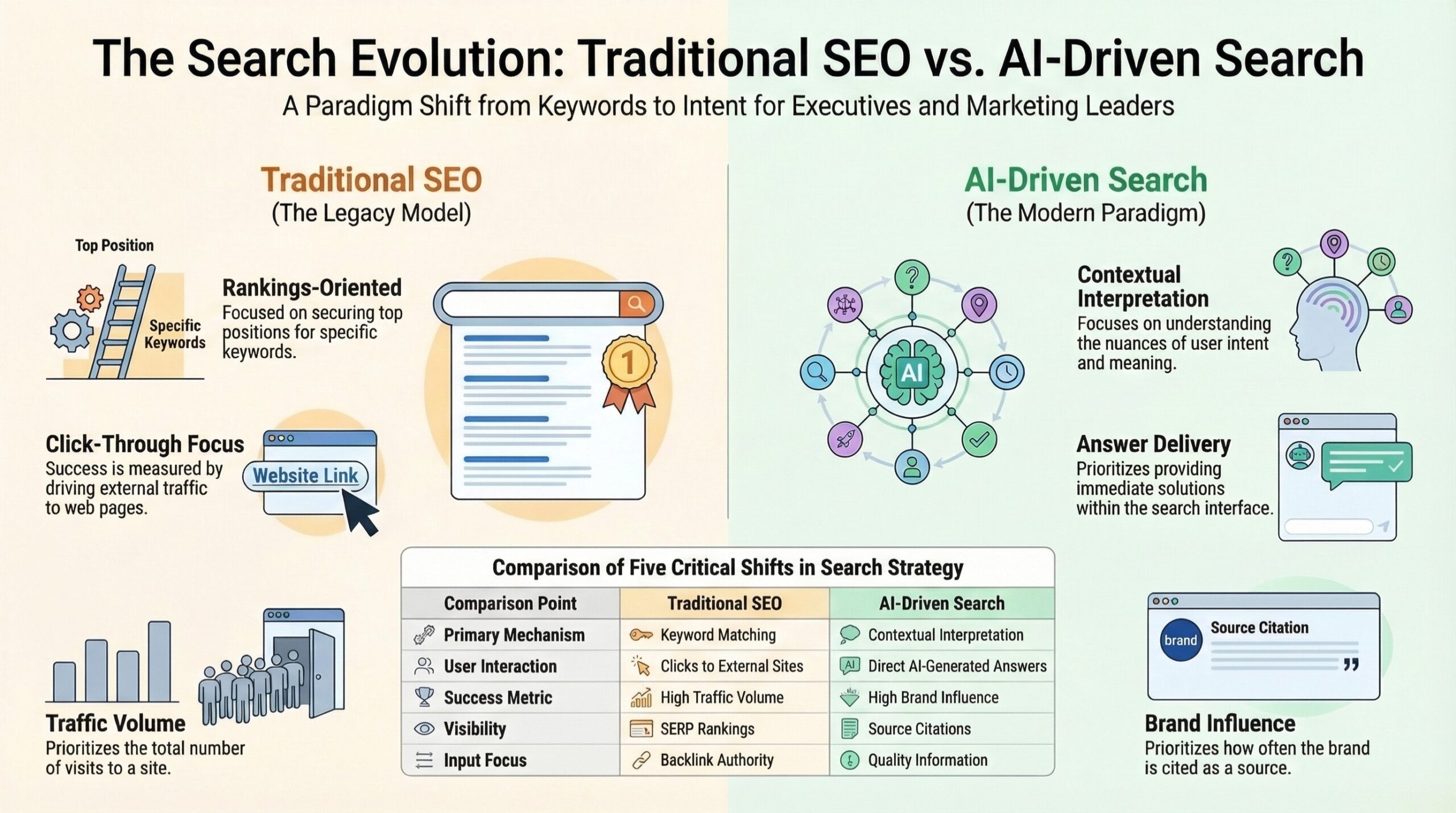
AI-powered search engines and generative assistants are rewriting how brands are discovered. Instead of displaying links, these systems summarize, interpret, and recommend. That shift fundamentally changes visibility.
Your company is no longer just ranked; it is described.
When AI models generate answers about your industry, they decide:
- Which companies to mention
- How to position your expertise
- What differentiators to highlight
- Whether your claims appear credible
This interpretation layer introduces strategic risk. If AI misrepresents pricing, compliance, positioning, or competitive advantages, that narrative spreads instantly across thousands of users.
Many executive teams assume AI visibility is “just SEO.” It is not.
AI visibility intersects with:
- Brand equity
- Regulatory exposure
- Competitive positioning
- Investor perception
Without structured AIO executive oversight, leadership relinquishes narrative control to algorithmic interpretation.
KPIs Executives Should Track
Traditional SEO metrics, traffic, impressions, and click-through rates remain relevant, but they are incomplete. Generative systems require a different executive lens.
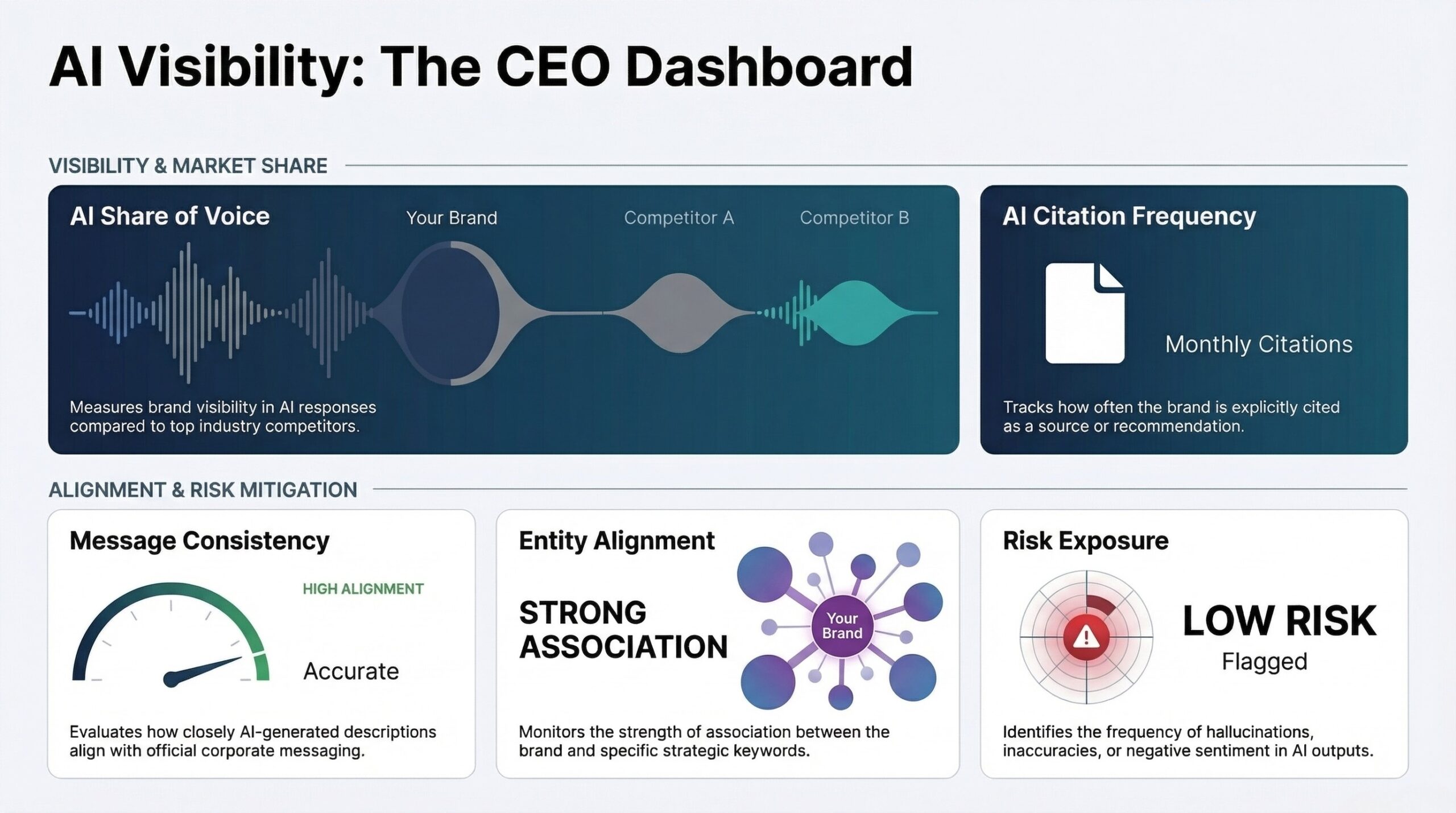
A CEO AI dashboard should include the following indicators.
1. AI Citation Frequency
How often is your brand mentioned in AI-generated answers for high-intent queries?
This KPI tracks:
- Inclusion in generative summaries
- Frequency of mention relative to competitors
- Placement prominence within responses
If your competitors are cited more often, they are shaping industry narratives.
2. Entity Alignment Score
AI systems rely on entity recognition to determine how clearly your brand is associated with specific topics.
Executives should ask:
- Is our company consistently linked to our primary category?
- Are secondary services overshadowing core offerings?
- Has our positioning drifted in AI outputs?
Entity misalignment signals strategic dilution.
3. Competitive AI Share of Voice
This measures your brand’s presence within AI-generated industry responses compared to competitors.
Even if website traffic appears stable, declining AI share of voice can indicate narrative erosion.
For example:
If 6 out of 10 generative answers mention competitors but not your brand, you are losing invisible influence.
4. Message Consistency Index
Are AI-generated descriptions aligned with official messaging?
Common issues include:
- Outdated service descriptions
- Legacy product references
- Incorrect geographic positioning
- Inconsistent value propositions
Consistency protects authority.
5. Risk Exposure Flags
Executives should monitor AI outputs for:
- Compliance inaccuracies
- Incorrect executive attribution
- Fabricated capabilities
- Pricing errors
In regulated industries, misinformation is not cosmetic; it is material.
A structured CEO AI dashboard consolidates these indicators into executive-ready intelligence rather than tactical marketing reports.
Quarterly AI Audits
AI systems evolve continuously. Model updates, retraining cycles, and knowledge graph adjustments can shift your brand’s digital representation without warning.
A quarterly audit prevents blind spots.
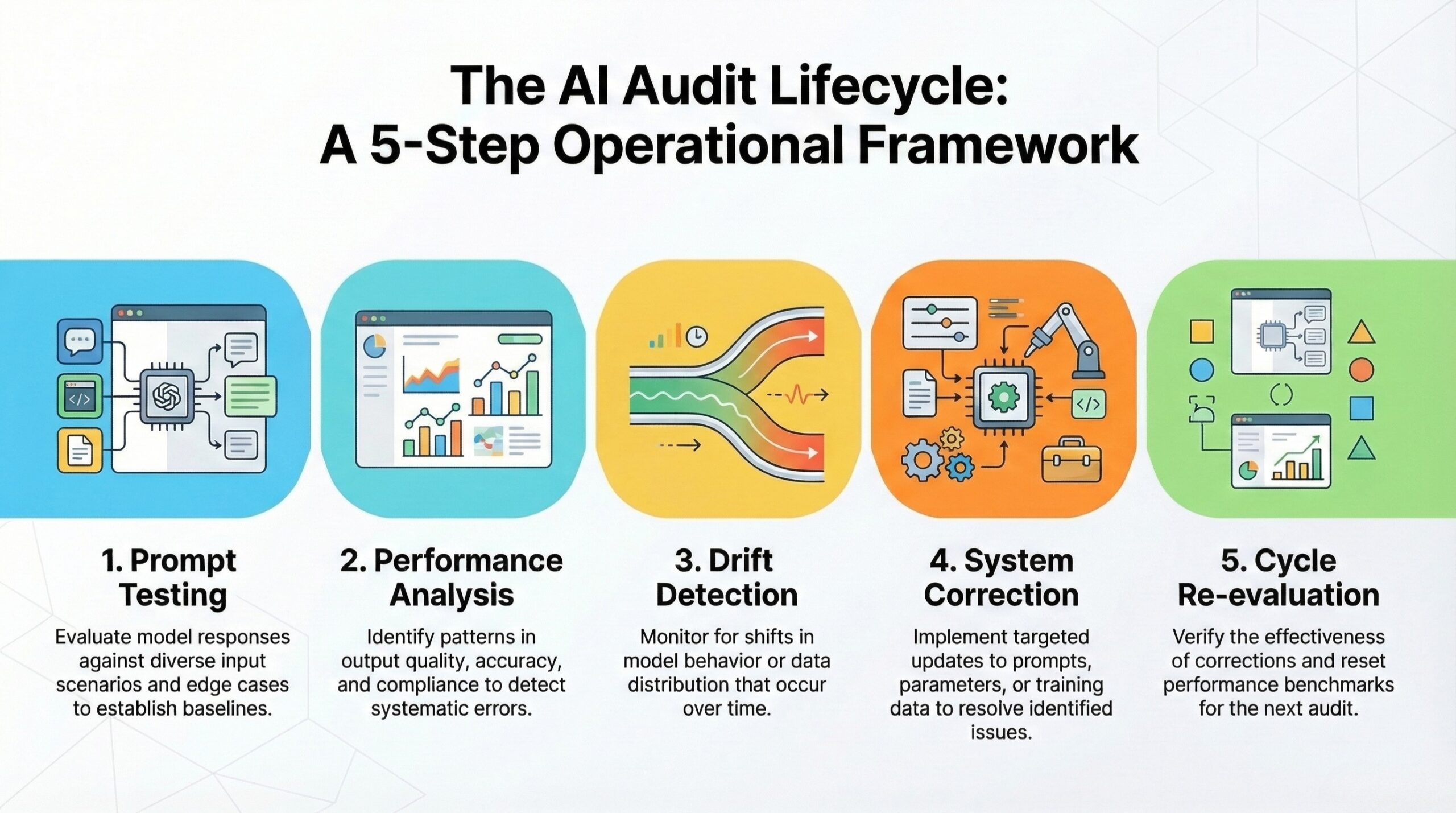
What a Quarterly AI Audit Should Include
1. Prompt Simulation Testing
Run standardized, high-intent queries across major AI platforms such as:
- “Top companies in [your industry]”
- “Compare [your brand] vs competitors.”
- “Is [your brand] compliant with regulations?”
Document:
- Accuracy
- Sentiment
- Competitive positioning
- Factual alignment
2. Narrative Drift Analysis
Compare current AI outputs with prior-quarter snapshots.
Identify:
- Positioning changes
- Category reassignment
- Emerging inaccuracies
- Competitor elevation patterns
Narrative drift is subtle, but over time, it reshapes perception.
3. Structured Data Validation
Ensure that schema structures, metadata consistency and entity mapping remain intact. Broken structures reduce AI confidence in your authority.
4. Executive Representation Review
Are leadership bios accurately summarized?
Is industry expertise correctly attributed?
Executive misrepresentation undermines credibility.
Quarterly audits transform AI visibility from reactive correction to proactive governance.
Risk Evaluation Framework
AI visibility introduces four strategic risk domains.
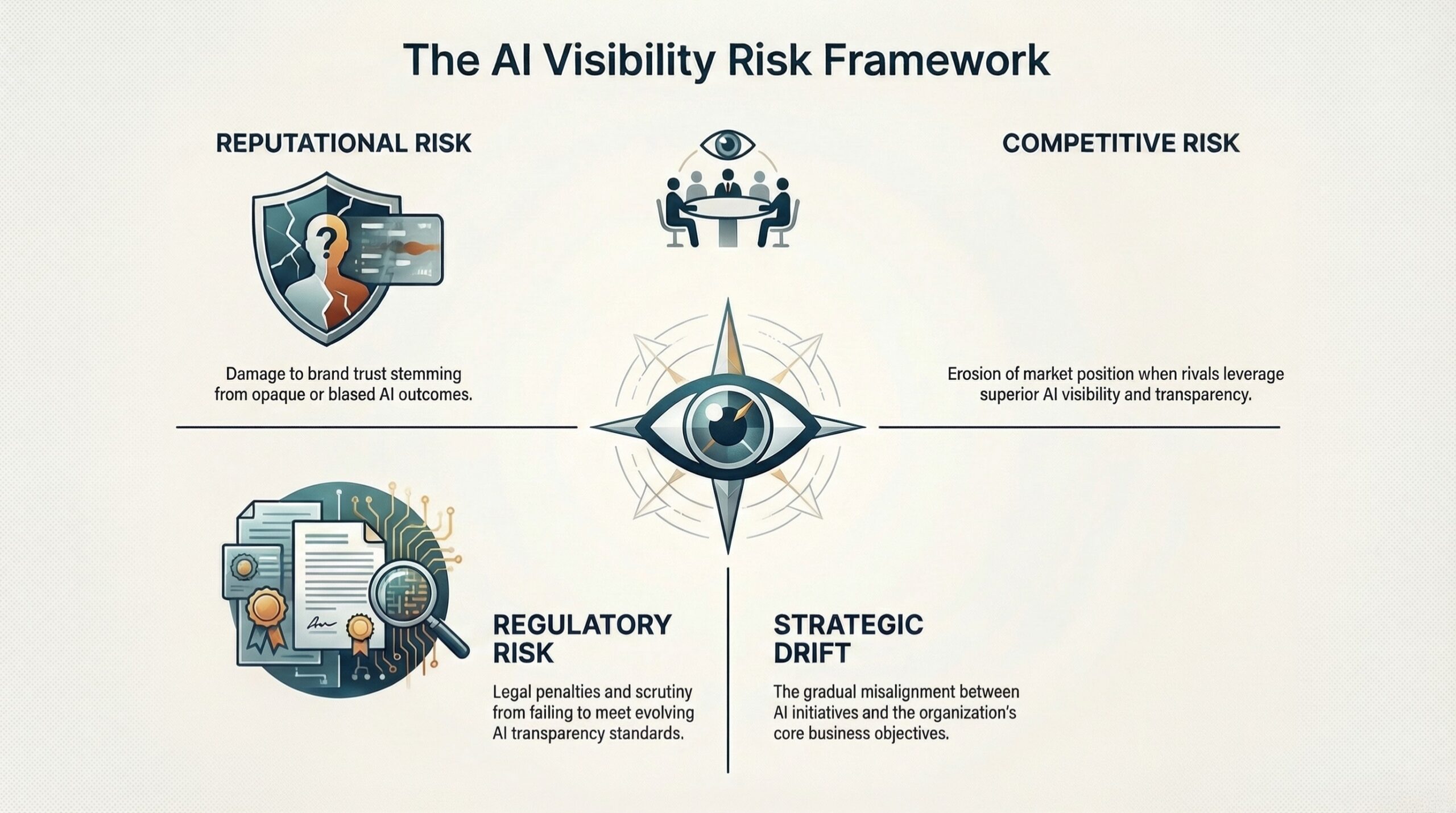
1. Reputational Risk
AI-generated answers mischaracterize product quality, scale, or industry standing.
2. Regulatory Risk
Compliance claims are summarized incorrectly, creating exposure.
3. Competitive Risk
AI consistently prioritizes competitor narratives in high-intent responses.
4. Strategic Drift Risk
Your brand becomes associated with secondary categories, diluting primary positioning.
Building a Risk Framework
Executives should institutionalize:
- Risk scoring (low, moderate, high)
- Clear accountability ownership
- Escalation thresholds
- Correction mechanisms (content reinforcement, structured updates, governance revisions)
Embedding AI oversight into broader enterprise risk management ensures alignment with AI marketing governance standards.
This is not about micromanaging marketing.
It is about safeguarding enterprise value.
Executive Playbook
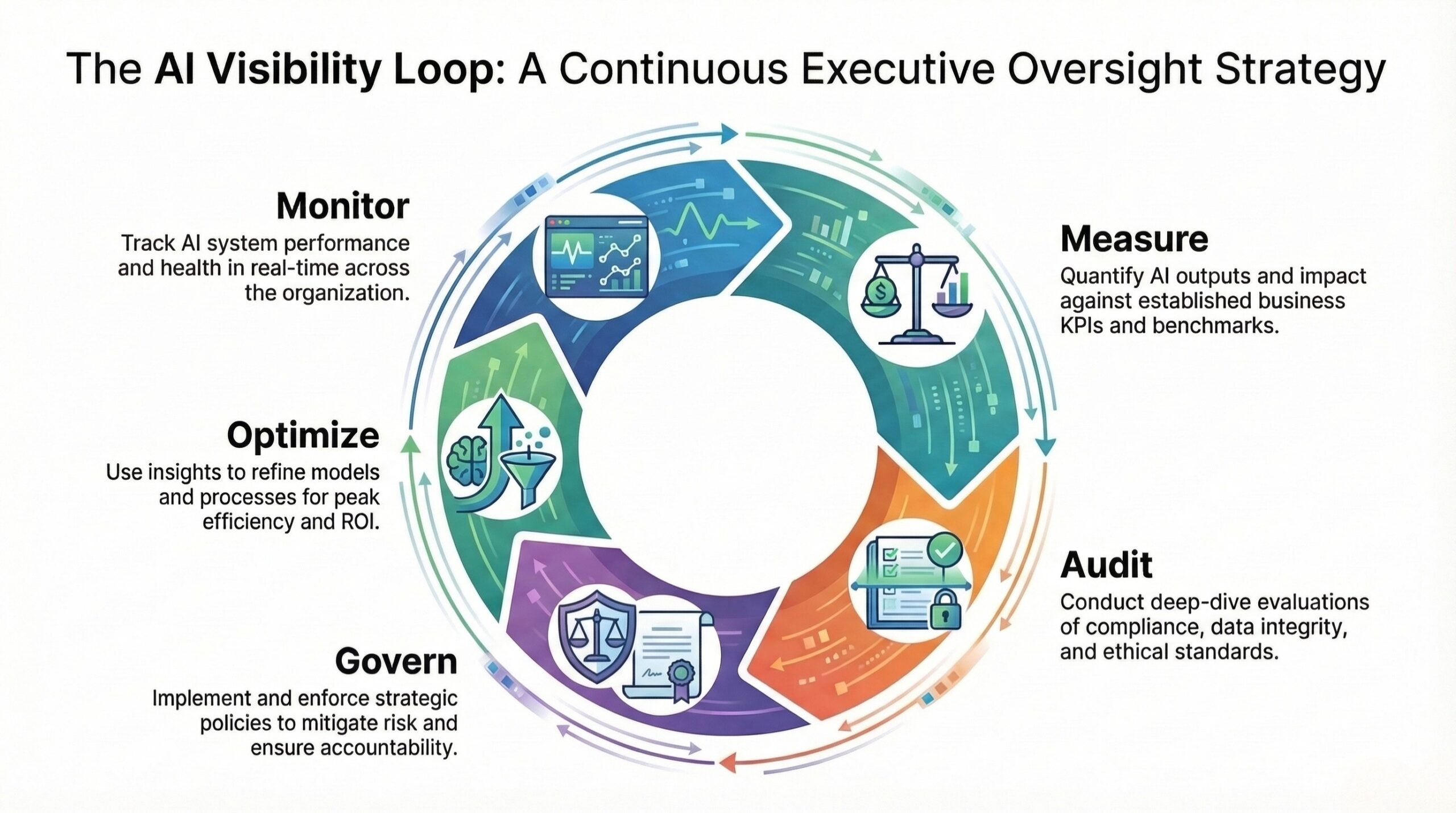
CEOs need clarity, cadence, and accountability, not tactical optimization tasks.
Here is a high-level executive framework for AIO executive oversight.
Step 1: Assign Cross-Functional Ownership
AI visibility touches marketing, data, compliance, and communications. Oversight must be collaborative, not siloed.
Step 2: Implement a Leadership AI Dashboard
Your dashboard should include:
- AI citation frequency trends
- Entity alignment scores
- Competitive AI share of voice
- Risk exposure alerts
- Quarterly variance comparisons
Review cadence: Monthly at leadership meetings.
Step 3: Institutionalize Quarterly Audits
Standardize documentation:
- Prompt testing templates
- Output tracking logs
- Risk evaluation summaries
Trend analysis matters more than isolated results.
Step 4: Align AI Visibility With Strategic Objectives
If the company shifts focus toward a new product, region, or vertical, AI systems must reflect that shift within one quarter.
AI interpretation should mirror board-level priorities.
Step 5: Integrate With AI Marketing Governance
AI visibility should align with structured AI marketing governance protocols. Governance ensures:
- Version control
- Messaging consistency
- Structured review cycles
- Executive-level reporting
Without governance, oversight becomes reactive.
With governance, it becomes strategic.
FAQs
What should CEOs monitor in AIO?
CEOs should monitor AI citation frequency, entity alignment, competitive AI share of voice, message consistency, and risk exposure. These indicators provide a strategic view of how AI systems interpret the brand.
How often should AI visibility be reviewed?
Monthly dashboard reviews combined with quarterly AI audits provide sufficient oversight to detect narrative drift and emerging risks.
What is a CEO AI dashboard?
A CEO AI dashboard is a leadership-level reporting system that consolidates AI citation trends, entity alignment metrics, competitive visibility, and risk indicators into one executive view.
How does AI marketing governance support executive oversight?
AI marketing governance establishes structured review cycles, accountability frameworks, and risk evaluation systems that ensure AI visibility aligns with enterprise strategy.
Conclusion
AI systems now influence how your brand is interpreted long before prospects engage directly with you. That makes AIO executive oversight a strategic necessity, not a marketing add-on. CEOs must ensure that AI-generated narratives accurately reflect positioning, compliance, and competitive strengths.
With a structured dashboard, quarterly audits, and disciplined AI marketing governance, leadership can prevent narrative drift and reduce risk. In an AI-driven search environment, visibility is no longer just about being discovered; it is about being represented correctly. In the AI era, visibility is not just discoverability.
It is narrative control.