
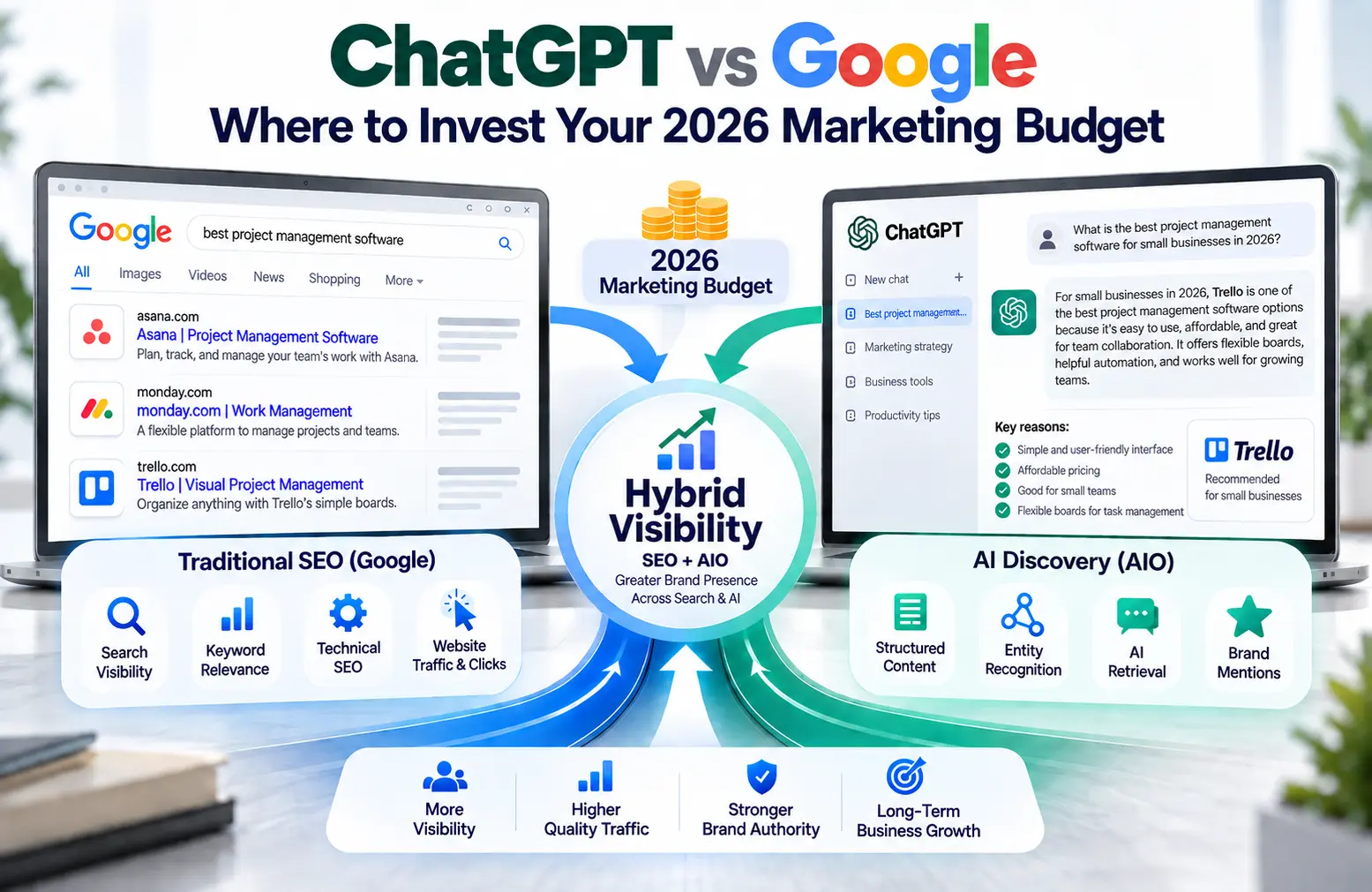
Search behavior is evolving quickly as AI assistants begin influencing how users discover information. While Google still drives large volumes of website traffic, platforms like ChatGPT increasingly guide decisions through recommendations rather than links.
Businesses in 2026 should not treat this as a competition but as a shift in discovery models. The most effective approach is a hybrid strategy combining traditional SEO with AIO (Artificial Intelligence Optimization) so brands remain visible in both search results and AI-generated answers.
ChatGPT vs Google
The debate around ChatGPT vs Google SEO reflects a broader transformation in how information is accessed online. For years, search engines dominated digital discovery. Businesses focused on ranking for keywords, attracting organic traffic, and converting visitors.
Today, conversational AI tools such as ChatGPT, Gemini, and other generative platforms are changing that pattern. Instead of returning a list of links, AI systems synthesize information and provide direct answers.
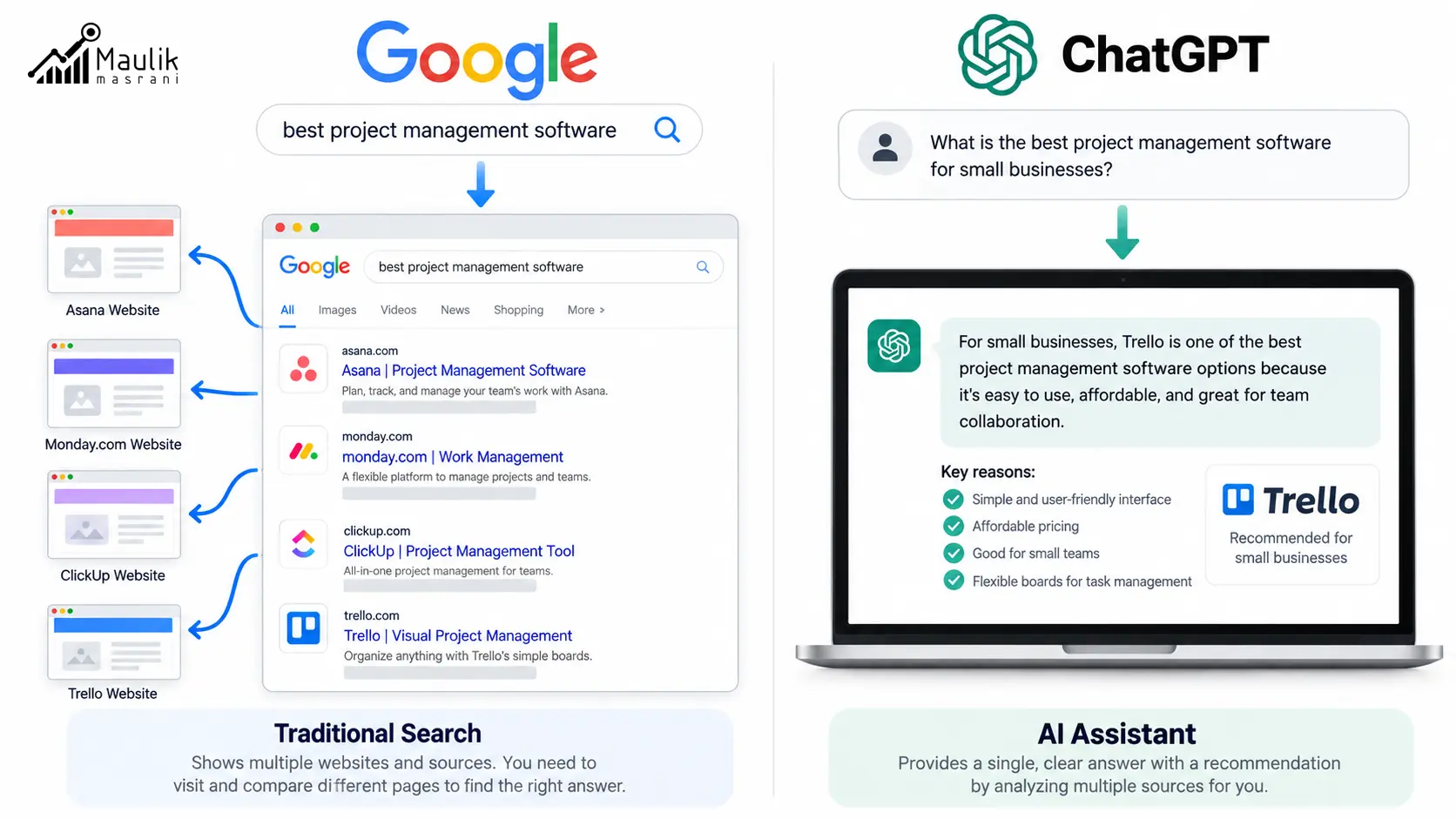
For users, this means faster decision-making. For businesses, it means visibility is no longer limited to search rankings.
Many organizations are now rethinking their AI search marketing strategy because AI assistants are increasingly used for research queries like:
- Best cybersecurity tools for startups
- Top marketing automation platforms
- Recommended AI certification programs
In these scenarios, the AI does not simply show websites. It generates recommendations based on structured knowledge, credible sources, and recognized entities.
This is why marketing leaders are investing in AIO, a framework designed to make brand knowledge understandable to AI systems. Instead of focusing only on keyword rankings, businesses ensure their expertise, products, and services are structured in a way AI can retrieve and reference.
At the same time, Google remains the dominant discovery platform globally. Billions of searches still occur daily, making traditional SEO a core marketing discipline.
The real strategic question is not whether AI will replace search engines, but how both systems influence digital visibility.
Traffic vs Recommendation Model
The most important difference between Google and AI assistants lies in how they deliver information to users.
Google: The Traffic Model
Google operates on a link-based discovery system. Users search for a query, browse the results page, and click through to websites.
Success in this model depends on:
- keyword optimization
- content depth and relevance
- backlink authority
- technical SEO performance
Businesses compete for top positions in search results because higher rankings lead to increased traffic.
For marketing teams, this approach produces clear performance metrics such as impressions, clicks, and conversions.
ChatGPT: The Recommendation Model
AI assistants operate very differently. Instead of returning multiple links, they synthesize information and present a consolidated answer.
In many cases, users receive a direct recommendation without navigating to a website.
This shift creates a recommendation-driven discovery model.
Visibility in this environment depends on factors such as:
- brand authority
- structured knowledge
- entity recognition
- trusted sources
Businesses must ensure their expertise is represented in digital knowledge ecosystems so AI systems can reference them accurately.
The role of AIO becomes essential here. AIO ensures that content, brand information, and structured data are optimized for retrieval by AI models.
Rather than competing for clicks alone, companies must compete for inclusion in AI-generated answers.
ChatGPT vs Google: Key Differences
Factor | Google Search | ChatGPT / AI Assistants |
Discovery Model | Traffic-driven search results | Recommendation-driven answers |
User Interaction | Users click links and visit websites | Users receive summarized responses |
Optimization Approach | Traditional SEO | AIO (Artificial Intelligence Optimization) |
Visibility Goal | Rank on SERPs | Be referenced by AI |
Authority Signals | Backlinks and domain authority | Entity recognition and trusted sources |
Content Style | Long-form SEO pages | Structured explanations and knowledge content |
Measurement Metrics | Traffic, CTR, rankings | AI mentions and brand citations |
Decision Influence | Research and discovery | Recommendations and comparisons |
Budget Allocation Strategy
Executives planning marketing budgets must now consider how resources should be distributed across both search engines and AI discovery platforms.
Traditional SEO investments remain essential, but AI optimization is emerging as a complementary strategy.
A balanced approach typically includes three focus areas.
1. Maintain Strong SEO Foundations
Google continues to drive significant website traffic. Businesses must continue investing in:
- technical SEO
- high-quality content
- authority-building backlinks
- user experience optimization
These fundamentals ensure sustained organic visibility.
2. Prepare Content for AI Retrieval
AI systems rely on structured and clearly defined information. Companies should develop content that AI can easily interpret.
Key practices include:
- building structured knowledge hubs
- creating clear definitions of services and products
- publishing structured FAQ sections
- implementing schema markup
These steps increase the likelihood that AI systems will reference your content.
3. Build Digital Authority
AI assistants rely heavily on credible sources. Businesses must expand their authority footprint across the web.
Examples include:
- industry research reports
- expert commentary and interviews
- media citations
- authoritative guest publications
These signals strengthen brand recognition across both search engines and AI systems.
The organizations that adapt fastest are already allocating a portion of their marketing resources toward AI visibility initiatives.
Hybrid Visibility Framework
The most sustainable strategy for businesses is not choosing between search engines and AI assistants. Instead, companies should adopt a hybrid visibility framework.
This framework combines traditional SEO with AIO to ensure brand presence across both discovery environments.
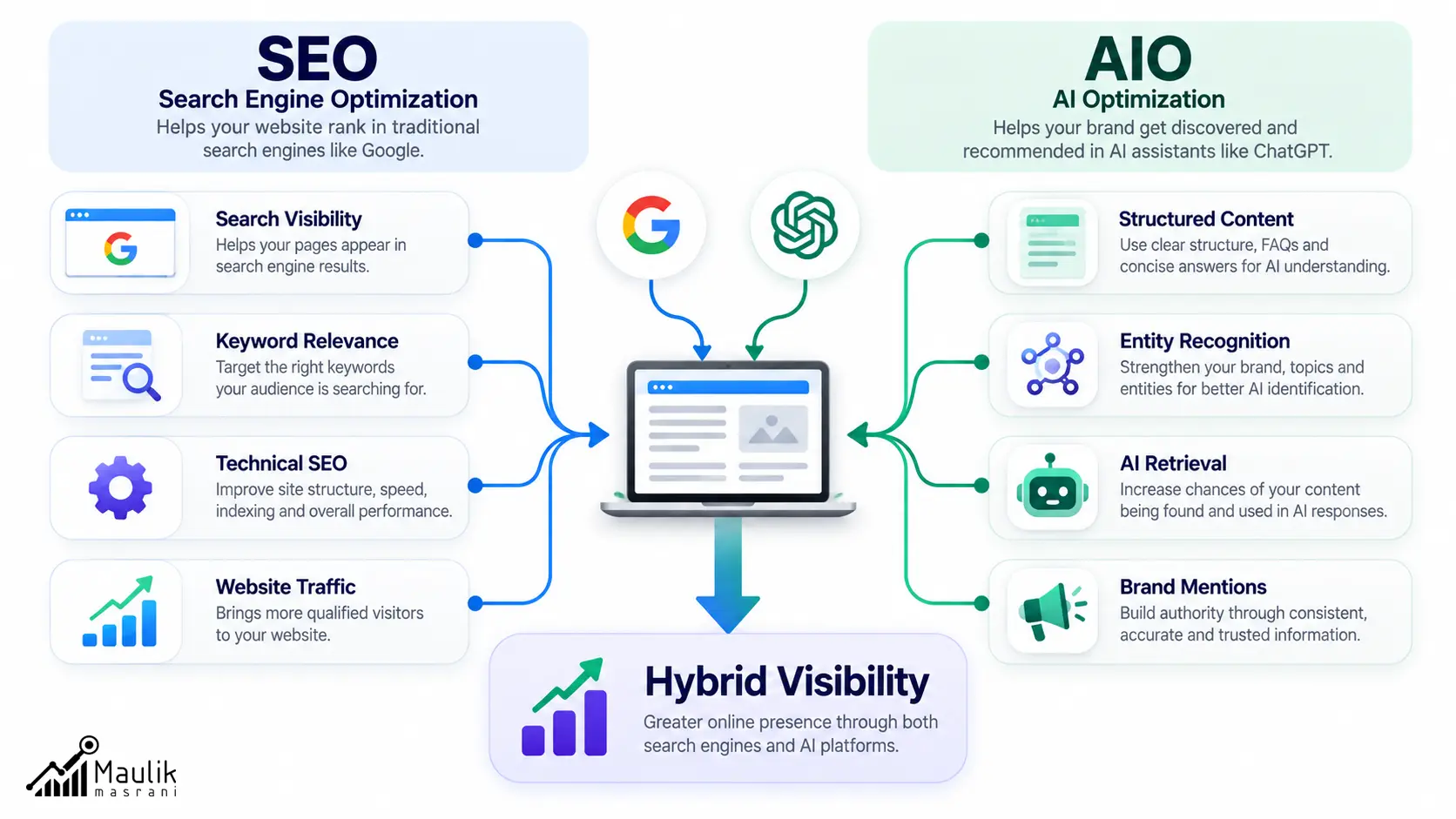
Step 1: Optimize for Search Engines
Businesses should continue producing high-quality content designed for search intent and keyword relevance. Educational guides, product comparisons, and expert insights still perform well in Google search.
Step 2: Structure Content for AI Understanding
AI systems prefer structured, clearly explained information. Content should include concise explanations, defined concepts, and well-organized sections that AI tools can easily summarize.
Step 3: Implement AIO Principles
AIO focuses on ensuring brand knowledge is machine-readable and authoritative.
This includes:
- entity-based content architecture
- structured knowledge documentation
- schema-supported content
- consistent brand signals across platforms
Step 4: Track Expanded Visibility Metrics
Marketing teams must go beyond traditional traffic metrics. The future of measurement will include signals such as:
- AI citations
- brand mentions in conversational search
- knowledge graph visibility
- authority signals across trusted sources
This broader visibility framework provides a more accurate picture of digital influence.
FAQs
Should I focus on AI search?
Yes, but alongside traditional SEO. Businesses should expand their strategy to include AI discovery while maintaining strong search engine visibility.
Is Google becoming less important?
No. Google still drives a large share of global web traffic. However, AI assistants are increasingly influencing how users evaluate information.
How does AI visibility differ from traditional SEO?
Traditional SEO focuses on ranking pages in search results. AI visibility focuses on ensuring AI systems recognize and reference your brand in generated answers.
What role does AIO play in marketing?
AIO ensures that brand knowledge is structured and accessible for AI models, improving the chances of being included in AI-generated recommendations.
What is the biggest change businesses should prepare for?
The shift from a traffic-driven search environment to a recommendation-driven discovery model powered by AI assistants.
Conclusion
The debate around ChatGPT vs Google SEO often frames the future of search as a competition between platforms. In reality, the next phase of digital discovery will involve both traditional search engines and AI assistants working together. Google will continue driving large volumes of website traffic, but AI platforms are rapidly becoming decision-support tools that influence purchasing behavior.
For businesses planning their AI search marketing strategy, the smartest approach is not choosing one channel over another. Instead, organizations should implement a hybrid visibility model that combines SEO, structured content, authority building, and AIO practices.