
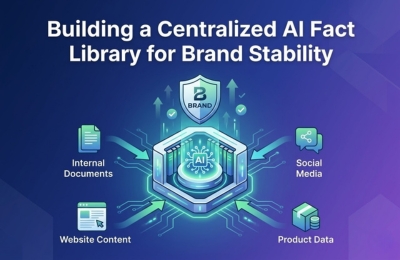
An AI fact library is a centralized, structured source of verified brand information that ensures consistent AI outputs across search engines, generative platforms, and digital channels. Without it, enterprises experience AI drift, messaging inconsistencies and data fragmentation.
By building a controlled brand data repository and integrating it with schema, FAQs, and version control systems, companies can stabilize AI visibility and protect authority at scale.
Centralized AI Fact Library
Enterprise brands are entering an era where AI systems search engines, copilots, and generative platforms interpret, summarize, and redistribute their information autonomously. The challenge is no longer just publishing content. It ensures factual alignment everywhere AI references your brand. A centralized AI fact library solves this problem.
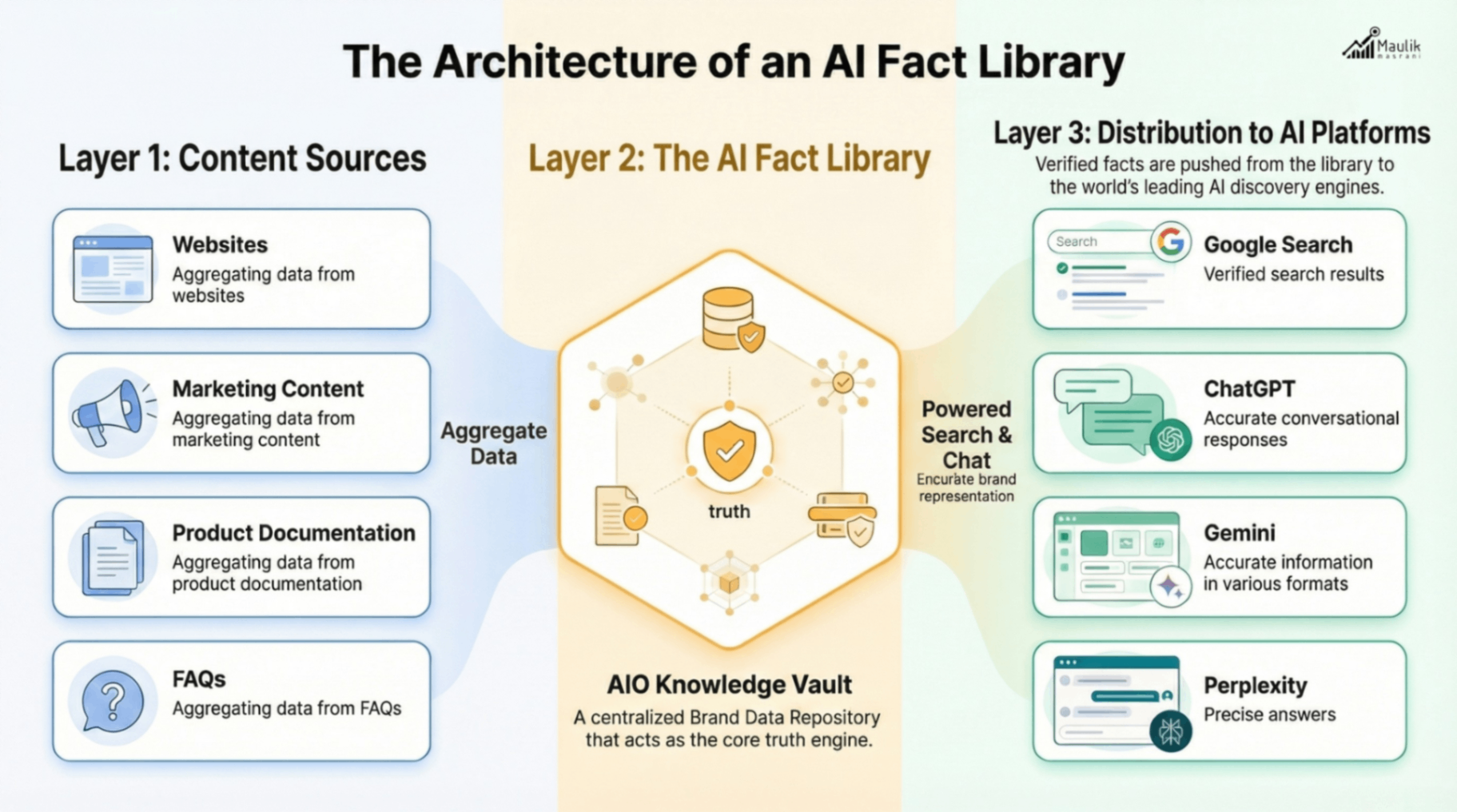
It functions as a structured, authoritative source of brand truths: company definitions, positioning statements, product descriptions, compliance notes, metrics, leadership bios, and standardized FAQs. When properly maintained, it becomes the single source of truth for marketing, sales, PR, and AI systems alike.
In the context of Artificial Intelligence Optimization (AIO), this structure is not optional; it is foundational.
Why brands lose AI consistency
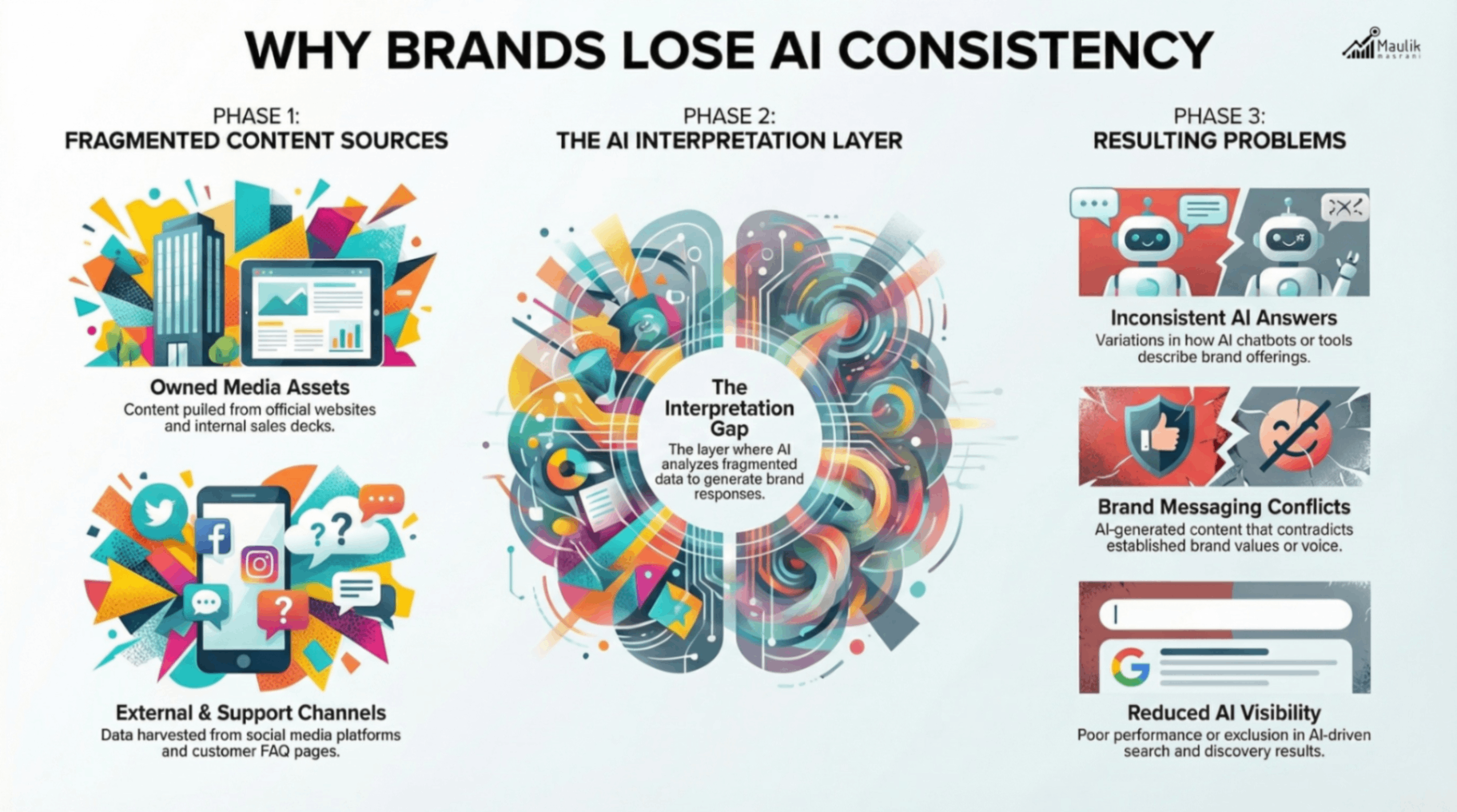
AI inconsistency rarely begins externally. It starts internally.
Most enterprises operate with fragmented information systems:
- Website copy differs from sales decks
- Social bios vary by platform
- Product messaging evolves without documentation
- FAQs change, but older versions remain indexed
AI models ingest this fragmented content and synthesize it into outputs. When definitions conflict or messaging shifts without structured updates, AI systems produce unstable responses.
For example:
- A SaaS brand describes itself as a “workflow automation platform” in one location and an “AI productivity tool” in another.
- Pricing data differs between a landing page and a press release.
- Leadership bios use inconsistent titles.
These discrepancies create algorithmic ambiguity.
Research in enterprise knowledge management shows that organizations lose measurable productivity, often estimated at 20-30%, due to information silos. In AI-driven search environments, that inefficiency translates into diluted authority and reduced citation frequency.
An AIO knowledge vault eliminates this ambiguity by standardizing and centralizing all mission-critical facts.
Core facts every business must define
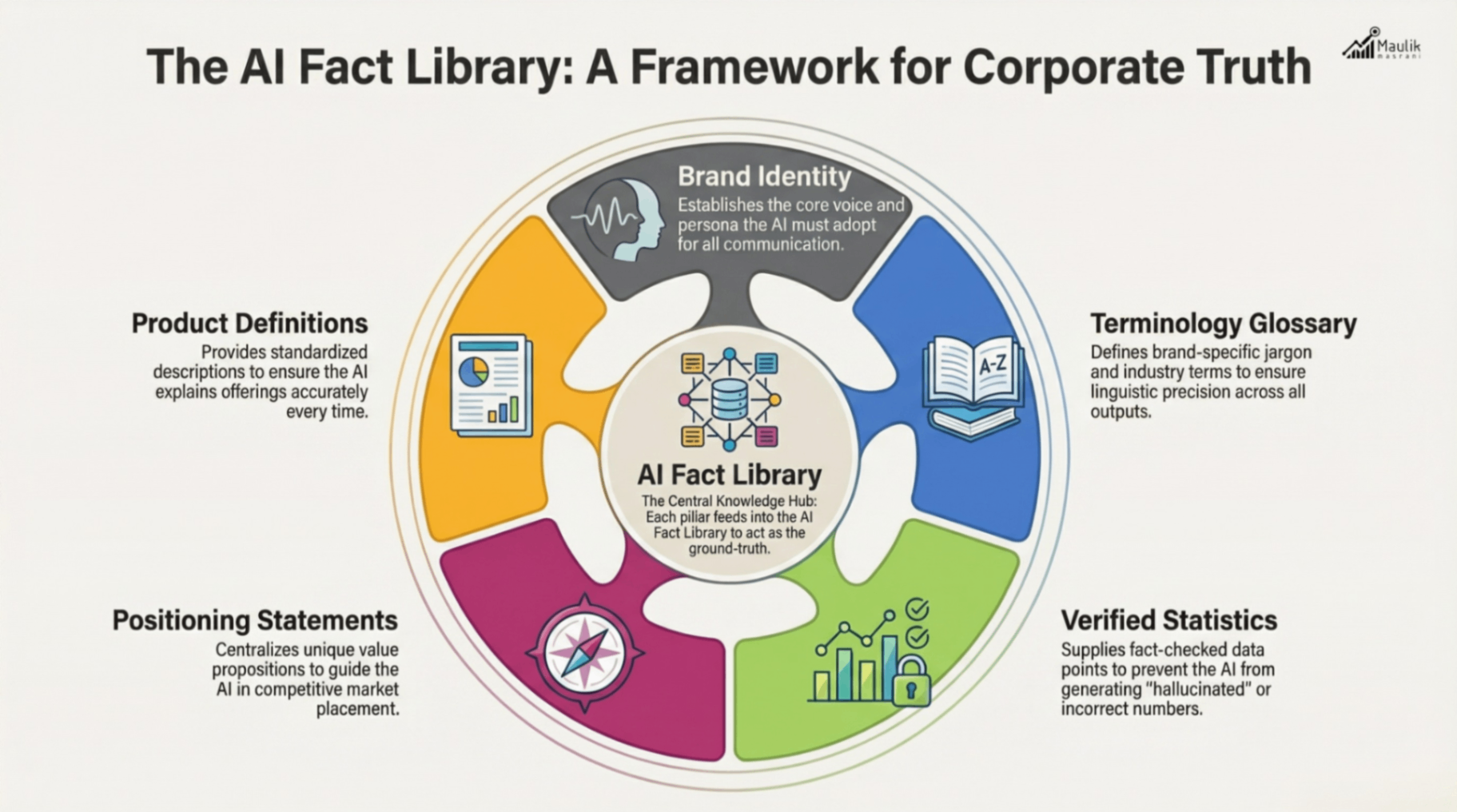
An effective brand data repository begins with structured categorization. Every enterprise should formally define the following data layers:
1. Brand Identity Layer
- Official company name and formatting
- Founding year
- Headquarters location
- Industry classification
- One-sentence and three-sentence definitions
These definitions must remain stable across all digital properties.
2. Positioning Layer
- Core value proposition
- Target audience segments
- Unique differentiation statements
- Approved elevator pitch
AI models often prioritize concise, well-structured definitions. A “definition-first” writing style increases extraction accuracy.
3. Product & Service Layer
- Standardized product descriptions
- Feature summaries
- Compliance disclosures
- Pricing positioning framework
Consistency here directly influences AI-generated product comparisons and summaries.
4. Authority Signals
- Verified statistics
- Case study highlights
- Awards and certifications
- Leadership credentials
These reinforce entity trust and help AI systems classify brand credibility.
5. Operational Definitions
- Terminology glossary
- Acronym explanations
- Process frameworks
When brands fail to define proprietary terms, AI platforms reinterpret them, often inaccurately.
A properly structured brand data repository ensures that these layers remain aligned across channels and AI references.
Version control for brand data
Building an AI fact library is not a one-time project. It is an ongoing governance process.
Without version control, even a centralized knowledge system becomes unreliable.
Best practices include:
- Timestamped updates for every fact revision
- Clear documentation of messaging changes
- Approval workflows before public publication
- Change logs for regulatory or compliance updates
Modern tools such as structured knowledge management systems like those found in platforms similar to Notion Knowledge Systems allow organizations to track edits, maintain archival versions and assign ownership for updates.
Version control achieves two objectives:
- Prevents legacy messaging from reappearing in AI search results
- Ensures synchronized updates across the website, schema markup and content repositories
When AI models crawl your digital ecosystem, they reward clarity and consistency. Version control sustains both.
FAQ bank integration
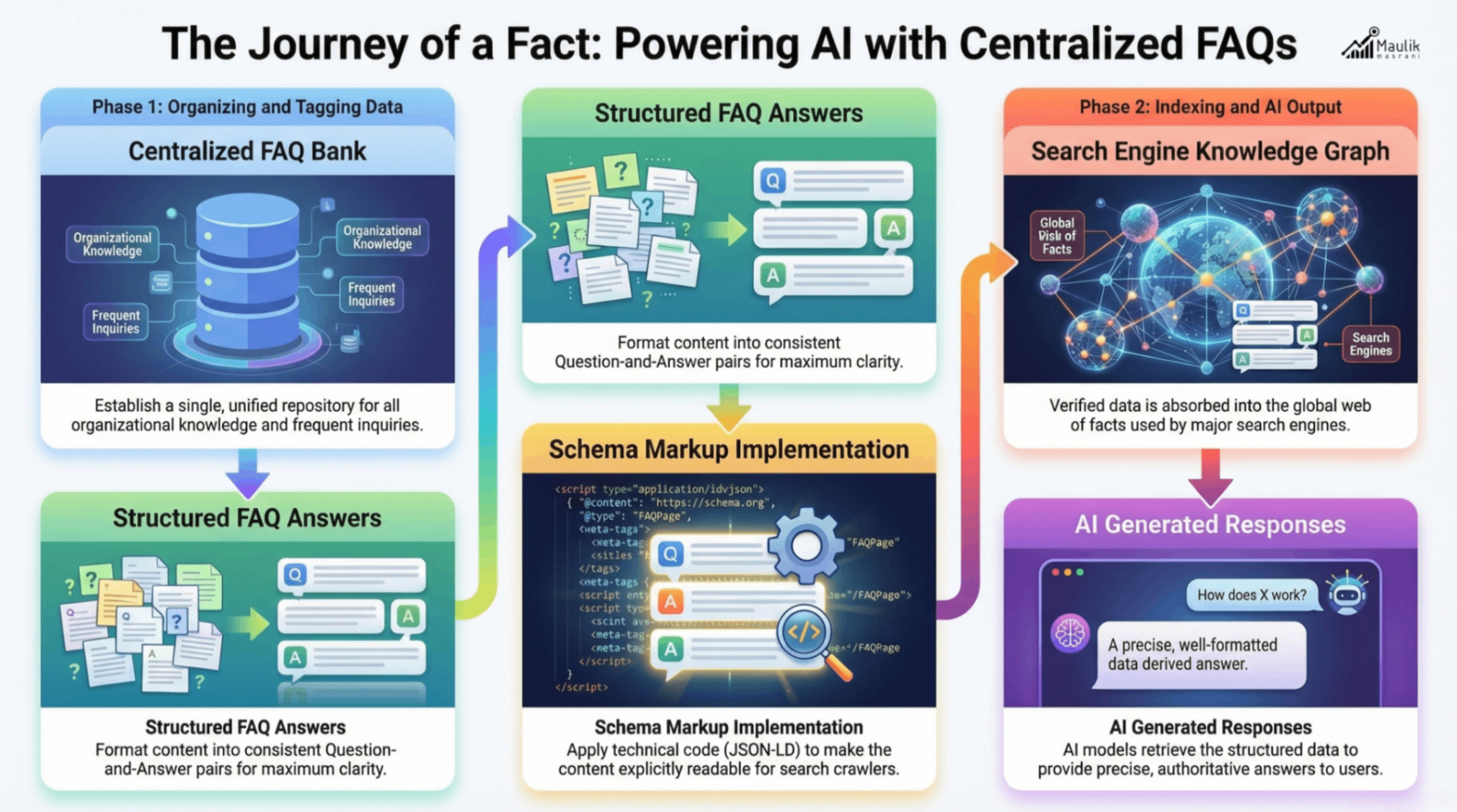
One of the most powerful components of an AIO knowledge vault is a centralized FAQ bank.
FAQs are frequently extracted by search engines and generative AI platforms because they provide structured question-and-answer formatting. However, when FAQs vary across landing pages, blog posts, and documentation, inconsistency multiplies.
An integrated FAQ bank should:
- Store canonical answers in one location
- Standardize question phrasing
- Align definitions with brand positioning
- Sync automatically with website schema
This integration improves featured snippet visibility and AI citation reliability.
For enterprise brands, FAQ governance also reduces legal and compliance risks by ensuring that public responses align with official policy.
Syncing with website schema
Even the most robust AI fact library fails if it remains disconnected from structured data.
Schema markup translates human-readable brand information into machine-readable signals. When your centralized knowledge base syncs with:
- Organization schema
- Product schema
- FAQPage schema
- Article schema
AI systems can more accurately extract verified information.
This structured alignment strengthens entity recognition and increases the likelihood that generative engines reference your content.
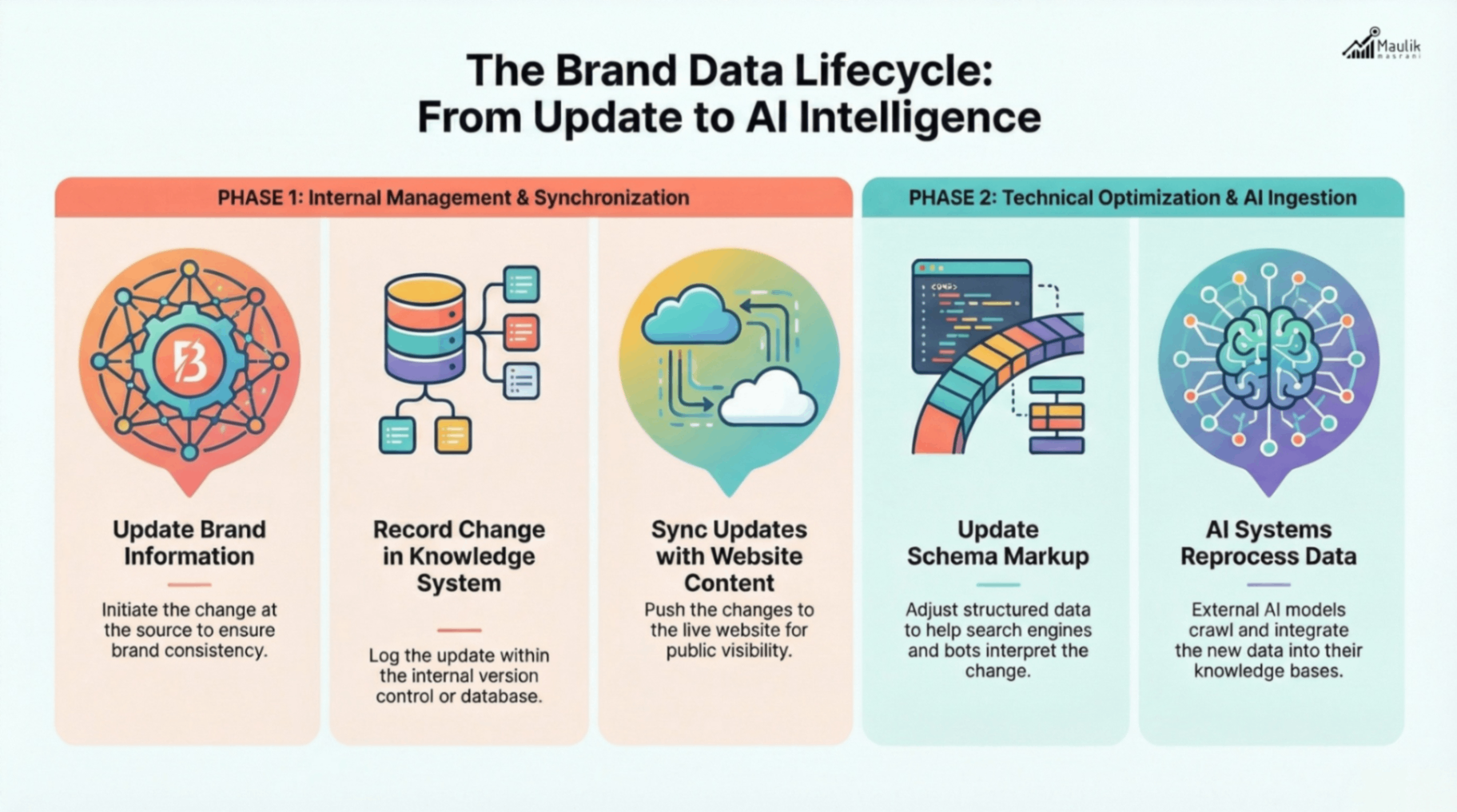
Synchronization strategy:
- Update the AI fact library.
- Reflect changes in website copy.
- Update schema markup accordingly.
- Revalidate through structured data testing tools.
Consistency across these layers reduces semantic drift and reinforces brand stability in AI-driven environments.
FAQs
What is an AI fact library?
An AI fact library is a centralized, structured repository of verified brand information used to ensure consistent AI-generated outputs across search engines and generative platforms.
Why does brand inconsistency affect AI visibility?
AI systems aggregate information from multiple sources. When messaging conflicts across platforms, algorithms produce inconsistent summaries, reducing authority and citation accuracy.
How often should an AI fact library be updated?
It should be reviewed quarterly at a minimum, with immediate updates whenever product positioning, compliance details, or leadership information changes.
How does schema support an AI fact library?
Schema markup converts structured brand information into machine-readable data, enabling search engines and generative systems to extract verified facts accurately.
Conclusion
A centralized AI fact library is no longer optional for enterprises operating in AI-driven search environments. It ensures consistent messaging, protects brand authority, and reduces the risk of misinformation across generative platforms. By structuring, controlling, and syncing core brand data, businesses can maintain stability and strengthen long-term AI visibility with confidence.
As AI systems increasingly shape discovery and decision-making, clarity becomes a competitive advantage. A unified brand data repository enables faster updates, stronger governance, and better alignment across teams. Over time, this structured approach builds trust with both algorithms and audiences.