
AI search ecosystems are fragmented across multiple models such as ChatGPT, Gemini, Claude, and Perplexity. Relying on a single platform or channel creates significant risk for brands. AI visibility insurance is a strategic framework that protects brand discoverability by building redundancy across AI models and distribution channels. By diversifying model exposure, strengthening entity signals, and running regular AI stress tests, organizations can prevent sudden visibility loss and maintain a stable presence in generative search environments.
AI Visibility Insurance Model
The rise of generative AI has fundamentally changed how users discover information. Instead of clicking through traditional search results, people increasingly rely on AI-generated answers. These answers are assembled by large language models using multiple signals such as structured content, entity relationships, citations and trusted sources.
For businesses investing in AIO (Artificial Intelligence Optimization), this shift introduces a new challenge: AI visibility is not guaranteed across all models. A brand that appears prominently in ChatGPT responses may be absent from Gemini or Perplexity recommendations.
This is where AI visibility insurance becomes critical.
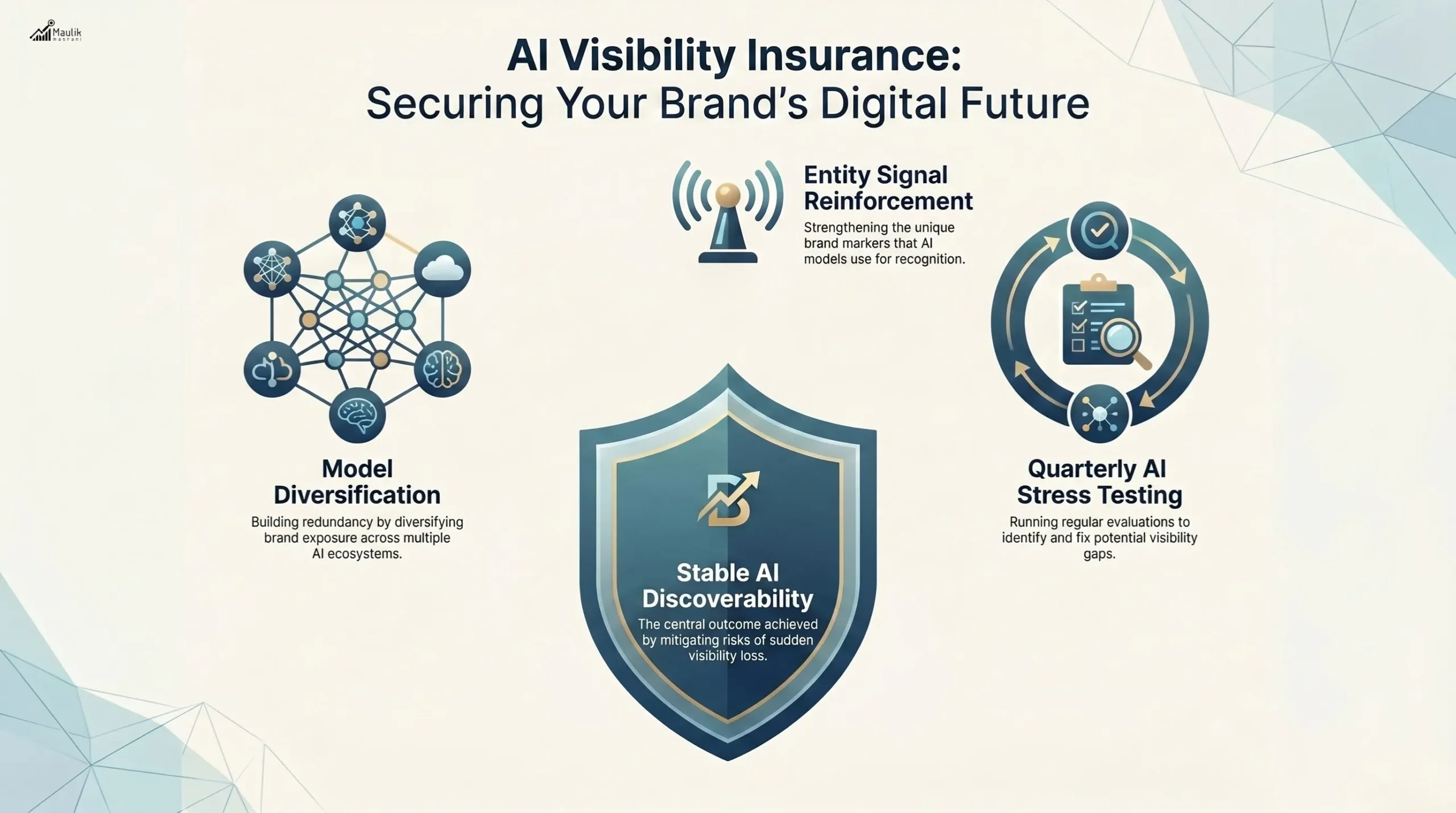
AI visibility insurance is not a product; it is a strategy. It ensures that a brand’s presence is reinforced across different AI systems and information channels so that visibility remains stable even when algorithms, datasets, or ranking behaviors change.
Think of it like infrastructure redundancy in cloud computing. Instead of relying on one server, companies deploy multiple systems to avoid downtime. The same principle applies to generative search visibility.
A resilient AI visibility strategy includes:
- Entity reinforcement across structured data and trusted sources
- Multi-channel content distribution across authoritative platforms
- Cross-model visibility testing
- Redundancy across different discovery ecosystems
Companies that treat AI search visibility as a single-channel activity often experience sudden traffic volatility. Brands that implement an AI protection strategy through redundancy maintain a consistent presence across multiple AI systems.
Why Single-Platform Strategy Fails
Historically, digital marketing strategies focused heavily on ranking within Google. While this approach worked for years, generative search has fragmented the discovery landscape.
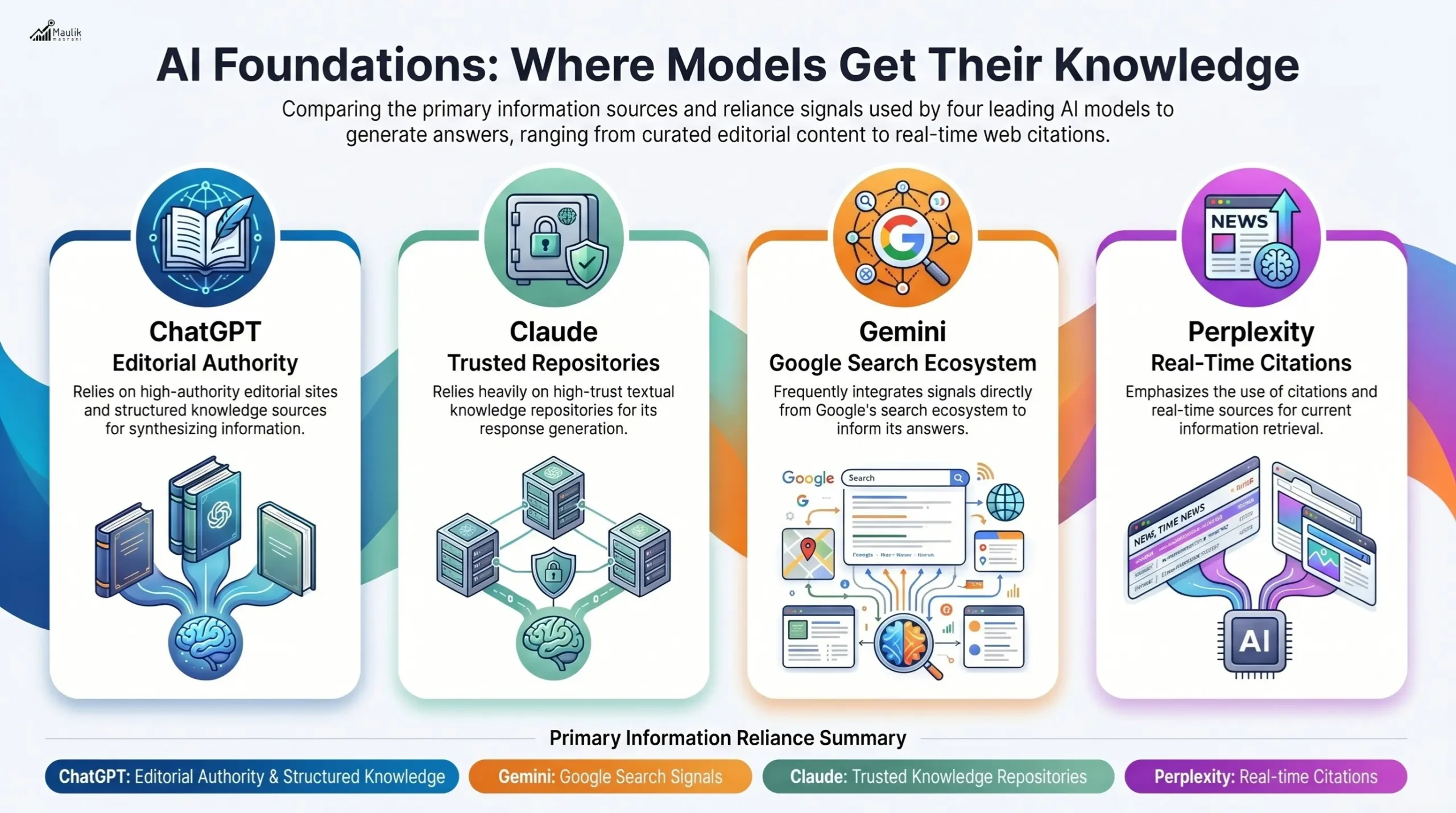
Today, different AI models rely on different training datasets, sources, and ranking logic.
For example:
- ChatGPT often synthesizes information from high-authority editorial sites and structured knowledge sources.
- Gemini frequently integrates signals from Google’s search ecosystem.
- Claude may rely more heavily on high-trust textual knowledge repositories.
- Perplexity emphasizes citations and real-time sources.
This means that a brand appearing in one AI model’s answers does not automatically appear in another.
Organizations that optimize only for one ecosystem often encounter problems such as:
- Brand absence in certain AI assistants
- Inconsistent descriptions of products or services
- Reduced AI citation frequency
- Lower trust signals in generative summaries
These gaps can significantly impact brand discoverability.
A company that dominates AI responses in one system may be invisible in another. As AI assistants become a primary interface for search, this fragmentation introduces operational risk.
An AI protection strategy must therefore assume that every AI model behaves differently and requires independent visibility reinforcement.
Model Diversification Strategy
A strong AI visibility insurance approach focuses on diversification across AI systems. Instead of optimizing for a single platform, organizations design strategies that increase entity recognition across multiple models.
Model diversification begins with understanding how generative systems interpret entities.
AI models identify brands through:
- Structured content and schema signals
- Repeated mentions across authoritative sources
- Consistent entity relationships
- Cross-platform citations
If a brand appears across multiple trusted platforms, the probability of AI referencing that entity increases significantly.
Practical diversification methods include:
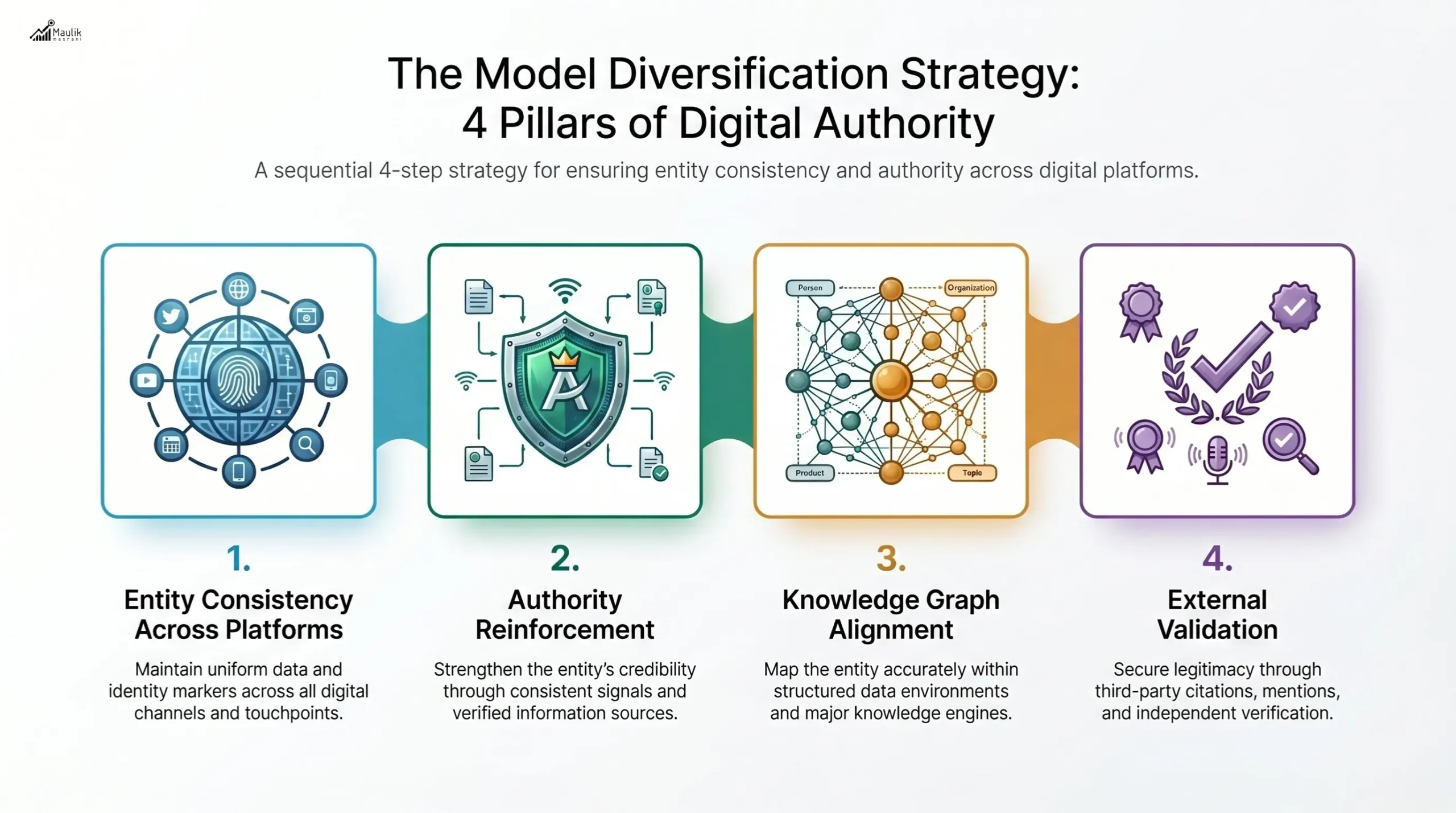
Entity Consistency Across Platforms
Organizations must maintain consistent brand information across websites, industry directories, social platforms and knowledge hubs. This strengthens entity clarity across models.
Authority Reinforcement
Publishing expert-level content on authoritative platforms increases the likelihood that AI models cite the brand as a trusted source.
Knowledge Graph Alignment
Structured schema helps AI systems understand relationships between brand, products, services, and expertise areas. This improves discoverability within AEO (Answer Engine Optimization) strategies.
External Validation
When independent sources mention a company, AI systems interpret this as credibility reinforcement. This significantly improves AI citation probability.
Brands implementing these diversification methods tend to maintain stronger visibility across different AI models.
Channel Redundancy System
Model diversification alone is not sufficient. A second critical component of AI visibility insurance is channel redundancy.
Channel redundancy ensures that brand signals appear across multiple digital ecosystems rather than relying solely on a website.
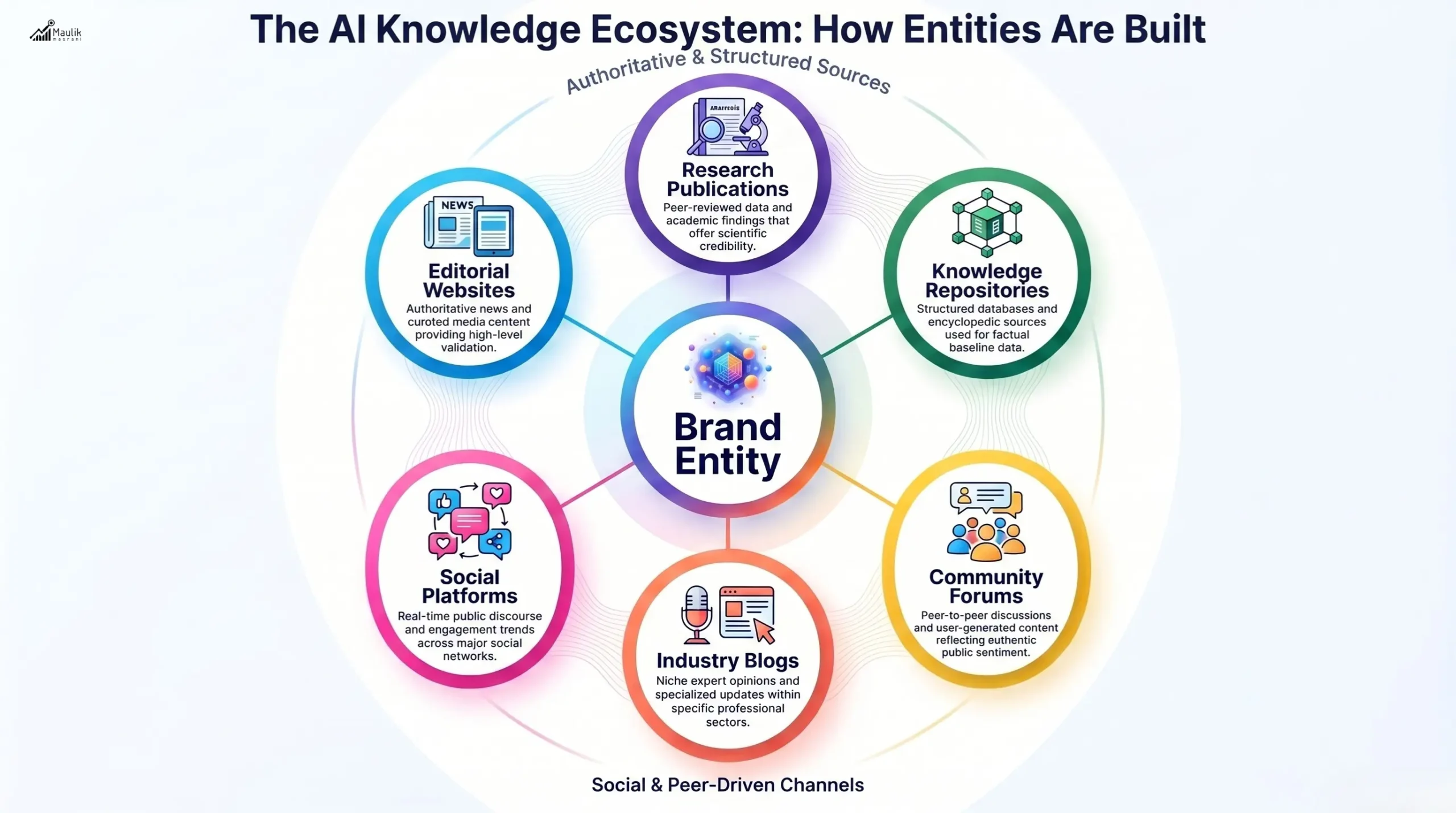
AI systems aggregate knowledge from a variety of sources, including:
- Editorial websites
- Industry blogs
- Social platforms
- Knowledge repositories
- Research publications
- Community forums
If a brand’s expertise is documented across these environments, AI systems gain more contextual evidence about that entity.
A robust channel redundancy system often includes:
- Thought leadership articles published on industry sites
- Expert contributions across professional platforms
- Structured content on the brand website
- Knowledge sharing through educational resources
- Content presence across social and video channels
This multi-channel reinforcement strengthens entity recognition within GEO (Generative Engine Optimization) frameworks.
For example, when a company’s research insights appear across blogs, whitepapers, interviews, and social discussions, AI systems recognize the brand as an authority within that domain.
Redundancy, therefore, acts as insurance against platform-specific volatility.
Quarterly AI Stress Testing
Even strong visibility systems require continuous monitoring. This is where AI stress testing becomes essential.
AI stress testing evaluates how a brand appears across multiple generative models over time.
Organizations implementing AI visibility insurance typically conduct quarterly audits to analyze AI response behavior.
These tests often include prompts such as:
- Which companies are recommended for a specific service?
- Which experts are mentioned within a particular domain?
- Which tools or platforms are cited by AI assistants?
By analyzing these responses across ChatGPT, Gemini, Claude, and Perplexity, brands can identify visibility gaps.
Indicators of AI visibility risk include:
- Brand mentions are declining across models
- Incorrect descriptions of services or offerings
- Competitors appear more frequently in AI answers
- Reduced citation frequency
When these signals appear, corrective actions may include publishing new authoritative content, improving structured data, or increasing third-party citations.
Quarterly stress testing ensures that organizations identify potential visibility collapse before it impacts traffic or brand reputation.
Insurance Blueprint
Building a complete AI visibility insurance system requires aligning multiple strategic layers.
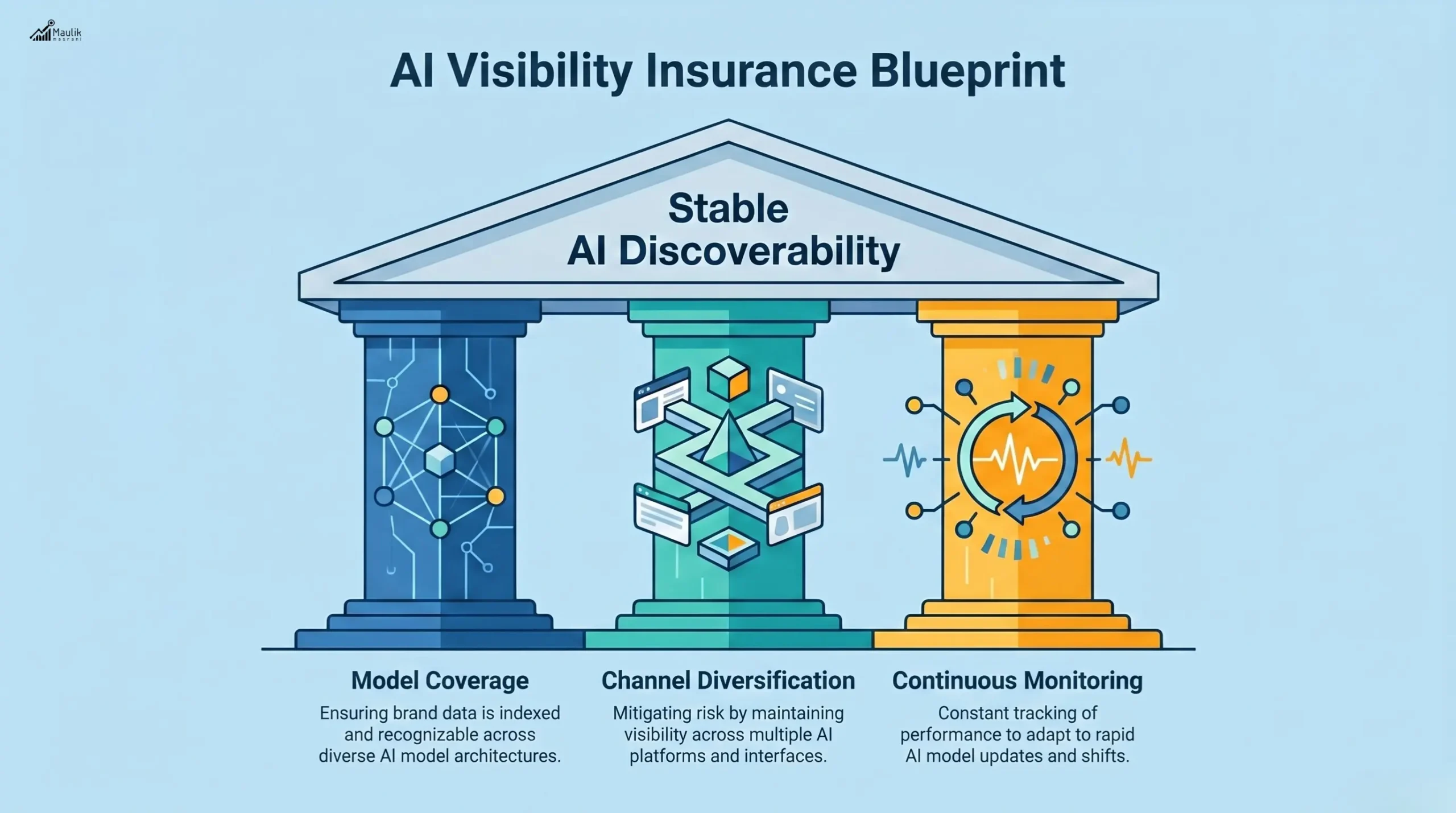
At its core, the blueprint combines three elements:
Model Coverage
Brands must ensure visibility across multiple generative AI models instead of optimizing for a single assistant.
Channel Diversification
Authority signals must exist across different information ecosystems, strengthening entity recognition.
Continuous Monitoring
Regular audits allow organizations to detect visibility shifts early and reinforce signals proactively.
Companies implementing these principles typically experience more stable AI discoverability and a stronger presence in generative search environments.
The long-term advantage is
resilience. When AI ecosystems evolve, brands with redundancy built into their visibility strategy maintain authority while competitors struggle to adapt.
FAQs
How to prevent AI visibility collapse?
Preventing AI visibility collapse requires diversification across models and channels. Brands should strengthen entity signals, publish authoritative content across platforms, and conduct regular AI stress tests to ensure consistent visibility across generative systems.
What is AI visibility insurance?
AI visibility insurance is a strategic framework designed to protect brand presence across multiple AI models and discovery channels through redundancy, monitoring, and authority reinforcement.
Why is cross-model redundancy important?
Different AI systems rely on different datasets and ranking logic. Cross-model redundancy ensures that brand visibility remains stable even if one AI platform changes how it generates answers.
How often should AI visibility audits be conducted?
Most organizations benefit from quarterly AI stress testing to evaluate brand mentions, citations, and recommendation patterns across generative AI models.
Conclusion
Generative AI has introduced a new layer of uncertainty into digital visibility. Brands can no longer rely on a single platform or search ecosystem to maintain discoverability because AI assistants operate independently and rely on different data sources and ranking signals.
AI visibility insurance provides that protection. By diversifying model exposure, reinforcing entity signals across channels, and conducting regular stress tests, organizations can build resilience into their AI search strategy. Instead of reacting to sudden visibility drops, brands with redundancy systems maintain a stable presence and authority across the generative ecosystem.