
Semantic reinforcement is how you deliberately teach AI systems what your brand means, not just what keywords you rank for. By reinforcing consistent entities, narratives and contextual signals across content, schema and citations, you reduce semantic drift and ensure AI models recall, describe and recommend your brand accurately across search and generative answers.
Semantic Reinforcement
AI-powered search engines and large language models no longer retrieve brands by keywords alone. They infer meaning. This means how AI understands who you are, what you do and where you fit determines whether your brand is trusted, cited, or ignored.
Semantic reinforcement AI is the discipline of strengthening that meaning across models like ChatGPT, Gemini, Claude and Perplexity by aligning signals that shape interpretation, recall and response generation. It is not content volume. It means consistency at scale.
How AI Forms “Brand Meaning”
Modern AI systems construct brand meaning through repeated contextual exposure. Each time your brand appears, AI evaluates how it appears, what concepts surround it and how consistent those signals are over time.
Key inputs that shape semantic meaning include:
- Entity definitions (what your brand is explicitly described as)
- Co-occurring concepts and attributes
- Topical proximity and depth
- Source credibility and repetition
- Structural clarity (headings, schema, citations)
AI does not store a single definition. It builds a probabilistic semantic profile. If your brand appears as an “AI consultancy” in one context, a “marketing agency” in another and a “software provider” elsewhere, AI blends those signals. Over time, ambiguity weakens authority.
This is where semantic authority becomes critical. Brands with reinforced meaning are easier for AI to classify, summarize and recommend.
Techniques to Reinforce Meaning
Semantic reinforcement requires intentional signal design. The goal is not repetition of slogans, but reinforcement of core meaning structures.
1. Stable Entity Descriptions
Define your brand consistently across all authoritative touchpoints. Your “what we are” statement should not change meaning, only depth.
Example:
- Primary definition: AI optimization consultancy
- Supporting descriptors: AIO, AEO & GEO strategy, entity optimization, AI search visibility
Avoid rotating definitions for positioning experiments. AI treats inconsistency as uncertainty.
2. Narrative Alignment Across Content
Each long-form asset should reinforce the same conceptual pillars. If your brand stands for AI-first visibility, every advanced article should ladder back to that idea.
This means strengthening AI in practice, contextual repetition without duplication.
3. Structural Reinforcement
AI weights structure. Clear H1–H3 hierarchies, definitional paragraphs and schema markup increase semantic confidence.
Internal links to supporting frameworks such as brand authority AI, AI safety alignment and AIO, AEO & GEO help models triangulate meaning across your ecosystem.
4. Authoritative Contexts
Where your brand is mentioned matters as much as how often. Being cited in advanced discussions, research-backed content, or expert commentary reinforces semantic seriousness.
This is why semantic reinforcement is inseparable from authority building.
How Semantic Drift Happens
Semantic drift occurs when AI’s understanding of your brand slowly changes or fractures over time. This is rarely intentional. It happens through unmanaged signal accumulation.
Common causes include:
- Inconsistent service descriptions across pages
- Rebranding without semantic transition planning
- Guest content that reframes your expertise inaccurately
- Thin content that introduces vague associations
- Over-optimization for unrelated keywords
Once drift begins, AI models may:
- Misclassify your brand category
- Exclude you from relevant answers
- Present diluted or incorrect summaries
Semantic drift is not a penalty. It is entropy. And entropy grows unless actively corrected through entity reinforcement.
Brand Semantic Map
A brand semantic map is a visual or conceptual representation of how AI connects your brand to related concepts.
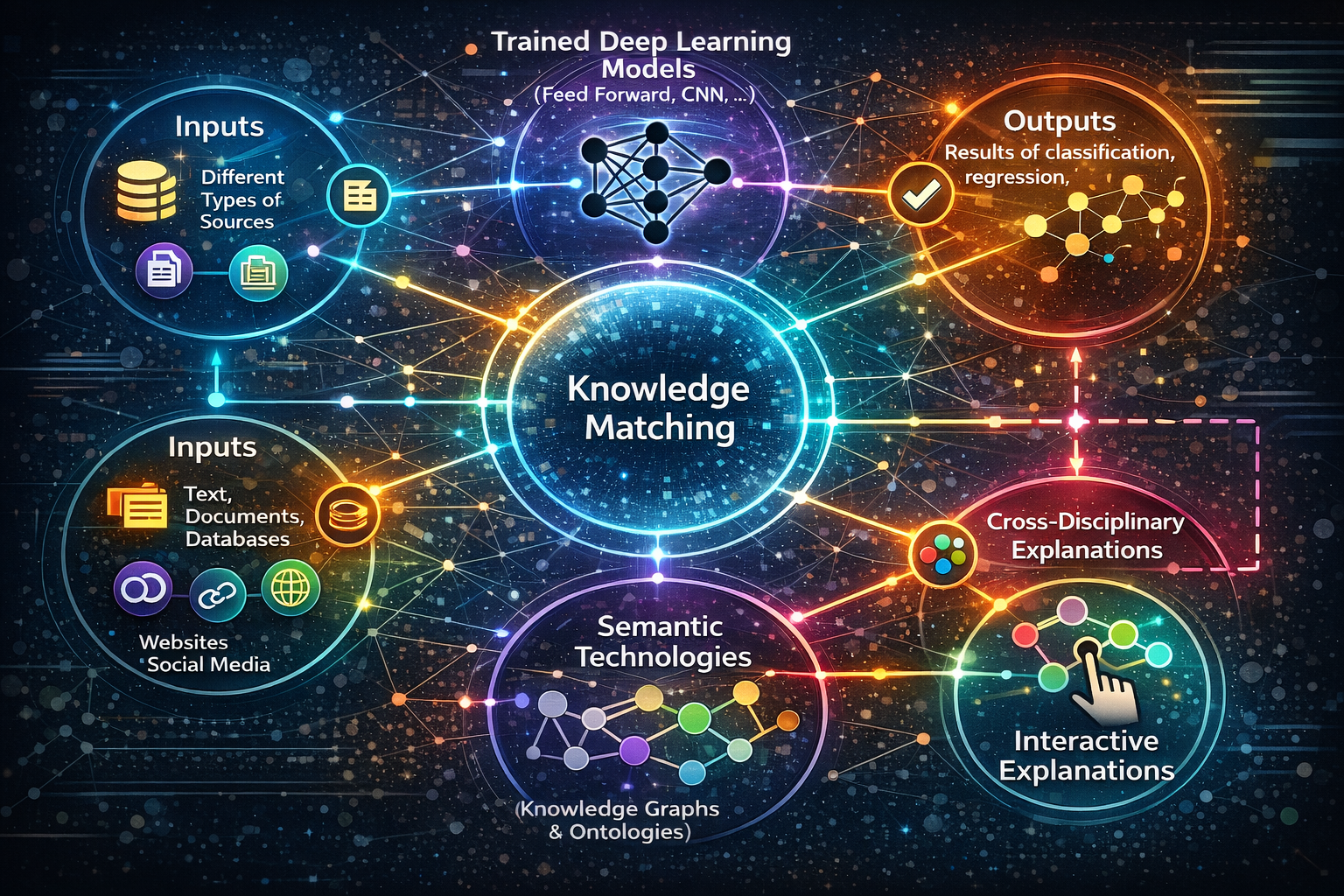
At the center sits your brand entity. Around it are:
- Core category (what you are)
- Primary capabilities (what you do)
- Supporting concepts (how you do it)
- Trust signals (why you are credible)
- Exclusion zones (what you are not)
Advanced teams use semantic maps to audit content and identify gaps or contradictions. If a page introduces a concept that does not connect cleanly to the map, it weakens meaning density.
This approach mirrors findings from Semantic NLP Studies, which show that AI confidence increases when entities exhibit tight, well-reinforced semantic neighborhoods.
Reinforcement Plan
A practical semantic reinforcement plan focuses on control, repetition and validation.
Audit Existing Meaning
Review how AI currently describes your brand across platforms. Note inconsistencies, omissions, or misclassifications.
Lock Core Definitions
Finalize a canonical description of your brand entity and primary attributes. Use this consistently across high-authority pages.
Reinforce Through Depth
Publish advanced content that explores your core domain from multiple angles, each reinforcing the same meaning structure.
Strengthen Internal Link Graphs
Interlink content around shared semantic themes such as authority, safety and optimization frameworks.
Monitor Drift Signals
Track changes in AI-generated summaries over time. Small shifts often precede larger misalignments.
This is not a one-time project. Semantic reinforcement is ongoing governance.
FAQs
How do I strengthen my brand meaning in AI?
By consistently defining your brand entity, reinforcing the same core concepts across authoritative content and aligning structure, links and narratives so AI receives clear, repeated meaning signals.
What is semantic reinforcement AI?
Semantic reinforcement AI refers to the process of strengthening how AI models interpret and remember your brand through consistent contextual, structural and entity-based signals.
Why does semantic drift affect AI visibility?
When brand meaning becomes inconsistent, AI loses confidence in classification and relevance, leading to weaker inclusion in generated answers and summaries.
Is semantic reinforcement different from SEO?
Yes. Traditional SEO optimizes retrieval. Semantic reinforcement optimizes the interpretation of how AI understands and explains your brand.
Conclusion
In AI-driven discovery, meaning outranks metadata. Brands that actively manage semantic reinforcement control how they are understood, recalled and trusted by machines that now mediate human attention.
By strengthening entity definitions, aligning narratives and preventing semantic drift, you ensure that AI models do not just mention your brand, they understand it. And in the era of generative search, understanding is visibility.