
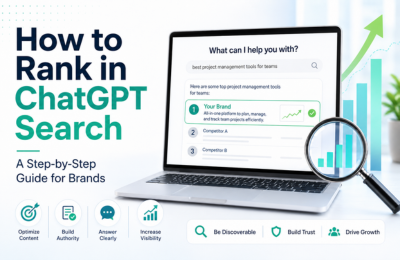
Generative AI platforms such as ChatGPT are rapidly becoming discovery engines for products, services, and expertise. Unlike traditional search engines that rank webpages, large language models retrieve and synthesize information from structured, authoritative, and entity-clear content across the web. To rank in ChatGPT, brands must focus on entity clarity, structured knowledge architecture, topical authority, and measurable visibility signals. This guide explains how LLMs retrieve answers, how to structure content so AI systems understand your brand, and how businesses can systematically improve their presence in generative answers.
How to Rank in ChatGPT
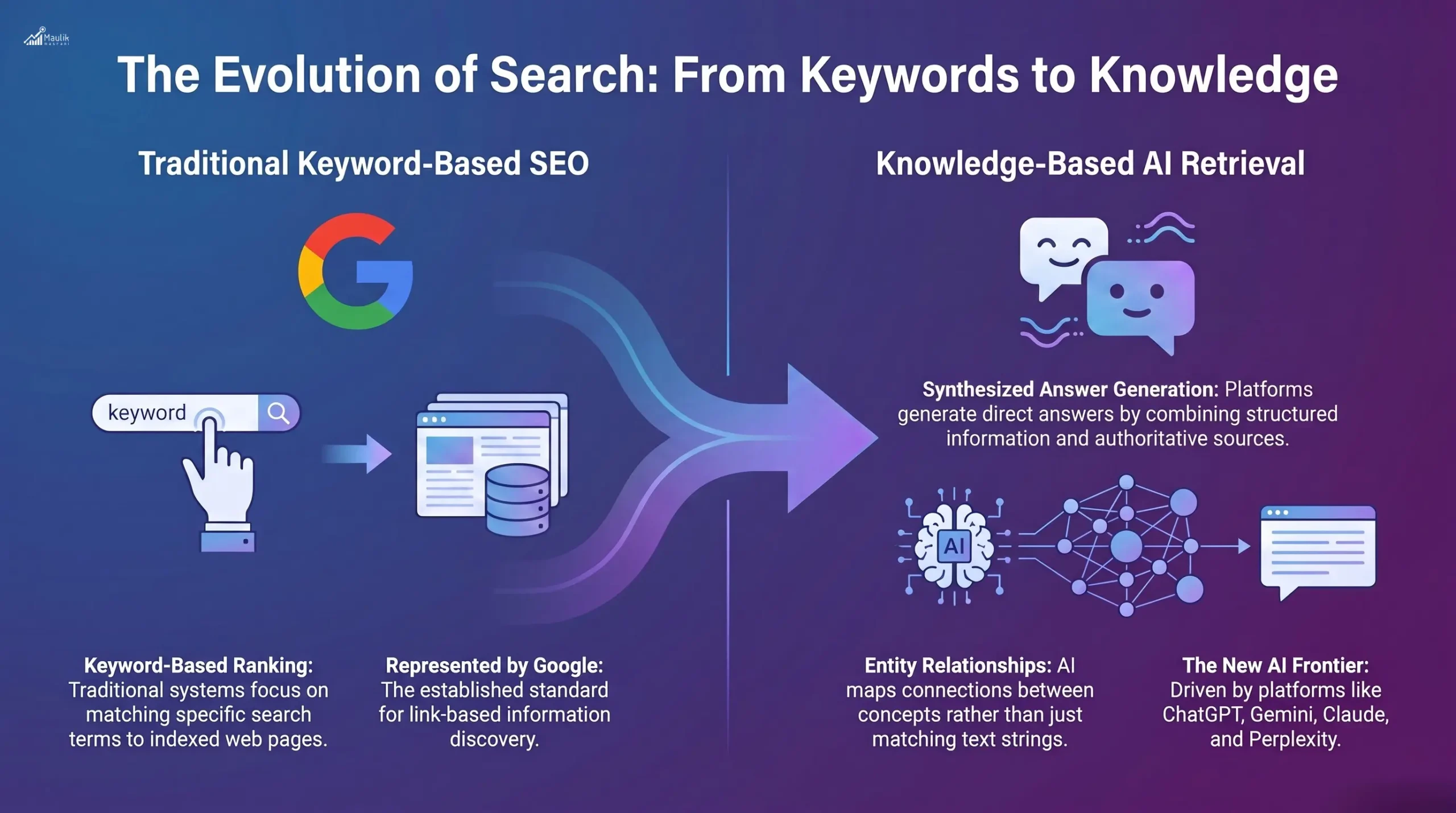
The search landscape is shifting from keyword-based ranking to knowledge-based retrieval. Platforms like ChatGPT, Gemini, Claude, and Perplexity generate answers by combining structured information, authoritative sources, and entity relationships.
For brands, this means visibility is no longer limited to Google results. When users ask questions like “Which company offers the best SEO strategy?” or “What tools help improve AI search visibility?”, AI systems generate answers based on trusted data patterns rather than simple keyword rankings.
This shift introduces a new discipline often called ChatGPT SEO or generative engine optimization, where the goal is to ensure your brand becomes a recognized entity within AI knowledge graphs and authoritative content ecosystems.
Companies that adapt early gain a strategic advantage. Instead of competing only for search rankings, they become part of the answer itself.
How LLMs Retrieve Answers
Understanding how large language models retrieve information is the first step toward improving generative visibility.
Unlike traditional search engines, LLMs rely on multiple signals simultaneously when constructing answers.
Key retrieval signals include:
- Entity recognition: AI models identify brands, products and concepts as entities within a knowledge graph.
- Source authority: Content from credible, widely referenced domains is prioritized.
- Contextual relevance: The model evaluates semantic relationships rather than exact keywords.
- Structured data signals: Schema and structured content help models interpret information accurately.
- Consensus patterns: If multiple trusted sources reference the same information, AI systems treat it as reliable knowledge.
For example, when someone asks ChatGPT about SEO strategy frameworks, the model analyzes training data, indexed content, and credible references to generate a summarized answer.
If your brand consistently appears in authoritative contexts-industry publications, structured blogs, and expert commentary AI systems are more likely to reference it.
This is why generative engine optimization focuses heavily on authority and structured knowledge rather than traditional keyword density.
Entity Clarity Framework
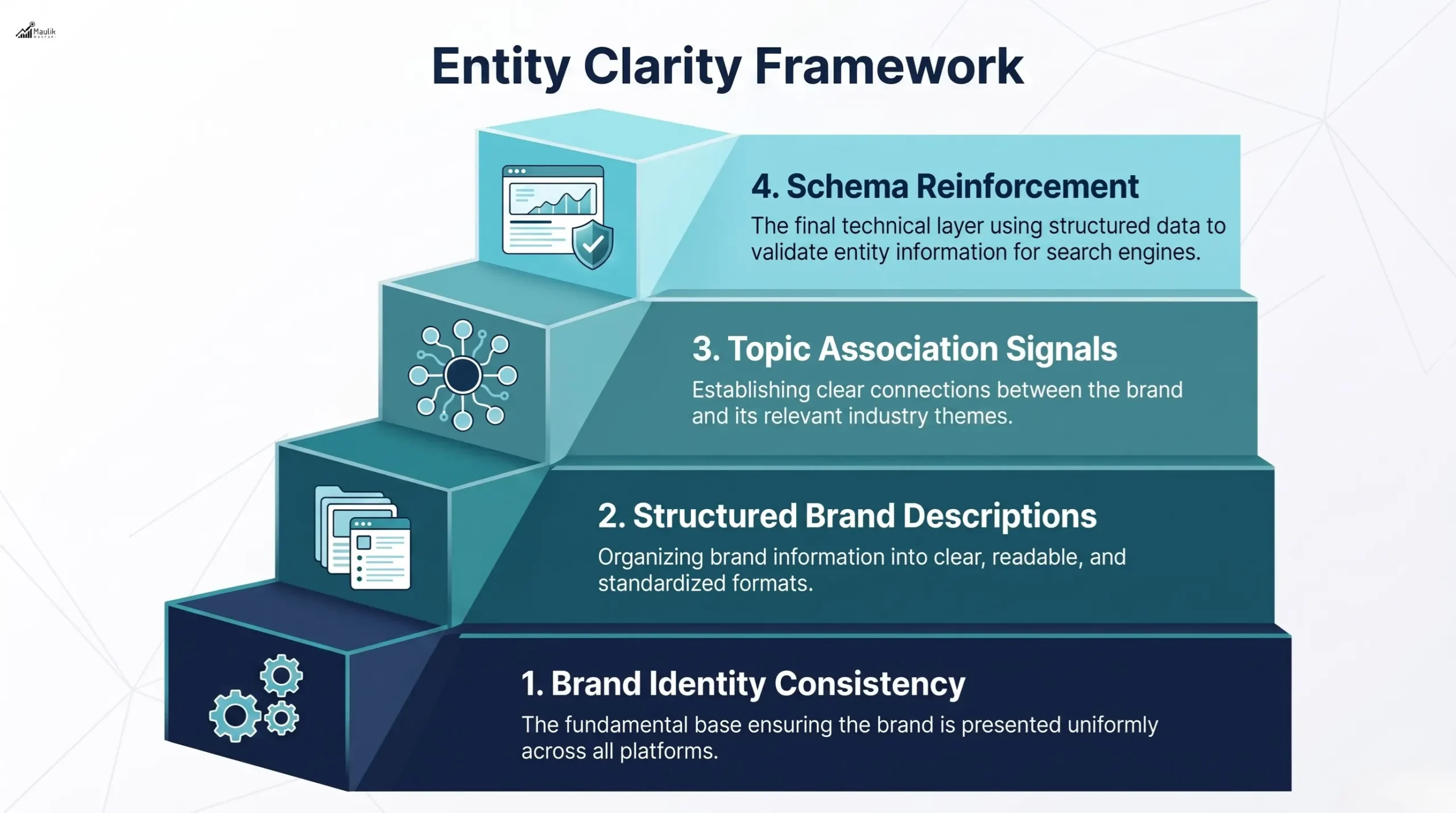
To rank in ChatGPT, your brand must first exist as a clear, identifiable entity. An entity is essentially a concept that AI systems can recognize, contextualize, and connect with related information. Without entity clarity, AI systems may treat your brand as a generic term rather than a recognized authority.
A strong entity clarity framework usually includes several foundational elements:
Brand Identity Consistency
Your brand name, service descriptions, and positioning should remain consistent across websites, social profiles, and authoritative mentions. Consistency helps LLMs associate your brand with specific expertise areas.
Structured Brand Descriptions
Clear “About” pages, structured author profiles, and detailed company information help AI systems understand what your organization does and who it serves.
Topic Association Signals
Your content should repeatedly connect your brand with specific expertise areas. For instance, a company specializing in generative search strategy should consistently publish insights on AI visibility, structured data, and LLM retrieval methods.
Schema Reinforcement
Structured schema, such as Organization, Person, Article, and FAQ markup, allows machines to interpret content relationships more accurately.
Together, these signals help transform your brand from a webpage into a recognized entity within the broader digital knowledge ecosystem.
Structured Content Blueprint
Structured content is one of the most important technical foundations for ChatGPT SEO.
LLMs prefer information that is easy to interpret, summarize, and retrieve.
Content designed for generative engines typically follows a structured architecture rather than long, unorganized text blocks.
An effective structured content blueprint includes:
Clear Heading Hierarchy
Organizing information with logical H1-H3 headings helps AI systems understand topic segmentation and relationships.
Definition-Style Sections
Short explanatory sections that answer specific questions improve retrievability for AI systems generating responses.
Tables and Structured Comparisons
LLMs frequently extract information from structured comparisons because they are easy to summarize.
Below is a simple example of how structured content supports generative retrieval.
| Content Element | Why It Helps AI Retrieval |
| Headings and sections | Improve topic segmentation |
| Structured data markup | Clarifies entity relationships |
| FAQ sections | Direct answer extraction |
| Author attribution | Strengthens credibility signals |
Another important component is answer-ready writing.
Content that clearly explains concepts in concise language is easier for AI models to summarize. Instead of vague marketing language, use precise explanations and real examples.
For instance, rather than saying “our service improves online presence,” describe exactly how your framework improves AI visibility.
Structured clarity dramatically increases the likelihood that generative engines reuse your insights.
Authority Stacking Method
Authority remains a critical ranking factor in both traditional SEO and generative search systems. However, generative engines evaluate authority across multiple sources simultaneously. The authority stacking method involves building credibility layers across different platforms so AI systems repeatedly encounter your brand in trusted contexts.
Authority signals often accumulate through the following channels:
Expert Content Publishing
High-quality blog articles, research pieces, and thought leadership content establish expertise within your niche.
Industry Mentions
References from reputable websites, interviews, and case studies increase credibility signals.
Cross-Platform Knowledge Reinforcement
Publishing consistent insights across blogs, industry platforms, and professional networks helps create a unified expertise footprint.
Author Credibility
Content written by identifiable experts with a consistent publishing history strengthens authority signals.
When these signals align, AI models are more likely to treat your brand as a trusted source.
This method works because generative systems rely on repeated contextual reinforcement across sources. If your expertise appears consistently in credible environments, AI answers are more likely to include or reference your brand.
Measuring Visibility
One challenge with generative search optimization is measurement. Traditional SEO metrics such as rankings and impressions do not fully capture AI visibility. Brands must adopt new measurement approaches to understand whether they successfully rank in ChatGPT and similar platforms.
Several indicators help measure generative visibility:
AI Answer Presence
Track whether your brand appears in AI-generated responses across tools such as ChatGPT, Gemini, Claude, or Perplexity.
Citation Frequency
Measure how often AI answers reference content from your domain or related entities.
Brand Association Signals
Evaluate whether AI systems connect your brand with specific topics or expertise areas.
Content Retrieval Patterns
Monitor which articles or pages AI platforms appear to summarize most frequently.
Some organizations also conduct periodic generative search audits by testing industry-specific queries and recording how often their brand appears in the generated responses. These insights help identify visibility gaps and guide future generative engine optimization strategies.
FAQs
Can Brands Rank in ChatGPT?
Yes. Brands can improve their presence in ChatGPT answers by building strong entity recognition, publishing authoritative content, and structuring information so AI models can easily interpret it. While LLMs do not use traditional ranking algorithms like search engines, they rely heavily on trusted, structured, and widely referenced information sources.
What is ChatGPT SEO?
ChatGPT SEO refers to optimizing content and brand signals so that generative AI systems recognize and reference your information when answering user queries. This includes structured content, entity clarity, authority building, and schema implementation.
What is Generative Engine Optimization?
Generative engine optimization is the practice of preparing content so AI systems such as ChatGPT, Gemini, and Perplexity can easily retrieve, interpret, and include it in generated answers.
How can Businesses Measure AI Visibility?
Businesses can measure AI visibility by tracking brand mentions in AI responses, analyzing citation frequency, and conducting periodic generative search audits to see how often their brand appears in AI-generated answers.
Conclusion
The ability to rank in ChatGPT represents a new frontier in digital visibility. As generative search becomes a major discovery channel, brands must move beyond traditional keyword strategies and focus on structured knowledge, entity clarity, and authority reinforcement. Organizations that implement ChatGPT SEO and generative engine optimization early will be better positioned to appear in AI answers rather than competing only for conventional search rankings.
If your brand wants to understand its current generative visibility, the most practical next step is to conduct an AI search audit and identify the structural improvements needed to strengthen your presence across AI platforms.