
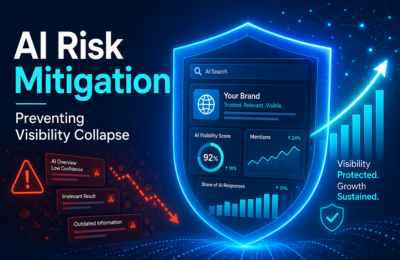
Generative AI search systems increasingly influence how brands are discovered online. When entity signals weaken, content becomes outdated, or governance fails, companies may experience sudden drops in AI visibility. Implementing AI risk mitigation strategies such as structured monitoring, governance frameworks and quarterly AI audits helps marketing leaders maintain a stable brand presence across generative platforms like ChatGPT, Gemini, and other AI discovery systems.
AI Risk Mitigation
Marketing visibility used to depend primarily on search engine rankings. Today, AI systems interpret and summarize information before presenting it to users. This means that brand perception is no longer controlled solely by your website or marketing campaigns.
Instead, generative systems analyze signals from multiple digital sources simultaneously.
These include:
- websites
- documentation platforms
- social media signals
- knowledge repositories
- industry publications
If these signals become inconsistent, AI systems may struggle to interpret the brand correctly.
This is where AI risk mitigation becomes critical for marketing leaders. Without proactive monitoring and governance, organizations may suddenly lose visibility in generative search results.
Many CMOs now treat AIO risk prevention similarly to reputation management or cybersecurity risk management.
The objective is simple: ensure that AI systems consistently understand and reference the brand accurately.
Common Causes of AI Visibility Drop
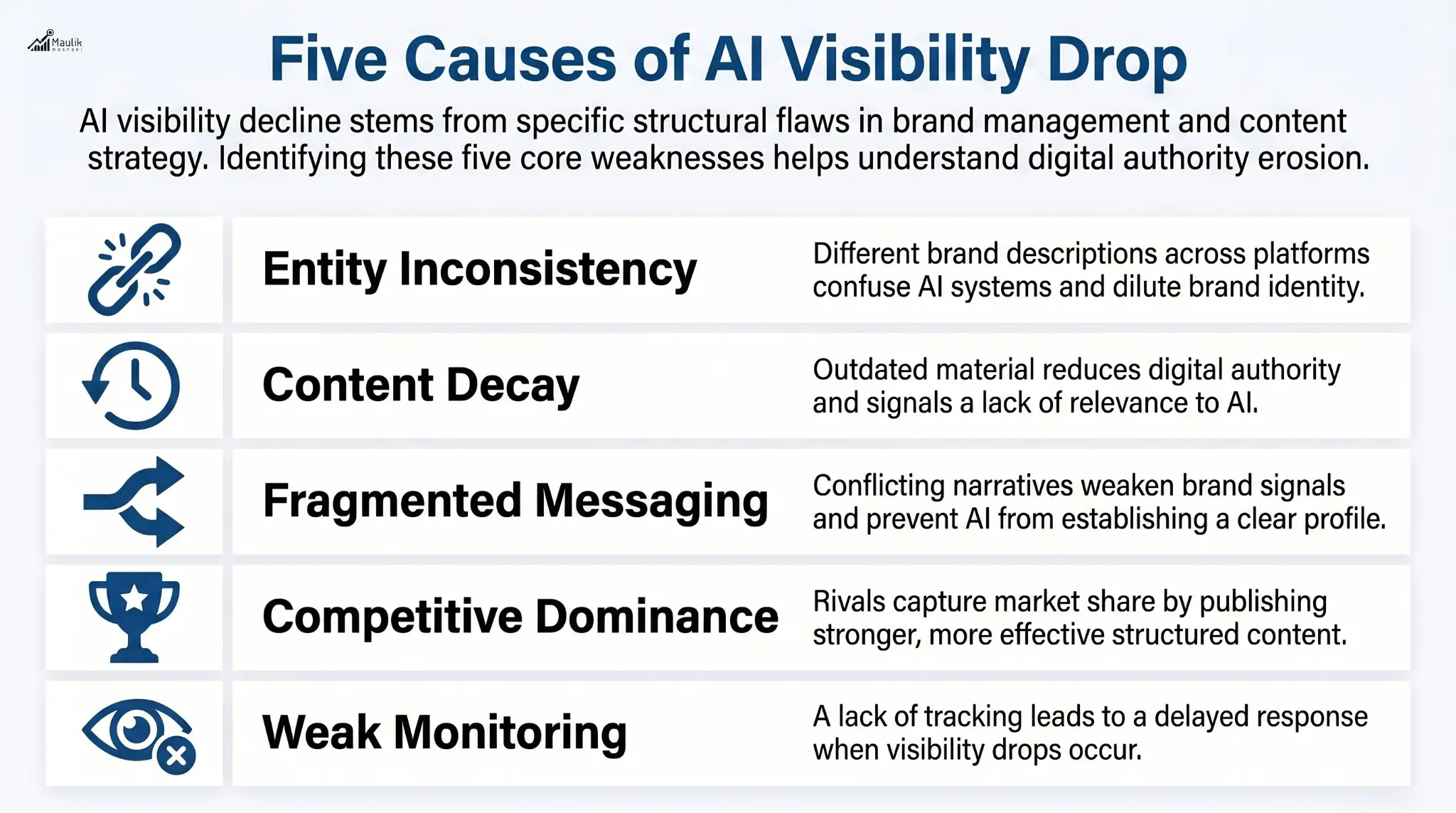
AI visibility decline rarely happens randomly. It usually results from structural weaknesses in digital authority signals.
Key Drivers of Visibility Loss
| Risk Factor | Description | Impact |
| Entity inconsistency | Different brand descriptions across platforms | AI confusion |
| Content decay | Outdated or rarely updated content | Reduced authority |
| Fragmented messaging | Conflicting marketing narratives | Weak brand signals |
| Competitive dominance | Competitors are publishing stronger, structured content | AI referencing competitors |
| Weak monitoring | No tracking of AI-generated mentions | Delayed response |
 Another overlooked cause is content saturation without structure.
Marketing teams often publish large volumes of content but fail to align it around clear entity signals. AI systems may struggle to determine which information represents the official brand narrative.
Over time, this can weaken AI search stability, especially in competitive industries.
Risk Scoring System
Marketing leaders can reduce uncertainty by adopting a structured AI risk scoring model.
Instead of guessing whether visibility is stable, organizations evaluate measurable signals.
Example Risk Evaluation Model
| Signal Category | Measurement Indicator | Risk Level |
| Brand mention frequency | AI-generated brand citations | Low / Medium / High |
| Entity clarity | Consistency of the company description | Low / Medium / High |
| Content authority | External references and citations | Low / Medium / High |
| Content freshness | Update frequency of key pages | Low / Medium / High |
| Competitive share | Competitor presence in AI answers | Low / Medium / High |
This scoring model allows marketing teams to quantify the strength of their digital presence within AI ecosystems.
For example, if AI platforms stop referencing a company in industry-related prompts, the score for brand mention frequency may increase to high risk.
This signals that corrective actions are needed before visibility collapses.
Structured risk scoring transforms AIO risk prevention from guesswork into a measurable strategy.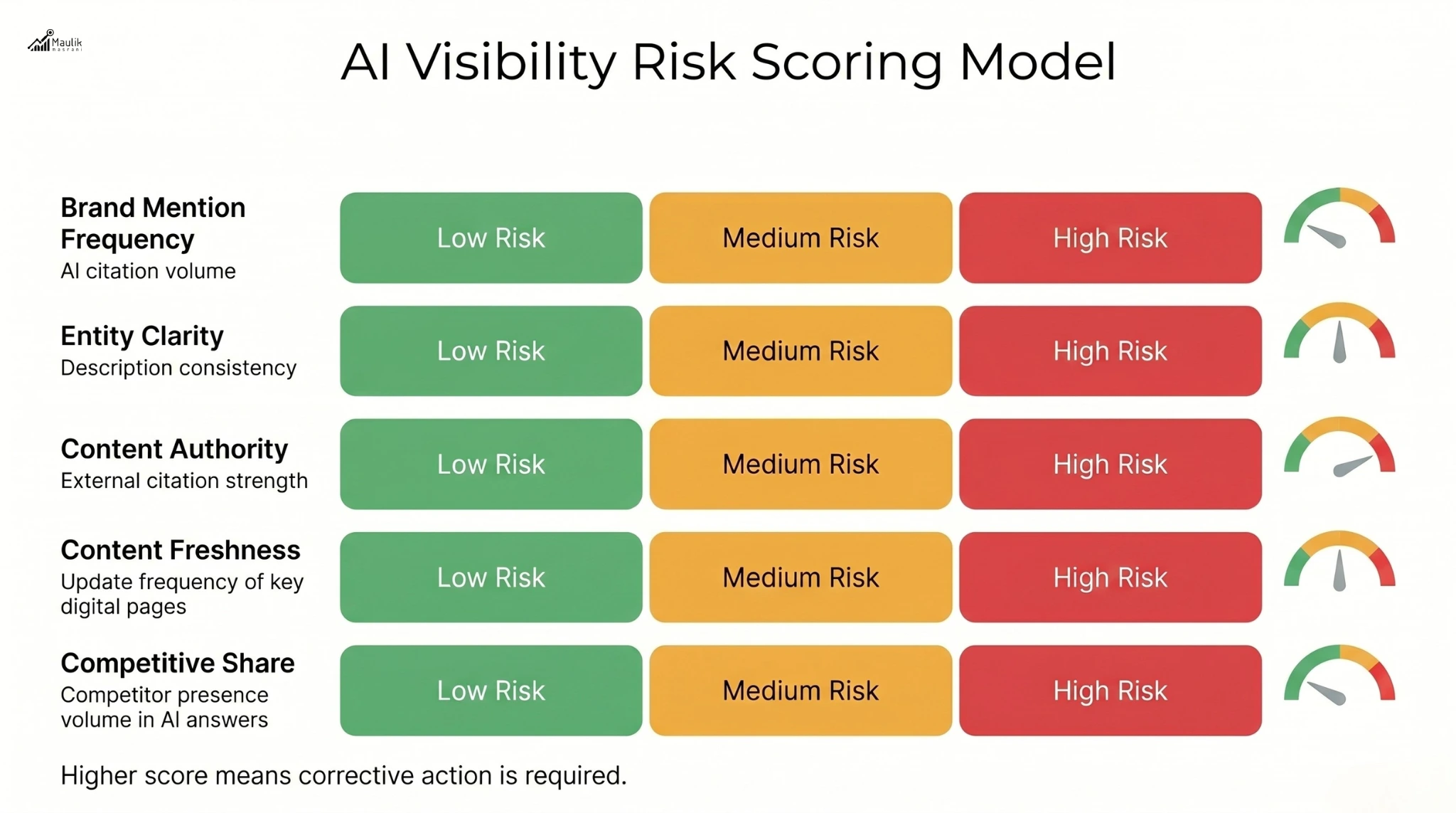
Quarterly AI Audits
Many organizations already conduct SEO audits. However, generative search requires a different evaluation process.
Quarterly AI audits simulate how generative platforms respond to industry queries.
Typical audit questions include:
- How does AI describe our company?
- Are competitors mentioned more frequently?
- Are product descriptions accurate?
- Does AI associate the brand with the correct industry expertise?
What a Typical AI Audit Reviews
| Audit Area | What is Evaluated |
| AI brand description | Accuracy of company identity |
| Industry expertise | AI association with key topics |
| Competitive mentions | Frequency of competitor references |
| Knowledge gaps | Missing brand information |
| Sentiment | Positive or neutral interpretation |
These audits reveal subtle narrative changes before they become serious visibility problems.
For example, an AI system that previously described a company as an industry leader may start referencing competitors more frequently. This shift signals a potential authority decline.
Regular auditing ensures that marketing teams maintain AI search stability across multiple generative platforms.
Governance Integration
AI visibility is not only a marketing responsibility. It requires governance across multiple teams.
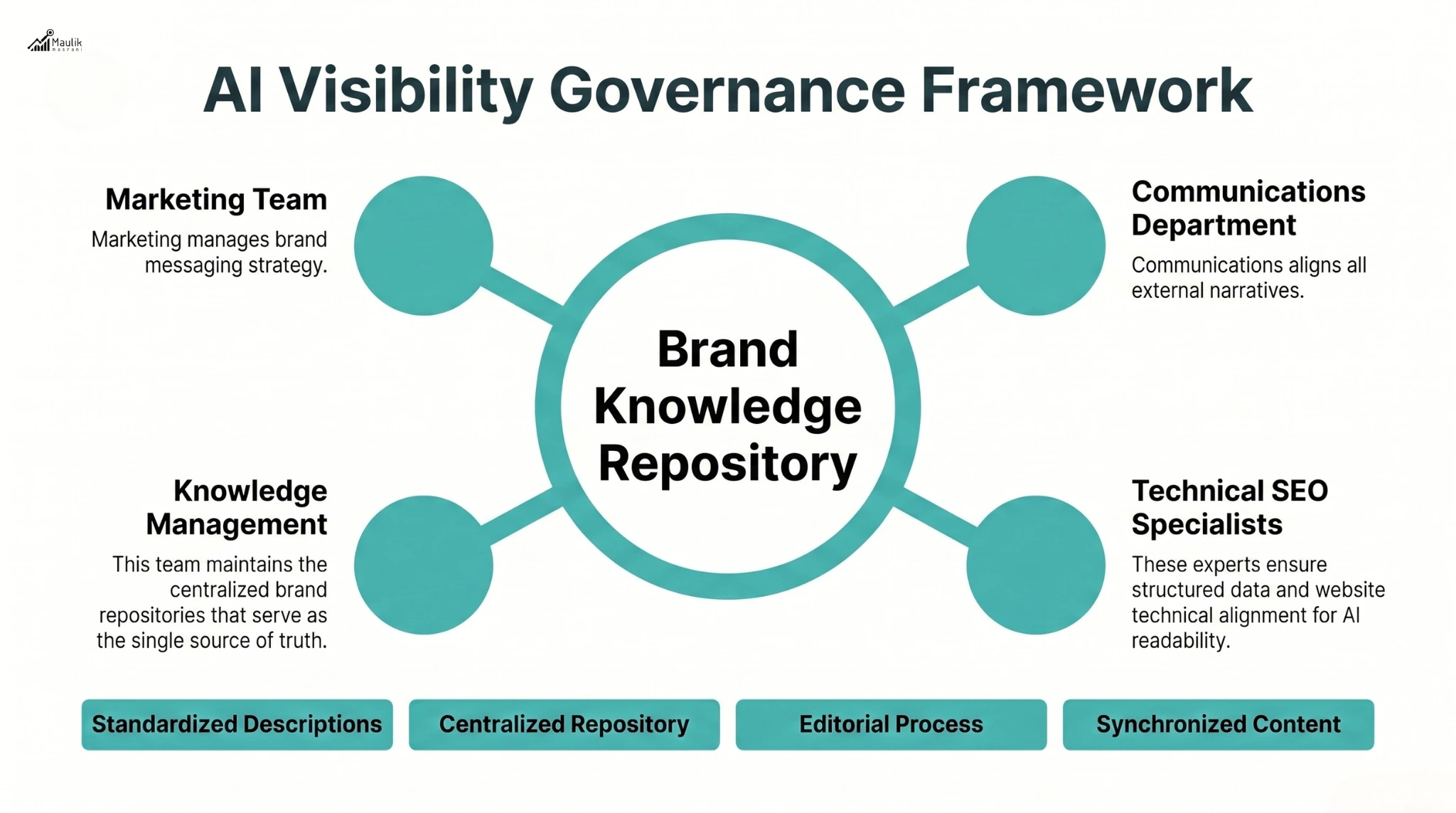
Companies that maintain stable AI visibility often implement structured governance frameworks.
These frameworks typically include collaboration between:
- marketing teams
- communications departments
- knowledge management teams
- technical SEO specialists
The goal is to maintain consistent brand information across all digital assets.
Governance Elements That Support AI Stability
- centralized brand knowledge repository
- standardized company descriptions
- controlled editorial publishing process
- synchronized website and documentation content
Some enterprises also develop internal “brand knowledge libraries” to ensure that official company information remains consistent across all marketing channels.
This approach reduces the risk of conflicting signals that could weaken AI interpretation.
When governance and marketing strategy align, organizations achieve stronger AIO risk prevention outcomes.
Executive Checklist
For marketing leaders responsible for digital visibility, AI governance should become part of a regular operational strategy.
Key actions include:
- monitoring how AI systems describe the brand
- ensuring consistent messaging across platforms
- maintaining structured and authoritative content
- auditing AI responses quarterly
- coordinating marketing and knowledge teams
Organizations that implement these practices significantly reduce the risk of generative search visibility collapse.
FAQs
What risks exist in AIO?
The main risks include inconsistent brand information, declining content authority, outdated digital assets, and stronger competitor visibility in generative AI answers. Without proactive monitoring, these issues can reduce brand presence in AI-generated responses.
Why is AI visibility important for marketing leaders?
AI assistants increasingly influence how customers research companies and services. If a brand is not referenced in generative answers, potential customers may never discover it during early research stages.
How often should companies audit AI search visibility?
Most organizations perform AI visibility audits every quarter. This schedule allows teams to detect narrative changes early and correct them before they impact marketing performance.
Can AI risk mitigation improve brand trust?
Yes. When companies maintain accurate and consistent information across platforms, AI systems are more likely to interpret the brand correctly. This improves credibility and increases the likelihood of being referenced in AI-generated responses.
Conclusion
Generative search systems are reshaping digital visibility, forcing marketing leaders to rethink traditional SEO strategies. Maintaining a stable presence in AI-driven discovery channels requires more than publishing content; it requires structured governance, consistent brand signals, and ongoing monitoring.
By implementing proactive AI risk mitigation practices, organizations can protect their digital authority, maintain credibility across AI platforms, and prevent sudden visibility collapse in an increasingly AI-driven search ecosystem.