
An effective internal knowledge base AIO framework ensures that AI systems represent your brand consistently, accurately, and at scale. By building an AI-ready knowledge system with centralized messaging, structured FAQ engineering, and controlled update layers, organizations reduce AI drift, eliminate contradictory outputs, and create sustainable visibility across search engines and LLMs. Structured intelligence is no longer optional; it is foundational for AI-era brand authority.
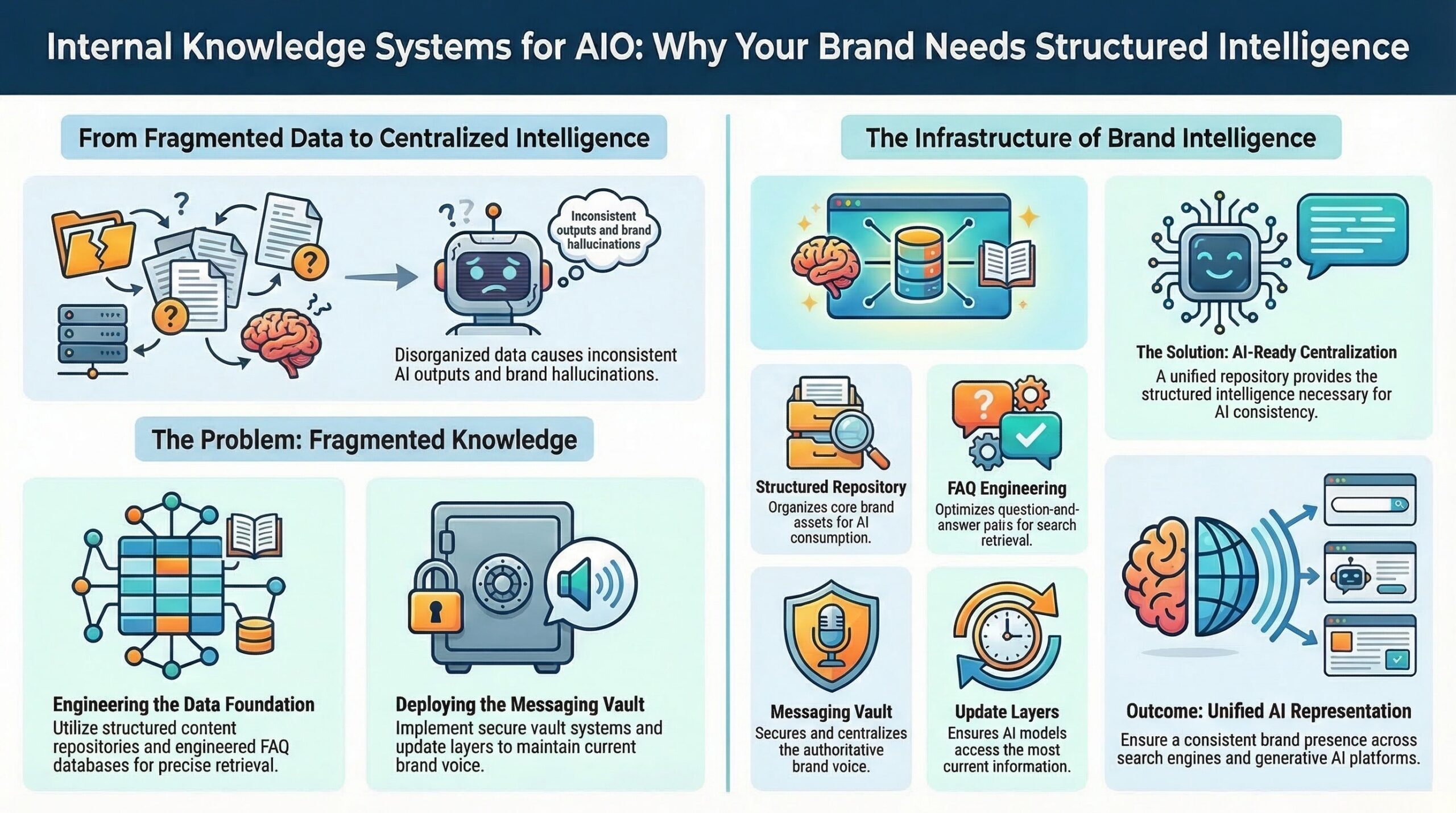
Why AI consistency starts internally
Most brands focus on optimizing what appears externally, such as blog posts, landing pages, schema markup, and social distribution. But AI inconsistency rarely begins outside. It begins inside.
When internal documentation is fragmented, sales decks say one thing, product pages say another, support scripts use different terminology, and AI systems reflect that inconsistency.
LLMs and search engines synthesize patterns. If your internal language is unstable, your external AI representation will be unstable.
A mature internal knowledge base AIO strategy ensures:
- Terminology alignment across departments
- Standardized product definitions
- Controlled positioning narratives
- Structured entity clarity
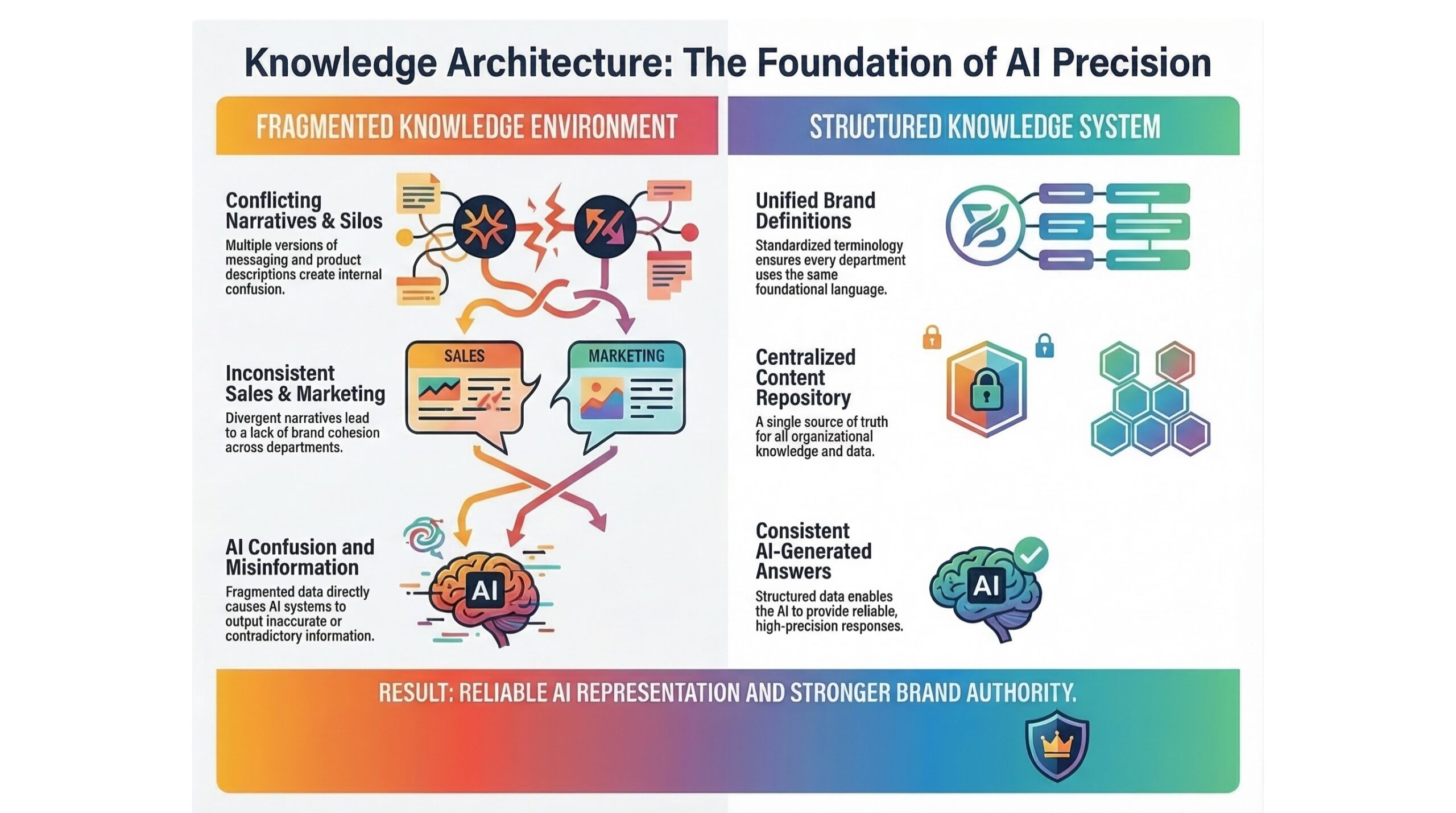
According to enterprise knowledge management studies, employees spend nearly 20% of their time searching for information internally. If humans struggle with inconsistency, AI systems will amplify it.
AI visibility is no longer just about SEO. It is about institutional coherence.
Building centralized brand intelligence
A true AI-ready knowledge system is not a Google Drive folder full of PDFs. It is a structured content repository engineered for machine comprehension.
Centralized brand intelligence includes:
1. Core entity definitions
Define your organization, products, services, methodologies, frameworks, and leadership in structured, canonical language.
Example:
- Official product description (short + long version)
- Approved positioning statement
- Value proposition variants
2. Controlled vocabulary system
Establish preferred terminology and disallowed synonyms.
For instance:
- Approved industry category terms
- Official feature naming
- Brand-safe descriptive language
Consistency here strengthens semantic reinforcement and improves AI model confidence in representing your brand.
3. Structured content repository architecture
Organize information into machine-friendly layers:
- Brand layer
- Product layer
- Customer layer
- Compliance layer
- Messaging layer
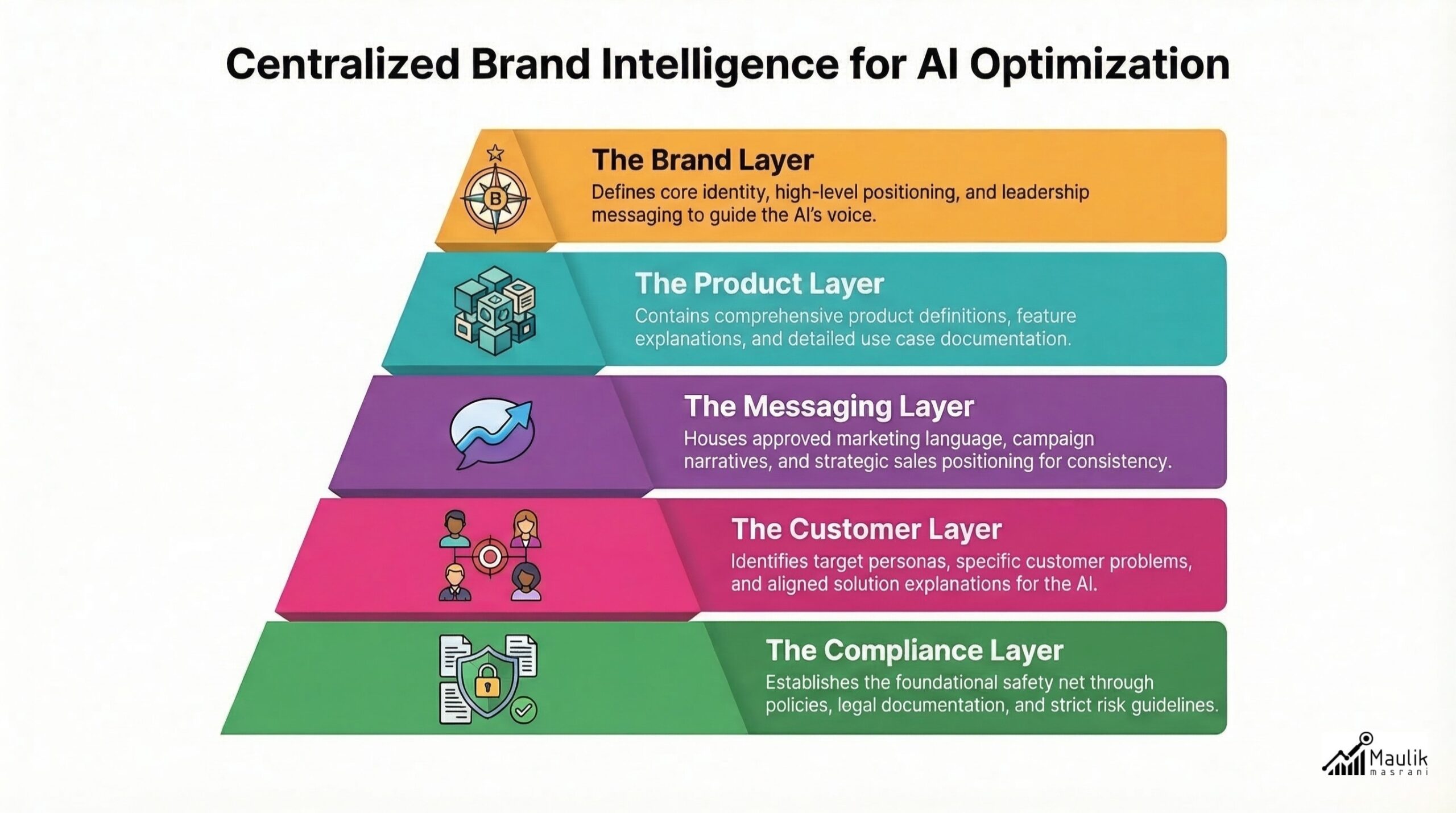
Each should have version control and metadata tagging.
Think of this as building an internal knowledge graph before expecting external AI systems to build one correctly.
For broader principles of knowledge management architecture, organizations often reference standards such as those outlined by the International Organization for Standardization in knowledge management frameworks.
FAQ database engineering
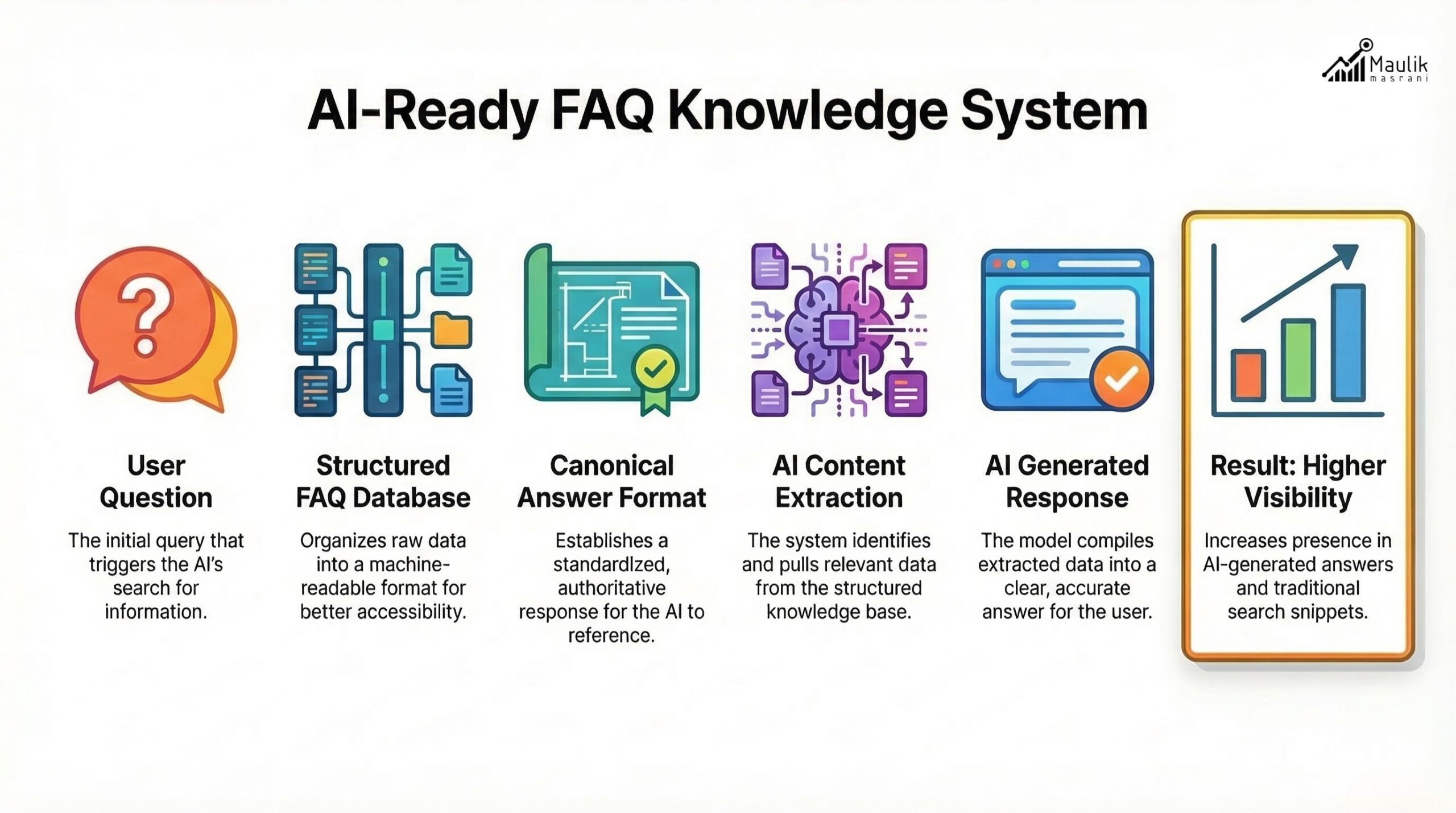
FAQ sections are often treated as marketing afterthoughts. In an internal knowledge base AIO framework, they are strategic assets.
Why? Because AI systems frequently extract answers from FAQ-style structures.
FAQ database engineering involves:
Structured question mapping
Document every core question about:
- Products
- Policies
- Differentiation
- Pricing logic
- Risk management
- Implementation
Each answer should be:
- Canonical
- Concise
- Version-controlled
- Reviewed cross-functionally
AI answer optimization
Create answer blocks designed for:
- Featured snippets
- LLM extraction
- Voice assistants
Example engineering principles:
- Direct answer in first 1–2 sentences
- Expand with context after
- Avoid ambiguity
- Use structured headings
An AI-ready knowledge system ensures that FAQs used internally match FAQs published externally, preventing contradictory AI responses across channels.
Messaging vault system
As organizations scale, messaging drift becomes inevitable.
Sales teams adapt language.
Marketing tests new narratives.
Product teams redefine features.
Without control, AI systems ingest mixed signals.
A messaging vault system is a controlled repository that stores:
- Approved headlines
- Elevator pitches
- Positioning frameworks
- Campaign narratives
- Taglines
- Objection-handling scripts
Each entry should include:
- Usage context
- Audience type
- Validity timeframe
- Version history
This creates institutional memory.
It also protects against AI hallucination caused by conflicting public-facing language.
In the AI era, brand consistency is not just a creative exercise; it is a technical requirement.
Updating knowledge layers
Static documentation is dangerous in dynamic markets.
AI systems continuously retrain and update based on fresh data. If your internal knowledge base AIO framework does not evolve, AI representations lag behind reality.
Effective updating requires:
Scheduled review cycles
- Quarterly entity audit
- Biannual messaging review
- Product update triggers
Cross-department validation
Marketing, legal, product and sales must validate critical knowledge entries.
Version tracking
Maintain historical records of:
- Old positioning
- Retired products
- Updated compliance statements
This enables controlled deprecation of outdated language.
Without structured update layers, AI models may continue referencing legacy claims long after strategy changes.
A structured content repository prevents that decay.
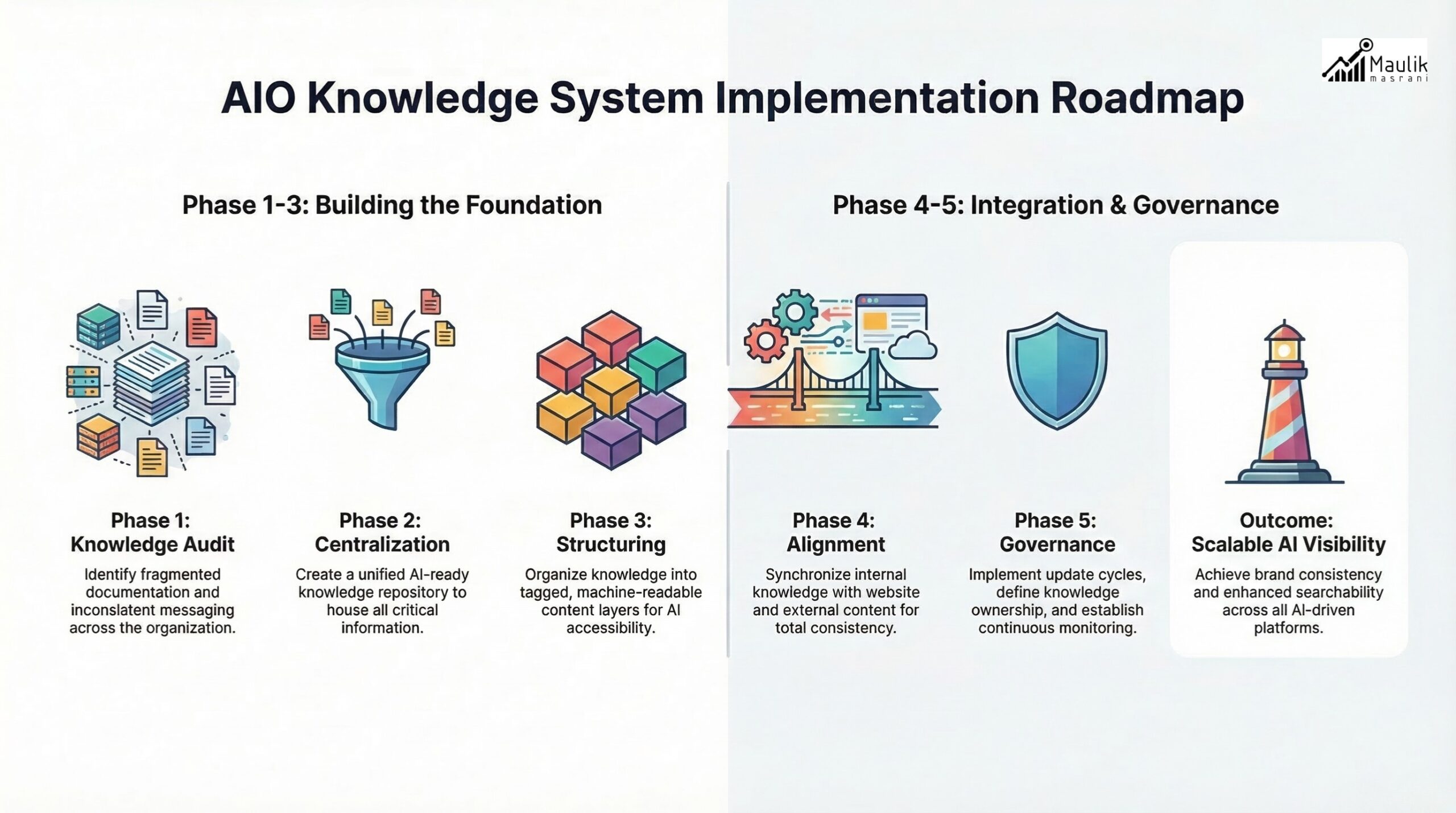
Implementation roadmap
Transitioning to a mature internal knowledge base AIO model requires structured execution.
Phase 1: Knowledge Audit
- Identify scattered documentation
- Map inconsistencies
- Catalog existing FAQs
- Extract core entity definitions
Phase 2: Centralization
- Consolidate into a unified AI-ready knowledge system
- Standardize terminology
- Establish controlled vocabulary
Phase 3: Structuring
- Create taxonomy and tagging logic
- Separate brand, product, and compliance layers
- Implement version control
Phase 4: Alignment
- Synchronize the internal repository with the public content
- Update website FAQ sections
- Reinforce schema markup alignment
Phase 5: Governance
- Assign knowledge owners
- Schedule audits
- Monitor AI representation consistency
The goal is not documentation. The goal is institutional intelligence.
When executed properly, this framework enhances:
- SEO clarity
- LLM citation probability
- Brand authority signals
- Reduced AI misrepresentation risk
Structured intelligence compounds over time.
FAQs
How do knowledge bases support AIO?
Knowledge bases support AIO by creating a centralized, structured source of truth that AI systems can interpret consistently. A well-engineered internal knowledge base AIO framework reduces contradictory outputs, strengthens entity clarity, and improves AI visibility across search engines and LLM platforms.
What is an AI-ready knowledge system?
An AI-ready knowledge system is a structured content repository designed for machine comprehension. It includes canonical definitions, standardized FAQs, messaging controls, and version tracking to ensure consistent AI representation.
Why is brand consistency important for AI search?
AI systems synthesize patterns from structured and unstructured content. Inconsistent terminology or messaging weakens semantic clarity, leading to diluted or inaccurate brand representation in AI-generated answers.
How often should internal knowledge systems be updated?
Core brand and product knowledge should be reviewed quarterly, with immediate updates triggered by major product launches, regulatory changes, or positioning shifts to maintain alignment with evolving AI ecosystems.
Conclusion
In an AI-first landscape, brand visibility depends less on volume and more on internal clarity. When your organization operates from a unified, structured source of truth, AI systems mirror that precision externally. An effective internal knowledge base AIO framework does more than organize documents; it stabilizes messaging, strengthens entity authority, and ensures consistent representation across search engines and generative platforms. Brands that treat structured intelligence as infrastructure, not documentation, will build durable trust in both human and AI-driven environments.