

An AIO performance dashboard tracks how your brand appears, gets cited and is interpreted across AI systems, not just how much traffic you receive. Instead of relying solely on sessions and clicks, modern teams must measure AI citation frequency, entity salience, cross-model visibility, sentiment alignment, and generative ranking KPIs. This article explains each metric clearly and provides a structured dashboard template to operationalize AI visibility measurement at scale.
AIO Performance Dashboards
Traditional analytics were built for search engines that send users to websites. AI systems do not always send traffic. They synthesize answers. They cite selectively. They summarize brands. That shift requires a new measurement layer: the AIO performance dashboard.
An AIO dashboard is an analytical framework designed to measure brand presence, representation accuracy and influence within AI-generated outputs across systems such as ChatGPT, Gemini, Claude and Perplexity.
Instead of optimizing for “click-through rate,” organizations now optimize for answer inclusion, citation dominance, and entity reinforcement. In enterprise environments, this is no longer optional. AI answer layers are becoming the new interface for discovery.
Why traffic is no longer enough
Traffic was once the north star. More organic sessions meant better visibility.
But generative AI disrupts that model in three major ways:
- Zero-click environments are increasing. Users receive answers without visiting websites.
- Brand mentions happen without referral data.
- Influence shifts from ranking position to answer authority.
For example, a B2B SaaS brand may appear in 65% of AI-generated responses about “AI governance tools” yet see flat website traffic. Without an AI measurement framework, that influence remains invisible.
According to industry analysis from sources like Search Engine Journal and generative search research from Google’s AI documentation, AI-driven summaries reduce reliance on traditional clicks.
This is why modern analytics teams are expanding dashboards beyond sessions, impressions and bounce rates. AI visibility is now a measurable strategic asset.
AI citation frequency metric
Definition
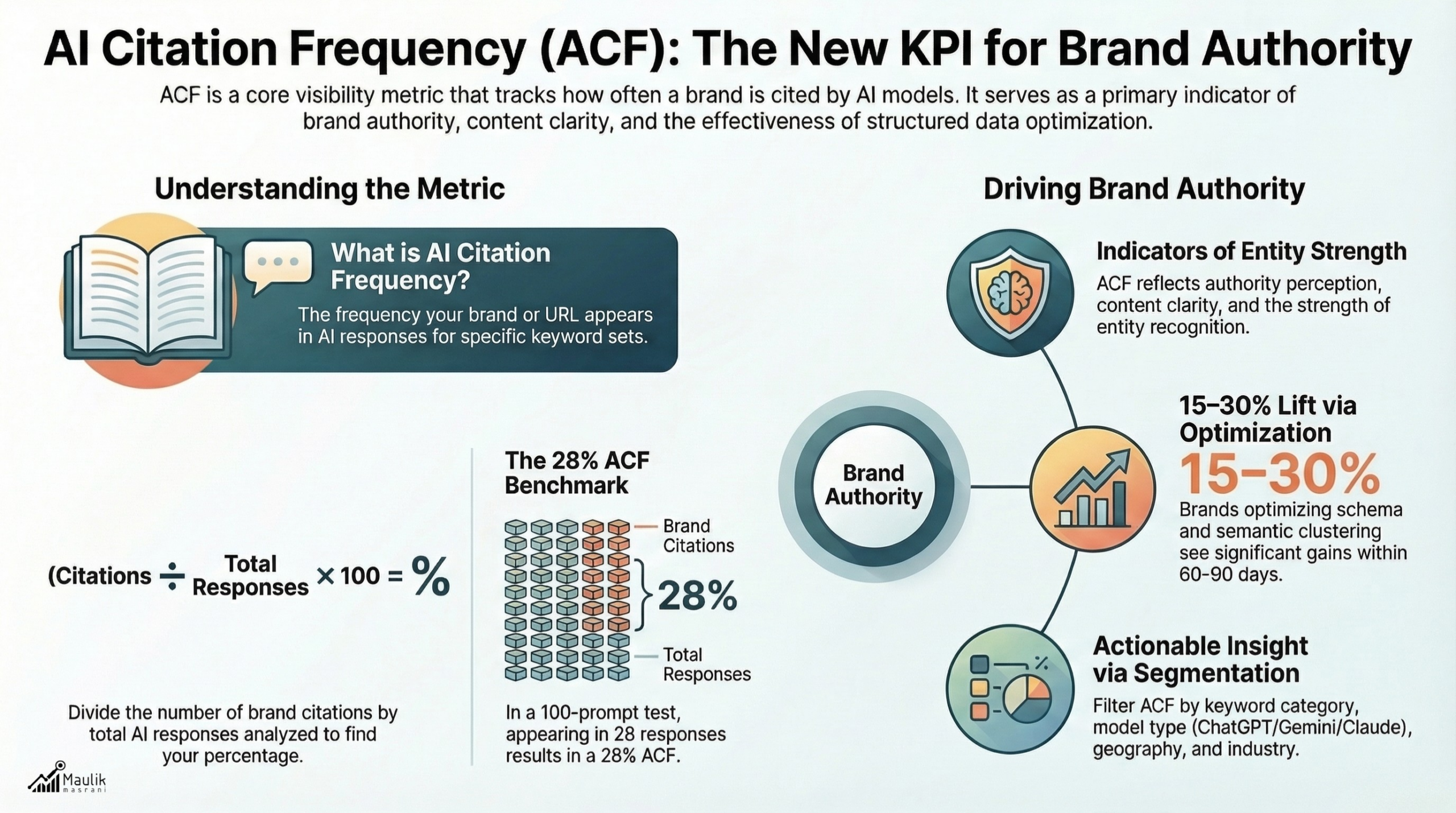
AI Citation Frequency (ACF) measures how often your brand, URL, or entity is cited within AI-generated responses for a defined keyword set.
Formula
AI Citation Frequency =
(Number of AI responses citing your brand ÷ Total AI responses analyzed) × 100
Example
If you test 100 prompts related to your industry and your brand appears in 28 responses:
ACF = (28 ÷ 100) × 100 = 28%
That percentage becomes a core AI visibility metric.
Why it matters
Citation frequency reflects:
- Authority perception
- Content clarity
- Entity recognition strength
- Structured data reinforcement
Brands optimizing schema, entity consistency and semantic clustering often see a 15–30% lift in citation frequency within 60–90 days.
Within your AIO performance dashboard, this metric should be segmented by:
- Keyword category
- Model type (ChatGPT vs Gemini vs Claude)
- Geography
- Industry vertical
This segmentation transforms raw AI exposure into actionable insight.
Entity salience score
Definition
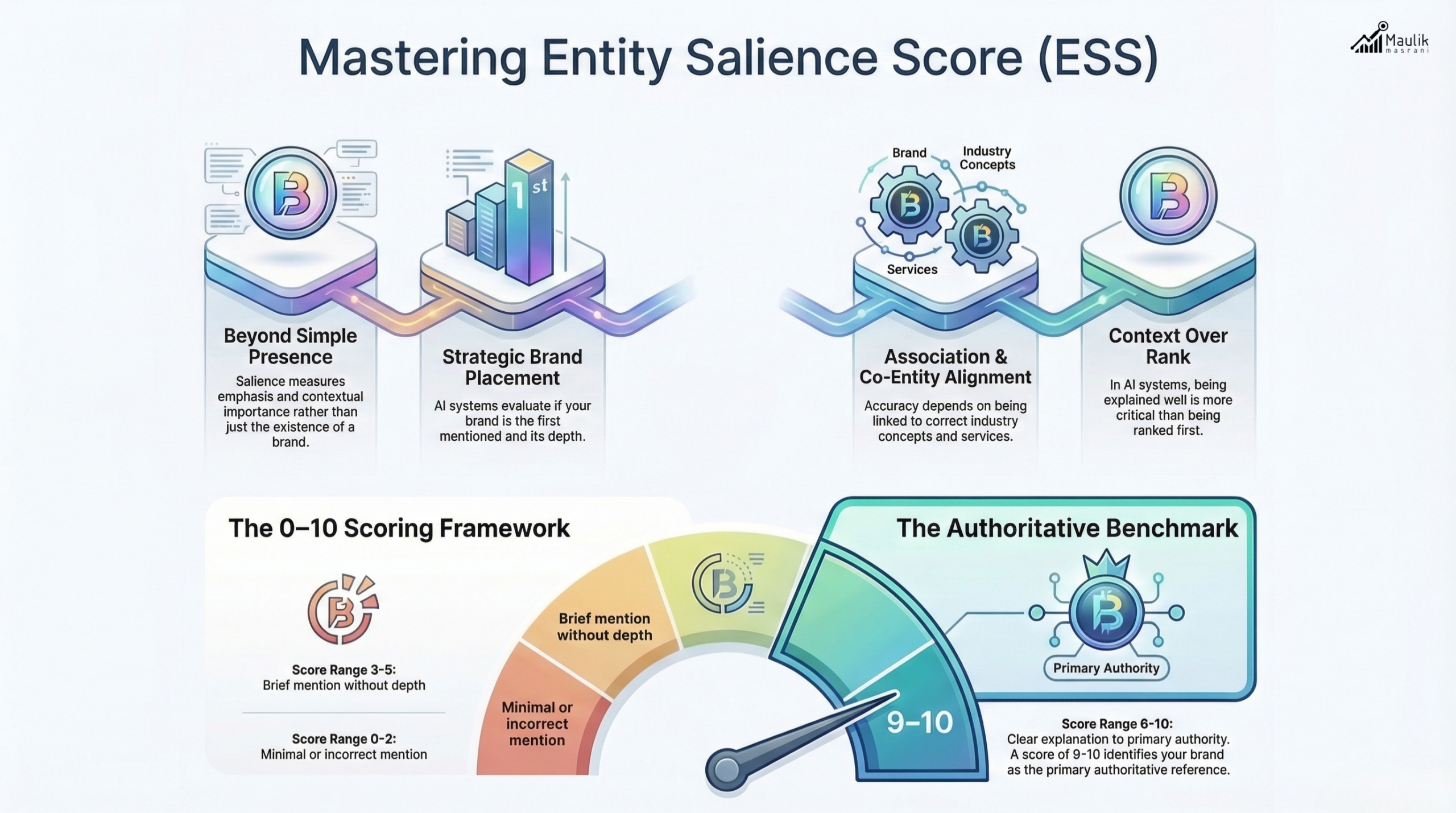
Entity Salience Score (ESS) measures how prominently and accurately your brand entity appears within AI-generated responses.
Salience is not about presence alone; it measures emphasis and contextual importance.
Components of Entity Salience
- Placement (Is your brand first mentioned?)
- Context depth (One-line mention vs detailed explanation)
- Association accuracy (Are your services described correctly?)
- Co-entity alignment (Are you linked to correct industry concepts?)
Scoring Model Example
You can score salience on a 0–10 scale:
- 0–2: Minimal or incorrect mention
- 3–5: Brief mention without depth
- 6–8: Clear contextual explanation
- 9–10: Primary authoritative reference
If your average ESS across 50 prompts is 7.2, that indicates strong contextual reinforcement.
This metric becomes essential for monitoring generative ranking KPIs.
Because in AI systems, being explained well matters more than being ranked first.
Cross-model visibility index
Different AI systems interpret data differently.
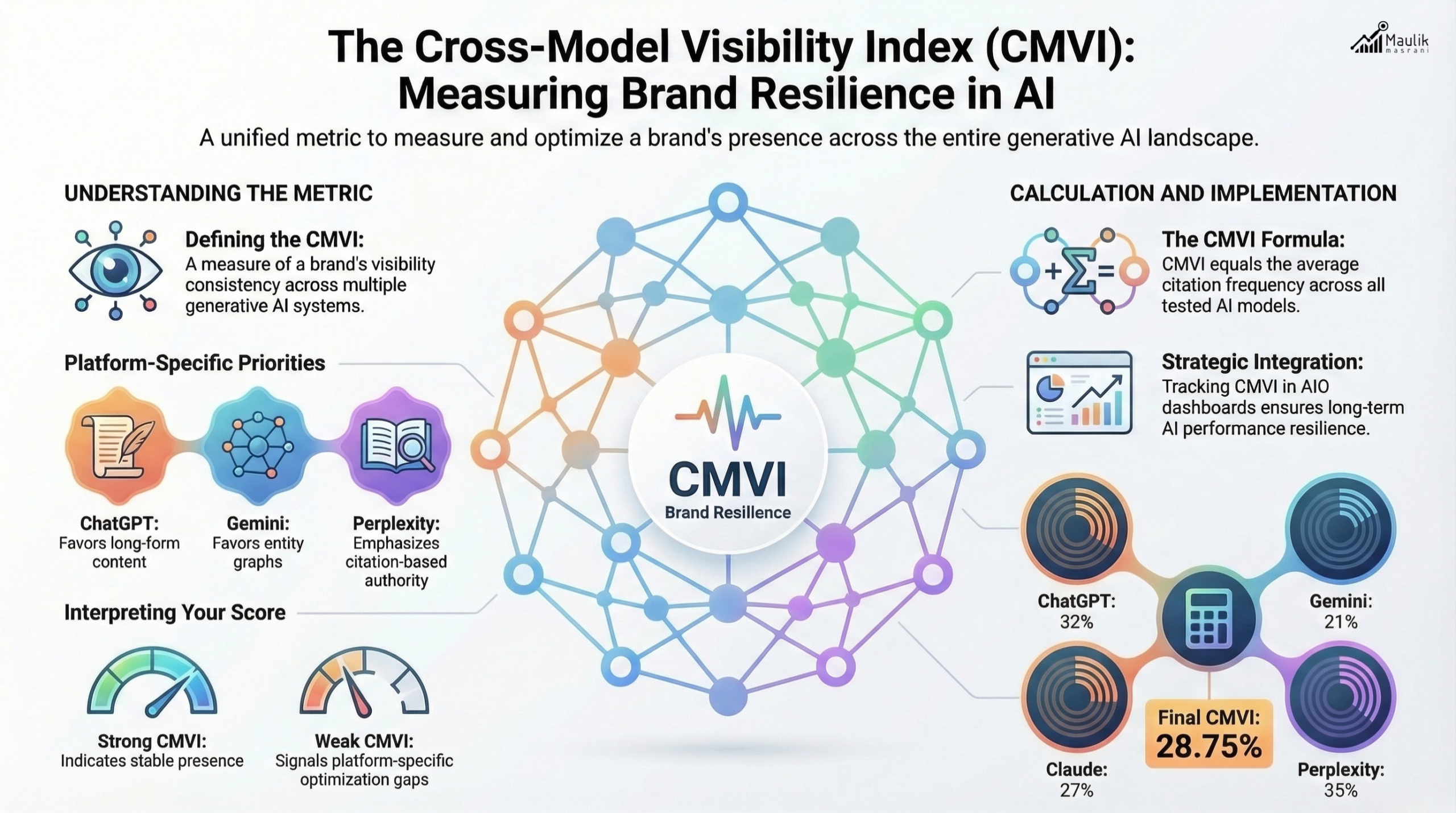
ChatGPT may prioritize structured long-form content.
Gemini may favor entity graphs.
Perplexity emphasizes citation-based authority.
Definition
Cross-Model Visibility Index (CMVI) measures your brand’s visibility consistency across multiple AI systems.
Formula
CMVI = Average citation frequency across tested models
If results show:
- ChatGPT: 32%
- Gemini: 21%
- Claude: 27%
- Perplexity: 35%
CMVI = (32 + 21 + 27 + 35) ÷ 4 = 28.75%
A strong CMVI indicates stable generative presence.
A weak CMVI signals platform-specific optimization gaps.
Tracking this index inside your AIO performance dashboard ensures AI performance resilience.
Sentiment alignment tracking
AI systems do not just cite brands, they describe them.
Definition
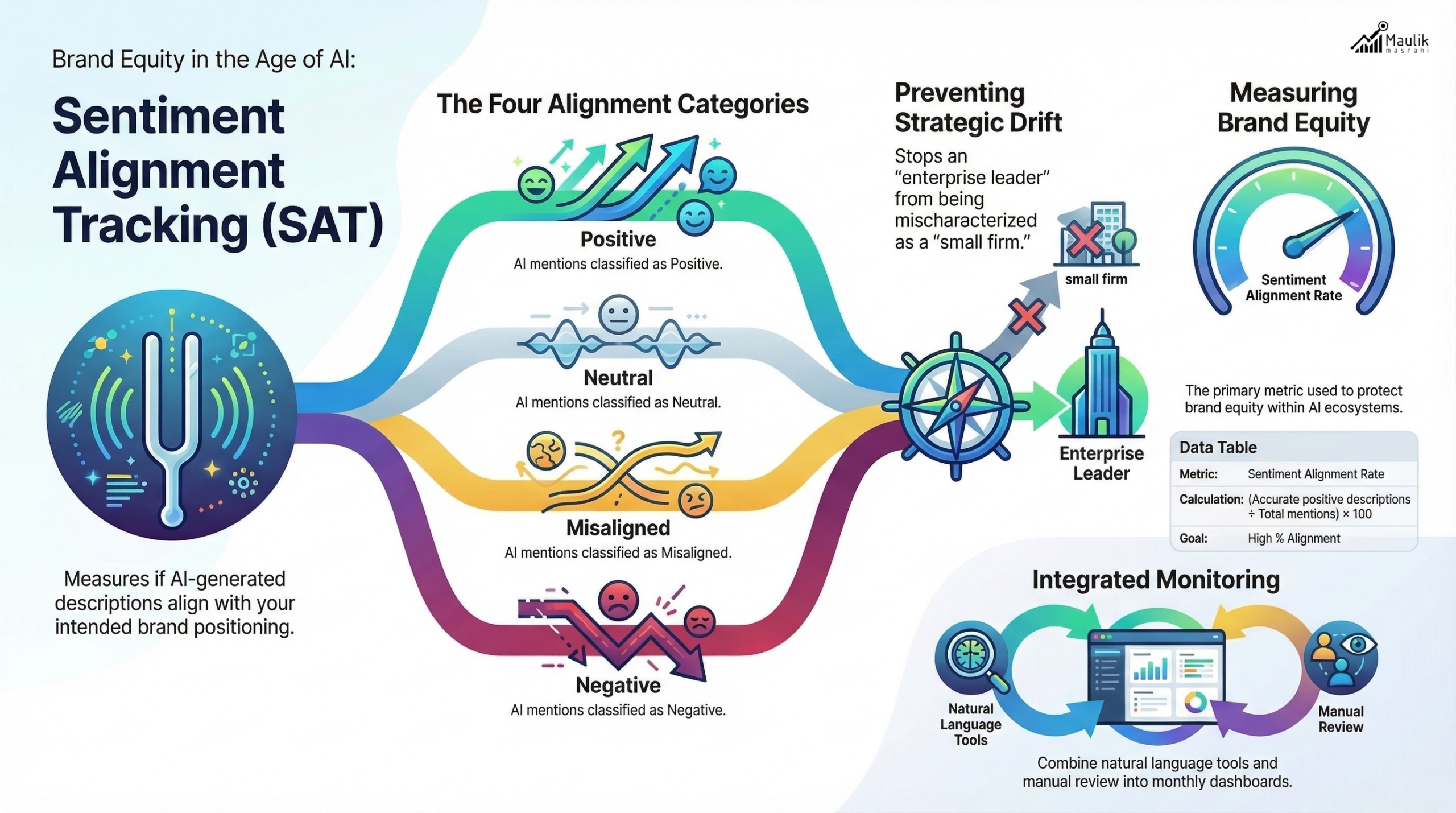
Sentiment Alignment Tracking (SAT) measures whether AI-generated descriptions align with your intended brand positioning.
Categories
- Positive (accurate, authoritative framing)
- Neutral (informational but flat)
- Misaligned (incorrect positioning)
- Negative (risk or critical framing)
Why this matters
Imagine your brand positions itself as an “enterprise AI governance leader.”
If AI consistently describes you as a “small consulting firm,” that is misalignment.
Tracking sentiment prevents strategic drift in generative environments.
You can integrate natural language classification tools or manual review sampling into your dashboard to track alignment percentages monthly.
For analytical rigor, include:
Sentiment Alignment Rate =
(Accurate positive descriptions ÷ Total mentions) × 100
This metric protects brand equity within AI ecosystems.
Dashboard template
Below is a simplified enterprise-ready template for an AIO performance dashboard:
1. AI Citation Frequency Panel
- Overall ACF
- ACF by keyword cluster
- ACF by geography
- ACF trend line (monthly)
2. Entity Salience Panel
- Average ESS score
- Top-performing entity clusters
- Misrepresentation alerts
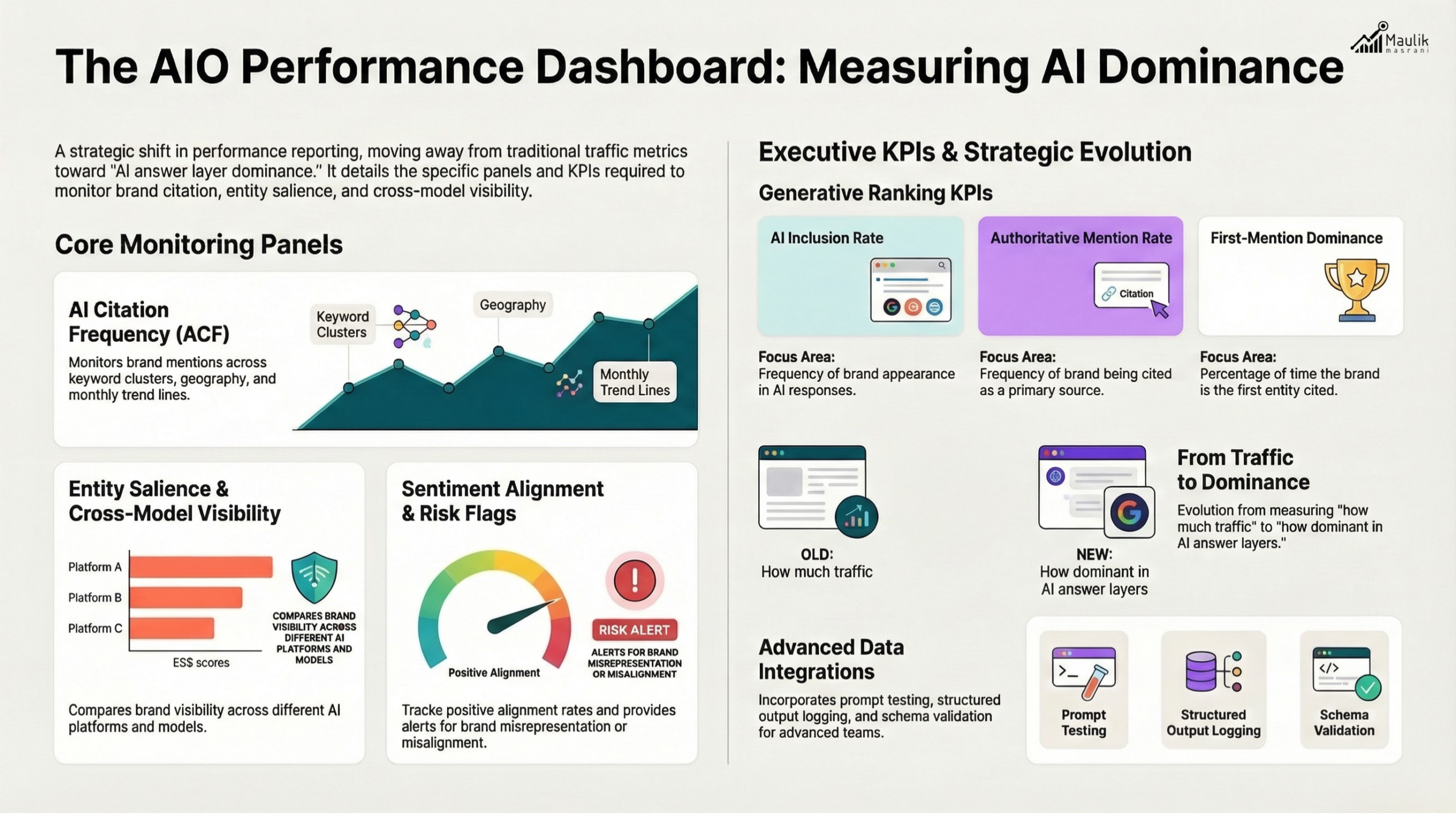
3. Cross-Model Visibility Panel
- CMVI score
- Model comparison heatmap
- Visibility gaps by platform
4. Sentiment Alignment Panel
- Positive alignment rate
- Misalignment percentage
- Risk flags
5. Generative Ranking KPIs Summary
- AI inclusion rate
- Authoritative mention rate
- First-mention dominance score
- Knowledge panel reinforcement
These generative ranking KPIs provide an executive summary layer for board-level reporting.
For advanced teams, integrate data sources such as:
- Prompt testing frameworks
- Structured AI output logging
- Entity mapping tools
- Schema validation systems
This dashboard shifts reporting conversations from “How much traffic did we get?” to:
“How dominant are we in AI answer layers?”
That is a strategic evolution.
FAQs
How to measure AI visibility?
Measure AI visibility by tracking citation frequency, entity salience score, cross-model visibility index and sentiment alignment across major AI systems. Combine these metrics into an AIO performance dashboard for consistent monitoring.
What are AI visibility metrics?
AI visibility metrics quantify how often and how accurately a brand appears in AI-generated responses. They include citation frequency, salience scoring and generative ranking KPIs.
What are generative ranking KPIs?
Generative ranking KPIs measure inclusion rate, authoritative mention dominance, first-mention positioning and cross-model consistency within AI systems.
Why is traffic not enough anymore?
AI systems often provide answers directly without sending users to websites. Measuring AI citations and entity representation provides a more accurate view of brand influence.
Conclusion
AI visibility is becoming a board-level metric, not just a marketing experiment. As generative systems increasingly shape how brands are discovered, evaluated and recommended, organizations need a structured way to measure their presence in AI-generated answers.
An effective AIO performance dashboard moves the conversation beyond traffic and rankings, focusing instead on citation frequency, entity prominence, cross-model consistency and sentiment alignment. Companies that adopt this analytical framework early will gain a measurable advantage in generative ecosystems—because in the AI era, visibility is no longer about who gets the click, but who gets included in the answer.